Claim · model-written summary
The authors speculate that Antarctic climatic fluctuations isolated Phaeomegaceros taxa through dispersal and vicariance.
- Taxon
- Phaeomegaceros
 Phaeomegacerose0
- Outcome
- isolation of Phaeomegaceros taxae0
- Qualifier
- dispersal events and vicariancee0
- Setting
- Antarctic continente0
Not reportedMaterialGeneCompoundOrgan / stageInteractorInteractor roleSecond interactorSecond interactor roleTreatmentComparatorDirectionValue
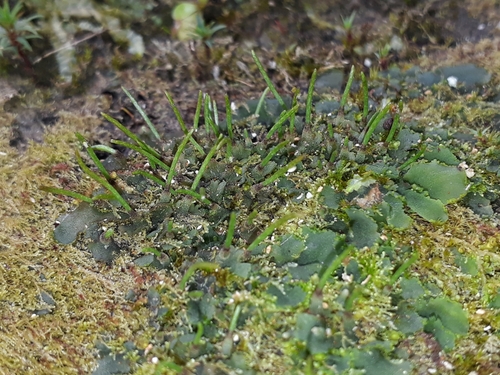
Organisms pictured · Representative pictures of the matched species, not figures from the paper.
Verbatim
e0“climatic fluctuations in the Antarctic continent during the middle to late-Miocene led to the isolation of Phaeomegaceros taxa with both processes (dispersal events and vicariance) acting on the independent evolution of the disjunct clades”
Title
GABRIEL F. PEÑALOZA-BOJACÁ; ADRIEL M. SIERRA; HANNES BECHER; et al. Bryophyte Diversity and Evolution 2022. doi:10.11646/bde.45.1.3
Other claims from this paper (5)
- Observation Phylogenetic analyses supported Phaeomegaceros monophyly.
- Observation Phaeomegaceros comprises New Zealand and Austral American clades differing in a spore-face depression.
- Observation Biogeographical analyses inferred a New Zealand and Antarctic ancestral area in the Late Cretaceous.
- Observation Austral American Phaeomegaceros species diverged during the Eocene.
- Mechanism The authors attribute recent Austral American diversification and range expansion to dispersal and cladogenesis associated with geological changes.