Phaeomegaceros 7 claims

genus · family Dendrocerotaceae · green plant · NCBI Taxonomy ↗

2 spellings

Phaeomegaceros
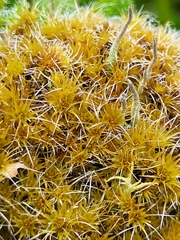
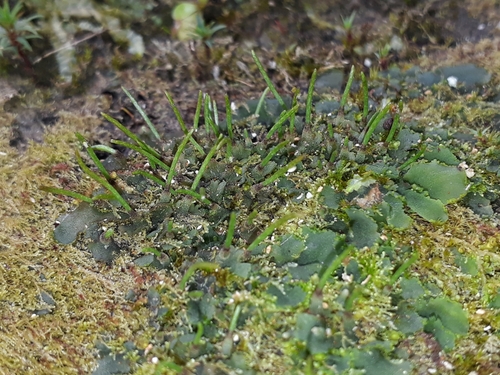
PhaeomegacerosLeon Perrie · CC BY 4.0 · iNaturalist ↗
Observationobservedoriginal resultmeasured

Claim · model-written summary

Phylogenetic analyses supported Phaeomegaceros monophyly.

Taxon
PhaeomegacerosPhaeomegacerose0
Outcome
monophyletice0

Verbatim

e0

“the three phylogenetic analyses supported the genus Phaeomegaceros as monophyletic”

✓ located verbatim in the source · abstract, characters 678–760

Title

HISTORICAL BIOGEOGRAPHY OF THE AUSTRAL HORNWORT GENUS PHAEOMEGACEROS (DENDROCEROTACEAE, ANTHOCEROTOPHYTA)

GABRIEL F. PEÑALOZA-BOJACÁ; ADRIEL M. SIERRA; HANNES BECHER; et al. Bryophyte Diversity and Evolution 2022. doi:10.11646/bde.45.1.3

Other claims from this paper (5)
Observationobservedoriginal resultmeasured

Claim · model-written summary

Phaeomegaceros comprises New Zealand and Austral American clades differing in a spore-face depression.

Taxon
PhaeomegacerosPhaeomegacerose0
Organ / stage
spore’s proximal facee0
Outcome
two major cladese0
Setting
New Zealande0

Verbatim

e0

“Phaeomegaceros is composed of two major clades corresponding to the New Zealand species, which presents a conspicuous trilete mark with one depression in the middle of the spore’s proximal face, and the Austral American species, which lack this middle depression.”

✓ located verbatim in the source · abstract, characters 762–1025

Title

HISTORICAL BIOGEOGRAPHY OF THE AUSTRAL HORNWORT GENUS PHAEOMEGACEROS (DENDROCEROTACEAE, ANTHOCEROTOPHYTA)

GABRIEL F. PEÑALOZA-BOJACÁ; ADRIEL M. SIERRA; HANNES BECHER; et al. Bryophyte Diversity and Evolution 2022. doi:10.11646/bde.45.1.3

Other claims from this paper (5)
Observationobservedoriginal resultsimulated

Claim · model-written summary

Biogeographical analyses inferred a New Zealand and Antarctic ancestral area in the Late Cretaceous.

Taxon
PhaeomegacerosPhaeomegacerose0
Outcome
ancestral areae0
Value
53.51 Mae0
Qualifier
HPD 95% = 31.64–72.63e0
Setting
New Zealand and Antarcticae0

Verbatim

e0

“the Phaeomegaceros ancestral area was New Zealand and Antarctica in the Late Cretaceous (53.51 Ma, HPD 95% = 31.64–72.63)”

✓ located verbatim in the source · abstract, characters 1076–1197

Title

HISTORICAL BIOGEOGRAPHY OF THE AUSTRAL HORNWORT GENUS PHAEOMEGACEROS (DENDROCEROTACEAE, ANTHOCEROTOPHYTA)

GABRIEL F. PEÑALOZA-BOJACÁ; ADRIEL M. SIERRA; HANNES BECHER; et al. Bryophyte Diversity and Evolution 2022. doi:10.11646/bde.45.1.3

Other claims from this paper (5)
Observationobservedoriginal resultsimulated

Claim · model-written summary

Austral American Phaeomegaceros species diverged during the Eocene.

Taxon
PHAEOMEGACEROSPhaeomegacerost0
Outcome
divergede0
Qualifier
during the Eocenee0
Setting
Austral Americane0

Verbatim

e0

“Austral American species diverged during the Eocene”

✓ located verbatim in the source · abstract, characters 1205–1256
t0

“PHAEOMEGACEROS”

✓ located verbatim in the source · title, characters 54–68

Title

HISTORICAL BIOGEOGRAPHY OF THE AUSTRAL HORNWORT GENUS PHAEOMEGACEROS (DENDROCEROTACEAE, ANTHOCEROTOPHYTA)

GABRIEL F. PEÑALOZA-BOJACÁ; ADRIEL M. SIERRA; HANNES BECHER; et al. Bryophyte Diversity and Evolution 2022. doi:10.11646/bde.45.1.3

Other claims from this paper (5)
Mechanismhypothesisoriginal resultsimulated

Claim · model-written summary

The authors speculate that Antarctic climatic fluctuations isolated Phaeomegaceros taxa through dispersal and vicariance.

Taxon
PhaeomegacerosPhaeomegacerose0
Outcome
isolation of Phaeomegaceros taxae0
Qualifier
dispersal events and vicariancee0
Setting
Antarctic continente0

Verbatim

e0

“climatic fluctuations in the Antarctic continent during the middle to late-Miocene led to the isolation of Phaeomegaceros taxa with both processes (dispersal events and vicariance) acting on the independent evolution of the disjunct clades”

✓ located verbatim in the source · abstract, characters 1276–1515

Title

HISTORICAL BIOGEOGRAPHY OF THE AUSTRAL HORNWORT GENUS PHAEOMEGACEROS (DENDROCEROTACEAE, ANTHOCEROTOPHYTA)

GABRIEL F. PEÑALOZA-BOJACÁ; ADRIEL M. SIERRA; HANNES BECHER; et al. Bryophyte Diversity and Evolution 2022. doi:10.11646/bde.45.1.3

Other claims from this paper (5)
Mechanismauthor interpretationoriginal resultsimulated

Claim · model-written summary

The authors attribute recent Austral American diversification and range expansion to dispersal and cladogenesis associated with geological changes.

Taxon
PhaeomegacerosPhaeomegacerose0
Outcome
recent diversificatione0
Qualifier
dispersal events and subsequent cladogenesise0
Setting
Austral Americae0

Verbatim

e0

“recent diversification of Phaeomegaceros taxa in Austral America and range expansion to northern Andes and oceanic islands, are explained by dispersal events and subsequent cladogenesis coinciding with the uplift of the Andes and the formation of volcanic oceanic islands (Juan Fernandez and Tristan da Cunha)”

✓ located verbatim in the source · abstract, characters 1530–1839

Title

HISTORICAL BIOGEOGRAPHY OF THE AUSTRAL HORNWORT GENUS PHAEOMEGACEROS (DENDROCEROTACEAE, ANTHOCEROTOPHYTA)

GABRIEL F. PEÑALOZA-BOJACÁ; ADRIEL M. SIERRA; HANNES BECHER; et al. Bryophyte Diversity and Evolution 2022. doi:10.11646/bde.45.1.3

Other claims from this paper (5)
Observationobservedoriginal resultmeasured

Claim · model-written summary

Ten bryophyte genera are newly recorded.

Taxon
Phaeomegaceros, Bromeliophila, Monodactylopsis, Myriocoleopsis, Rectolejeunea, Anomobryum, Brymela, Bryohumbertia, Lepidopilidium and MicrocampylopusAnomobryumMicrocampylopusBrymelaLepidopilidiumMyriocoleopsisPhaeomegacerosRectolejeuneaBryohumbertiaBromeliophilaMonodactylopsise0
Outcome
new generic recordse0
Value
tene0

Verbatim

e0

“These include ten new generic records: Phaeomegaceros, Bromeliophila, Monodactylopsis, Myriocoleopsis, Rectolejeunea, Anomobryum, Brymela, Bryohumbertia, Lepidopilidium and Microcampylopus.”

✓ located verbatim in the source · abstract, characters 108–297

Title

Contribution to the Knowledge of the Bryophyte Flora of Martinique, Lesser Antilles

Elisabeth Lavocat Bernard Cryptogamie Bryologie 2018. doi:10.7872/cryb/v39.iss3.2018.343

Other claims from this paper (3)