Abstract
Abstract Trichoderma is one of the fungal biological agents used to control fusarium basal rot disease on shallot. The use of Trichoderma sp. can reduce the negative impact on the environment and humans due to the use of synthetic chemical fungicides. This study aimed to characterize the physiological characteristics of some Trichoderma sp . and assess the potential in controlling Fusarium oxysporum on shallot. This research consisted of various tests, such as phosphate solubilization, chitinolytic activity, antibiosis, IAA production, and growth promoting tests, including germination percentage, plant height, and root length. There were eight isolates of Trichoderma originating from various species of plants in the field. They were T. hamatum 1, T. hamatum 2, T. asperellum , T. harzianum , T. pseudokoningii , Trichoderma rice, Trichoderma T01, and Trichoderma T02. All isolates did not react positively to the indole acetic acid (IAA) and antibiosis tests. Conversely, all isolates showed a positive reaction in the chitinolytic activity, except T. hamatum. Isolates Trichoderma T01 and Trichoderma T02 reacted positively to phosphate dissolution. Trichoderma T02 had the best germination rate and plant height compared to all isolates, with values of 90% and 6.00 ± 0.96, respectively. Trichoderma rice has the best root length compared to all isolates 8.
Abstract from the paper’s OpenAlex record; open copy licensed cc-by. Read at the source ↗
The text the model read, with the source record’s inline markup (italics, sub- and superscripts) rendered and its character entities decoded; quote offsets refer to the raw text.
Claims 8
Claim · model-written summary
All eight Trichoderma isolates were negative for IAA production.
- Taxon
- shallot
 Allium cepa var. aggregatumt0
- Interactor
- Trichoderma
 Trichodermat1biocontrol_agent
- Outcome
- indole acetic acid (IAA)e0
Organisms pictured · Representative pictures of the matched species, not figures from the paper.


Verbatim
e0“All isolates did not react positively to the indole acetic acid (IAA) and antibiosis tests.”
t0“shallot”
t1“trichoderma isolates”
Claim · model-written summary
All eight Trichoderma isolates were negative in antibiosis tests.
- Taxon
- shallotAllium cepa var. aggregatumt0
- Interactor
- TrichodermaTrichodermat1biocontrol_agent
- Outcome
- antibiosis testse0
Organisms pictured · Representative pictures of the matched species, not figures from the paper.
Verbatim
e0“All isolates did not react positively to the indole acetic acid (IAA) and antibiosis tests.”
t0“shallot”
t1“trichoderma isolates”
Claim · model-written summary
All isolates except T. hamatum showed chitinolytic activity.
- Taxon
- shallotAllium cepa var. aggregatumt0
- Interactor
- T. hamatum
 Trichoderma hamatume0biocontrol_agent
- Outcome
- positive reaction in the chitinolytic activitye0
Organisms pictured · Representative pictures of the matched species, not figures from the paper.
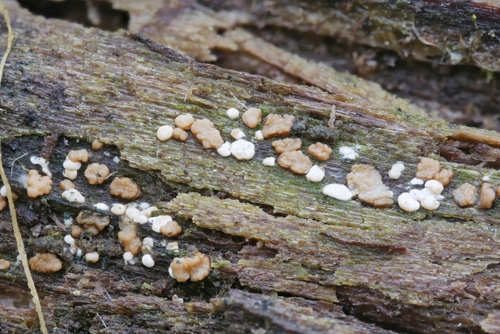
Verbatim
e0“all isolates showed a positive reaction in the chitinolytic activity, except T. hamatum.”
t0“shallot”
Claim · model-written summary
Trichoderma T01 dissolved phosphate.
- Taxon
- shallotAllium cepa var. aggregatumt0
- Interactor
- Trichoderma T01e0biocontrol_agent
- Outcome
- phosphate dissolutione0
Organisms pictured · Representative pictures of the matched species, not figures from the paper.
Verbatim
e0“Isolates Trichoderma T01 and Trichoderma T02 reacted positively to phosphate dissolution.”
t0“shallot”
Claim · model-written summary
Trichoderma T02 dissolved phosphate.
- Taxon
- shallotAllium cepa var. aggregatumt0
- Interactor
- Trichoderma T02e0biocontrol_agent
- Outcome
- phosphate dissolutione0
Organisms pictured · Representative pictures of the matched species, not figures from the paper.
Verbatim
e0“Isolates Trichoderma T01 and Trichoderma T02 reacted positively to phosphate dissolution.”
t0“shallot”
Claim · model-written summary
Trichoderma T02 produced the best shallot germination rate, 90%.
- Taxon
- shallotAllium cepa var. aggregatumt0
- Treatment
- Trichoderma T02e0
- Interactor
- Trichoderma T02e0biocontrol_agent
- Outcome
- germination ratee0
- Direction
- beste0
- Value
- 90%e0
- Comparator
- all isolatese0
Organisms pictured · Representative pictures of the matched species, not figures from the paper.
Verbatim
e0“Trichoderma T02 had the best germination rate and plant height compared to all isolates, with values of 90% and 6.00 ± 0.96, respectively.”
t0“shallot”
Claim · model-written summary
Trichoderma T02 produced the greatest shallot height, 6.00 ± 0.96.
- Taxon
- shallotAllium cepa var. aggregatumt0
- Treatment
- Trichoderma T02e0
- Interactor
- Trichoderma T02e0biocontrol_agent
- Outcome
- plant heighte0
- Direction
- beste0
- Value
- 6.00 ± 0.96e0
- Comparator
- all isolatese0
Organisms pictured · Representative pictures of the matched species, not figures from the paper.
Verbatim
e0“Trichoderma T02 had the best germination rate and plant height compared to all isolates, with values of 90% and 6.00 ± 0.96, respectively.”
t0“shallot”
Claim · model-written summary
Trichoderma rice gave the greatest shallot root length, reported as 8.
- Taxon
- shallotAllium cepa var. aggregatumt0
- Treatment
- Trichoderma ricee0
- Interactor
- Trichoderma ricee0biocontrol_agent
- Outcome
- root lengthe0
- Direction
- beste0
- Value
- 8e0
- Comparator
- all isolatese0
Organisms pictured · Representative pictures of the matched species, not figures from the paper.
Verbatim
e0“Trichoderma rice has the best root length compared to all isolates 8.”
t0“shallot”
The same questions in other papers
Oryza sativa · growth · Allium cepa (onion)Positive and negative results
4 papers in the same direction as this paper · 1 in the opposite direction
- no effect
- positive
- positive
2 papers more in this group
See all 6 papers →Trichoderma · growth · Allium cepa (onion)Results agree
17 papers in the same direction as this paper
- positive
- positive
- positive
14 papers more in this group
See all 18 papers →Claims are grouped by organism, treatment and what was measured or targeted. A paper counts as positive when any of its claims in the group is positive.