Abstract
Leucoptera coffeella (Lepidoptera: Lyonetiidae) is one of the main pests in coffee crops. The economic injury level (EIL) is the lowest density of the pest at which economic damages match the costs of control measures. The economic threshold (ET) is the density of the pest at which control measures must be taken so that this population does not reach the EIL. These are the main indices used for pest control decision-making. Control of L. coffeella is carried out by manual, tractor, airplane or drone applications. This work aimed to determine EILs and ETs for L. coffeella as a function of insecticide application technology in conventional and organic Coffea arabica crops. Data were collected over five years in commercial C. arabica crops on seven 100 ha central pivots. The cost of control in organic crops was 16.98% higher than conventional. The decreasing order of control cost was manual > drone > airplane > tractor application. Coffee plants were tolerant to low densities (up to 15% mined leaves) of the pest that caused losses of up to 6.56%. At high pest densities (54.20% mined leaves), losses were high (85.62%). In organic and conventional crops and with the use of different insecticide application technologies, EIL and ET were similar. The EIL and ET were 14% and 11% of mined leaves, respectively. Therefore, these indices can be incorporated in integrated pest management programs in C. arabica crops. The indices determined as a function of insecticide application technology in organic and conventional coffee are important as they serve producers with different technological levels. Additionally, EILs and ETs can contribute to more sustainable production, as control methods will only be employed when the pest density reaches these indices.
Abstract from the paper’s OpenAlex record; open copy licensed cc-by. Read at the source ↗
The text the model read, with the source record’s inline markup (italics, sub- and superscripts) rendered and its character entities decoded; quote offsets refer to the raw text.
Claims 10
Claim · model-written summary
Control cost in organic crops was 16.98% higher than conventional crops.
- Taxon
- Coffea arabica
 Coffea arabicat0
- Outcome
- cost of controle0
- Direction
- highere0
- Value
- 16.98%e0
- Comparator
- conventionale0
- Setting
- organic cropse0
Organisms pictured · Representative pictures of the matched species, not figures from the paper.

Verbatim
e0“The cost of control in organic crops was 16.98% higher than conventional.”
t0“Coffea arabica”
Claim · model-written summary
Manual application had the highest control cost, followed by drone, airplane and tractor.
- Taxon
- Coffea arabicaCoffea arabicat0
- Treatment
- manual > drone > airplane > tractor applicatione0
- Outcome
- control coste0
- Direction
- decreasinge0
Organisms pictured · Representative pictures of the matched species, not figures from the paper.
Verbatim
e0“The decreasing order of control cost was manual > drone > airplane > tractor application.”
t0“Coffea arabica”
Claim · model-written summary
Coffee plants tolerated pest densities up to 15% mined leaves.
- Taxon
- Coffea arabicaCoffea arabicat0
- Interactor
- Leucoptera coffeella
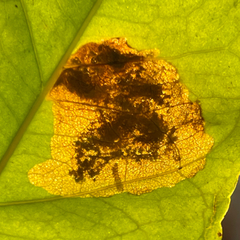 Leucoptera coffeellae1pest
- Outcome
- tolerant to low densitiese0
- Value
- up to 15% mined leavese0
Organisms pictured · Representative pictures of the matched species, not figures from the paper.
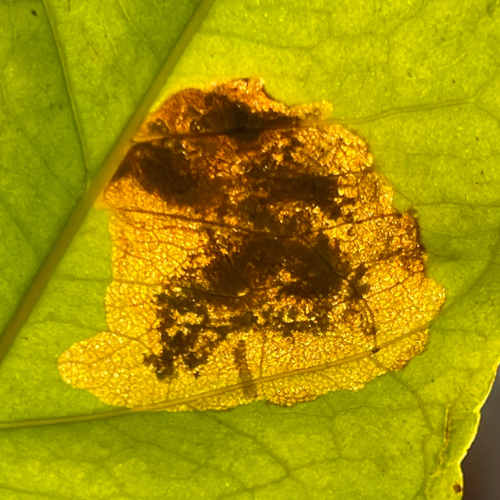
Verbatim
e0“Coffee plants were tolerant to low densities (up to 15% mined leaves) of the pest”
e1“Leucoptera coffeella”
t0“Coffea arabica”
Claim · model-written summary
At low pest density, losses reached 6.56%.
- Taxon
- Coffea arabicaCoffea arabicat0
- Interactor
- Leucoptera coffeellaLeucoptera coffeellae1pest
- Outcome
- lossese0
- Value
- up to 6.56%e0
- Qualifier
- up to 15% mined leavese0
Organisms pictured · Representative pictures of the matched species, not figures from the paper.
Verbatim
e0“low densities (up to 15% mined leaves) of the pest that caused losses of up to 6.56%”
e1“Leucoptera coffeella”
t0“Coffea arabica”
Claim · model-written summary
At 54.20% mined leaves, losses reached 85.62%.
- Taxon
- Coffea arabicaCoffea arabicat0
- Interactor
- Leucoptera coffeellaLeucoptera coffeellae1pest
- Outcome
- lossese0
- Value
- 85.62%e0
- Qualifier
- 54.20% mined leavese0
Organisms pictured · Representative pictures of the matched species, not figures from the paper.
Verbatim
e0“At high pest densities (54.20% mined leaves), losses were high (85.62%).”
e1“Leucoptera coffeella”
t0“Coffea arabica”
Claim · model-written summary
EIL was similar across organic and conventional crops and application technologies.
- Taxon
- Coffea arabicaCoffea arabicat0
- Interactor
- Leucoptera coffeellaLeucoptera coffeellae1pest
- Outcome
- EILe0
- Direction
- similare0
- Setting
- organic and conventional cropse0
Organisms pictured · Representative pictures of the matched species, not figures from the paper.
Verbatim
e0“In organic and conventional crops and with the use of different insecticide application technologies, EIL and ET were similar.”
e1“Leucoptera coffeella”
t0“Coffea arabica”
Claim · model-written summary
ET was similar across organic and conventional crops and application technologies.
- Taxon
- Coffea arabicaCoffea arabicat0
- Interactor
- Leucoptera coffeellaLeucoptera coffeellae1pest
- Outcome
- ETe0
- Direction
- similare0
- Setting
- organic and conventional cropse0
Organisms pictured · Representative pictures of the matched species, not figures from the paper.
Verbatim
e0“In organic and conventional crops and with the use of different insecticide application technologies, EIL and ET were similar.”
e1“Leucoptera coffeella”
t0“Coffea arabica”
Claim · model-written summary
Economic injury level was 14% mined leaves.
- Taxon
- Coffea arabicaCoffea arabicat0
- Interactor
- Leucoptera coffeellaLeucoptera coffeellae1pest
- Outcome
- EILe0
- Value
- 14%e0
Organisms pictured · Representative pictures of the matched species, not figures from the paper.
Verbatim
e0“The EIL and ET were 14% and 11% of mined leaves, respectively.”
e1“Leucoptera coffeella”
t0“Coffea arabica”
Claim · model-written summary
Economic threshold was 11% mined leaves.
- Taxon
- Coffea arabicaCoffea arabicat0
- Interactor
- Leucoptera coffeellaLeucoptera coffeellae1pest
- Outcome
- ETe0
- Value
- 11% of mined leavese0
Organisms pictured · Representative pictures of the matched species, not figures from the paper.
Verbatim
e0“The EIL and ET were 14% and 11% of mined leaves, respectively.”
e1“Leucoptera coffeella”
t0“Coffea arabica”
Claim · model-written summary
The authors recommend incorporating the indices into integrated pest management for C. arabica.
- Taxon
- C. arabicaCoffea arabicae0
- Interactor
- Leucoptera coffeellaLeucoptera coffeellae1pest
- Outcome
- integrated pest management programse0
Organisms pictured · Representative pictures of the matched species, not figures from the paper.
Verbatim
e0“these indices can be incorporated in integrated pest management programs in C. arabica crops”
e1“Leucoptera coffeella”