Abstract
A field experiment was conducted during the year 2018-2019 at the vital place of Bangladesh Jute Research Institute (BJRI), Dhaka. The aim of the study was to evaluate the influence of Mn fertilizer on the dry matter yield and potential nutrient uptake of the newly developed jute variety BJRI Tossa jute-7. The treatments used in the experiments were T1: Control, T2: RDF sole (N90P10 K30 S20kg/ha), T3: RDF + 1 kg Mn/ha, T4: RDF + 2 kg Mn/ha, T5: RDF + 3 kg Mn/ha and T6: RDF + 4 kg Mn/ha. Mn application had a favorable effect on the dry matter yield of jute. Among the fertilizers of Mn with RDF, interaction promoted the dry yield biomass compared to sole RDF and control. Maximum dry matter yield (leaves + shoots + roots) achieved (20000 kg/ha) with T5 (RDF + 3 kg Mn/ha) and minimum (6421 kg/ha) in T1 (control). Study indicated that it needs to apply Mn to obtain optimum yield production. The interaction effect of Mn, NPK and S fertilizer significantly influenced nutrient uptake by the jute plant. The uptake of nutrient found highest N (218.9 kg/ha) in T5, P (92.75 kg/ha) in T3, K (239.73 kg/ha) with T6, S (19.59 kg/ha) in T4, Fe (0.64 kg/ha) in T5, Zn (0.38 kg/ha) in T5 and Mn (0.63 kg/ha) recorded in T6. The amount of micro nutrient uptake may be arranged in the order of Mn >Zn> Fe. Considering the highest uptake of major element, it can be kept as in the order of K > N>P>S. Study indicated that a higher rate of nutrient uptake was promoted dry matter accumulation in jute. Research revealed that the rate of nutrient uptake maximized with the addition of Mn in the RDF treatment. Hence, it could be concluded that applying RDF + 3 kg Mn/ha may be a suitable dose for optimum yield production of jute. Yet, in order to draw a sound conclusion, repeating the experiment is needed. In the future, the study will be a guideline for further investigation. Int. J. Agril. Res. Innov. Tech. 14(1): 87-95, June 2024
Abstract from the paper’s OpenAlex record; open copy licensed cc-by. Read at the source ↗
The text the model read, with the source record’s inline markup (italics, sub- and superscripts) rendered and its character entities decoded; quote offsets refer to the raw text.
Claims 14
Claim · model-written summary
Manganese fertilizer increased jute dry matter yield relative to sole RDF and control.
- Taxon
- jute
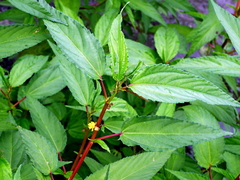 Corchorus capsularise1
- Treatment
- Mn with RDFe0
- Outcome
- dry yield biomasse0
- Direction
- promotede0
- Comparator
- sole RDF and controle0
Organisms pictured · Representative pictures of the matched species, not figures from the paper.
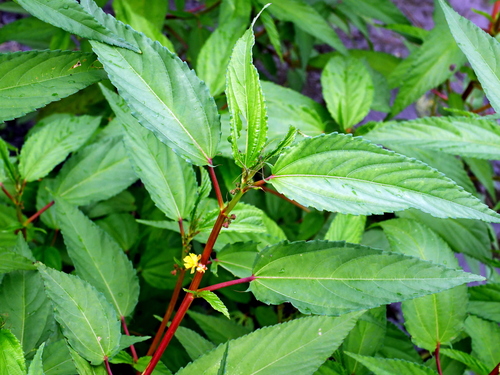
Verbatim
e0“Mn with RDF, interaction promoted the dry yield biomass compared to sole RDF and control”
e1“jute plant”
Claim · model-written summary
RDF plus 3 kg Mn/ha produced maximum jute dry matter yield of 20000 kg/ha.
- Taxon
- juteCorchorus capsularise1
- Treatment
- RDF + 3 kg Mn/hae0
- Outcome
- dry matter yielde0
- Direction
- Maximume0
- Value
- 20000 kg/hae0
- Qualifier
- 6421 kg/hae0
- Comparator
- T1 (control)e0
Organisms pictured · Representative pictures of the matched species, not figures from the paper.
Verbatim
e0“Maximum dry matter yield (leaves + shoots + roots) achieved (20000 kg/ha) with T5 (RDF + 3 kg Mn/ha) and minimum (6421 kg/ha) in T1 (control)”
e1“jute plant”
Claim · model-written summary
The combined Mn, NPK, and S fertilizer treatment significantly influenced jute nutrient uptake.
- Taxon
- juteCorchorus capsularise0
- Treatment
- Mn, NPK and S fertilizere0
- Outcome
- nutrient uptakee0
Not reportedComparatorDirection
Organisms pictured · Representative pictures of the matched species, not figures from the paper.
Verbatim
e0“The interaction effect of Mn, NPK and S fertilizer significantly influenced nutrient uptake by the jute plant”
Claim · model-written summary
Jute N uptake was highest at 218.9 kg/ha under T5.
Organisms pictured · Representative pictures of the matched species, not figures from the paper.
Verbatim
e0“highest N (218.9 kg/ha) in T5”
e1“jute plant”
Claim · model-written summary
Jute P uptake was highest at 92.75 kg/ha under T3.
Organisms pictured · Representative pictures of the matched species, not figures from the paper.
Verbatim
e0“P (92.75 kg/ha) in T3”
e1“The uptake of nutrient found highest”
e2“jute plant”
Claim · model-written summary
Jute K uptake was highest at 239.73 kg/ha under T6.
Organisms pictured · Representative pictures of the matched species, not figures from the paper.
Verbatim
e0“K (239.73 kg/ha) with T6”
e1“The uptake of nutrient found highest”
e2“jute plant”
Claim · model-written summary
Jute S uptake was highest at 19.59 kg/ha under T4.
Organisms pictured · Representative pictures of the matched species, not figures from the paper.
Verbatim
e0“S (19.59 kg/ha) in T4”
e1“The uptake of nutrient found highest”
e2“jute plant”
Claim · model-written summary
Jute Fe uptake was highest at 0.64 kg/ha under T5.
Organisms pictured · Representative pictures of the matched species, not figures from the paper.
Verbatim
e0“Fe (0.64 kg/ha) in T5”
e1“The uptake of nutrient found highest”
e2“jute plant”
Claim · model-written summary
Jute Zn uptake was highest at 0.38 kg/ha under T5.
Organisms pictured · Representative pictures of the matched species, not figures from the paper.
Verbatim
e0“Zn (0.38 kg/ha) in T5”
e1“The uptake of nutrient found highest”
e2“jute plant”
Claim · model-written summary
Jute Mn uptake was highest at 0.63 kg/ha under T6.
Organisms pictured · Representative pictures of the matched species, not figures from the paper.
Verbatim
e0“Mn (0.63 kg/ha) recorded in T6”
e1“The uptake of nutrient found highest”
e2“jute plant”
Claim · model-written summary
The reported micronutrient uptake ranking was Mn above Zn above Fe.
- Taxon
- juteCorchorus capsularise1
- Outcome
- micro nutrient uptakee0
- Qualifier
- Mn >Zn> Fee0
Not reportedDirection
Organisms pictured · Representative pictures of the matched species, not figures from the paper.
Verbatim
e0“The amount of micro nutrient uptake may be arranged in the order of Mn >Zn> Fe”
e1“jute plant”
Claim · model-written summary
The reported major nutrient uptake ranking was K above N above P above S.
- Taxon
- juteCorchorus capsularise1
- Outcome
- order of K > N>P>Se0
Not reportedDirection
Organisms pictured · Representative pictures of the matched species, not figures from the paper.
Verbatim
e0“the order of K > N>P>S”
e1“jute plant”
Claim · model-written summary
Higher nutrient uptake was associated with greater jute dry matter accumulation.
- Taxon
- juteCorchorus capsularise0
- Outcome
- dry matter accumulatione0
- Direction
- promotede0
- Qualifier
- higher rate of nutrient uptakee0
Not reportedTreatment
Organisms pictured · Representative pictures of the matched species, not figures from the paper.
Verbatim
e0“a higher rate of nutrient uptake was promoted dry matter accumulation in jute”
Claim · model-written summary
The authors recommend RDF plus 3 kg Mn/ha for optimum jute yield.
- Taxon
- juteCorchorus capsularise0
- Treatment
- RDF + 3 kg Mn/hae0
- Outcome
- applying RDF + 3 kg Mn/ha may be a suitable dosee0
Organisms pictured · Representative pictures of the matched species, not figures from the paper.
Verbatim
e0“applying RDF + 3 kg Mn/ha may be a suitable dose for optimum yield production of jute”
The same questions in other papers
fertilization · yield · Corchorus capsularis (jute)Positive and negative results
13 papers in the same direction as this paper · 3 in the opposite direction
- no effect
- negative
- negative
13 papers more in this group
See all 17 papers →fertilization · nutrient: content · Corchorus capsularis (jute)Results agree
8 papers in the same direction as this paper
- positive
- positive
- positive
5 papers more in this group
See all 9 papers →Claims are grouped by organism, treatment and what was measured or targeted. A paper counts as positive when any of its claims in the group is positive.