Abstract
Purpose - to determine the in-storage weight loss by table beetroots depending on the root pulp structure. Methods. 1. General scientific: hypotheses – drawing up designs of experiments; experiments - conducting laboratory tests; analysis and synthesis – summarizing and concluding. 2. Computantional and analytical. Results. Beetroots naturally lose their weight during storage and this process is uneven. At the beginning, it is quite rapid, then it gradually slows down, accelerating in spring. Of the studied beet cultivars, the greatest losses of weight during storage were registered for cvs. 'Renova' and 'Tsylindra'. The weight loss by beetroots was correlated with a decrease in the dry matter content, which was spent on the respiration of beetroots to support their vital activity. In beet cvs. 'Renova' and 'Opolskyi', the decrease in the dry matter during storage was greater, amounting to 5.6 and 4.5%, respectively. There was a relationship between cell area and in-storage water evaporation. It was revealed that in cells with the largest area of 140.04·103 μm, the evaporation-caused losses amounted to 77.7% (cv. 'Karilon'), while in cells with the smallest area of 62.89·103 μm, this parameter was only 10.5% (cv. 'Opolskyi'). Conclusions. There was a direct strong correlation between water evaporation and cell size (r = 0.791). There was a significant second-order curvilinear dependence of beetroot weight loss on cultivars' features (R2 = 0.6041–0.9910).
Abstract from the paper’s OpenAlex record, shown for indexing and research. Copyright remains with the authors or the publisher. Read at the source ↗
The text the model read, with the source record’s inline markup (italics, sub- and superscripts) rendered and its character entities decoded; quote offsets refer to the raw text.
Claims 10
Claim · model-written summary
Beetroot weight loss was initially rapid, slowed, then accelerated in spring.
Verbatim
e0“Beetroots naturally lose their weight during storage and this process is uneven. At the beginning, it is quite rapid, then it gradually slows down, accelerating in spring.”
Claim · model-written summary
Renova had among the greatest storage weight losses.
Verbatim
e0“the greatest losses of weight during storage were registered for cvs. 'Renova' and 'Tsylindra'.”
t0“TABLE BEETROOTS”
Claim · model-written summary
Tsylindra had among the greatest storage weight losses.
Verbatim
e0“the greatest losses of weight during storage were registered for cvs. 'Renova' and 'Tsylindra'.”
t0“TABLE BEETROOTS”
Claim · model-written summary
Weight loss correlated with declining dry matter content.
Not reportedCompoundOrgan / stageDirection
Verbatim
e0“The weight loss by beetroots was correlated with a decrease in the dry matter content, which was spent on the respiration of beetroots to support their vital activity.”
Claim · model-written summary
Dry matter declined 5.6% in Renova.
- Taxon
- beet
 Beta vulgarise0
- Material
- 'Renova'e0
- Outcome
- decrease in the dry matter during storagee0
- Direction
- decreasee0
- Value
- 5.6e0
Organisms pictured · Representative pictures of the matched species, not figures from the paper.
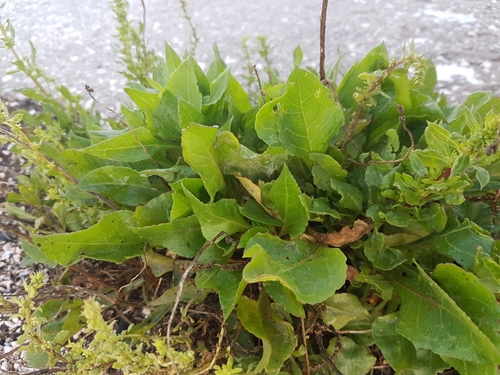
Verbatim
e0“In beet cvs. 'Renova' and 'Opolskyi', the decrease in the dry matter during storage was greater, amounting to 5.6 and 4.5%, respectively.”
Claim · model-written summary
Dry matter declined 4.5% in Opolskyi.
- Taxon
- beetBeta vulgarise0
- Material
- 'Opolskyi'e0
- Outcome
- decrease in the dry matter during storagee0
- Direction
- decreasee0
- Value
- 4.5%e0
Organisms pictured · Representative pictures of the matched species, not figures from the paper.
Verbatim
e0“In beet cvs. 'Renova' and 'Opolskyi', the decrease in the dry matter during storage was greater, amounting to 5.6 and 4.5%, respectively.”
Claim · model-written summary
Karilon cells of the largest reported area had 77.7% evaporation-caused losses.
Verbatim
e0“in cells with the largest area of 140.04·103 μm, the evaporation-caused losses amounted to 77.7% (cv. 'Karilon')”
t0“TABLE BEETROOTS”
Claim · model-written summary
Opolskyi cells of the smallest reported area had 10.5% evaporation-caused losses.
Verbatim
e0“in cells with the smallest area of 62.89·103 μm, this parameter was only 10.5% (cv. 'Opolskyi')”
t0“TABLE BEETROOTS”
Claim · model-written summary
Water evaporation correlated strongly and directly with cell size.
Verbatim
e0“There was a direct strong correlation between water evaporation and cell size (r = 0.791).”
t0“TABLE BEETROOTS”
Claim · model-written summary
Cultivar features had significant curvilinear dependence with beetroot weight loss.
Not reportedDirection
Verbatim
e0“There was a significant second-order curvilinear dependence of beetroot weight loss on cultivars' features (R2 = 0.6041–0.9910).”