Abstract
Drought represents a major environmental threat to global agricultural productivity. Employing plant growth-promoting rhizobacteria (PGPR) offers a promising strategy to enhance plant growth and resilience under drought stress. In this study, the strain G124, isolated from the arid region of Qinghai, was characterized at the molecular level, and its ability to enhance plant drought tolerance was validated through pot experiments. The findings revealed that the strain G124 belongs to Bacillus pacificus, with a 99.93% sequence similarity with B. pacificus EB422 and clustered within the same clade. Further analysis indicated that the strain G124 demonstrated a variety of growth-promoting characteristics, including siderophore production, phosphate solubilization, and the synthesis of indole-3-acetic acid (IAA), among others. Moreover, inoculation with B. pacificus G124 resulted in significant enhancements in plant height, leaf area, chlorophyll content, relative water content, and root development in both Arabidopsis thaliana and Medicago sativa seedlings under drought conditions. Additionally, G124 boosted antioxidant enzyme activities and osmolyte accumulation, while reducing malondialdehyde (MDA) and reactive oxygen species (ROS) levels in M. sativa seedlings exposed to drought. These findings suggest that B. pacificus G124 holds significant promise for enhancing plant drought tolerance and could be effectively utilized in crop management strategies under arid conditions.
Abstract from the paper’s OpenAlex record; open copy licensed cc-by. Read at the source ↗
The text the model read, with the source record’s inline markup (italics, sub- and superscripts) rendered and its character entities decoded; quote offsets refer to the raw text.
Claims 5
Claim · model-written summary
Bacillus pacificus G124 had siderophore production, phosphate solubilization and IAA synthesis traits.
- Taxon
- Arabidopsis thaliana and Medicago sativa
 Arabidopsis thaliana
 Medicago sativae1
- Interactor
- strain G124e0symbiont
- Outcome
- siderophore production, phosphate solubilization, and the synthesis of indole-3-acetic acid (IAA)e0
Organisms pictured · Representative pictures of the matched species, not figures from the paper.


Verbatim
e0“the strain G124 demonstrated a variety of growth-promoting characteristics, including siderophore production, phosphate solubilization, and the synthesis of indole-3-acetic acid (IAA)”
e1“both Arabidopsis thaliana and Medicago sativa seedlings”
Claim · model-written summary
G124 inoculation significantly improved height, leaf area, chlorophyll, water content and root development in drought-stressed Arabidopsis seedlings.
- Taxon
- Arabidopsis thalianaArabidopsis thalianae0
- Treatment
- inoculation with B. pacificus G124e0
- Interactor
- B. pacificus G124
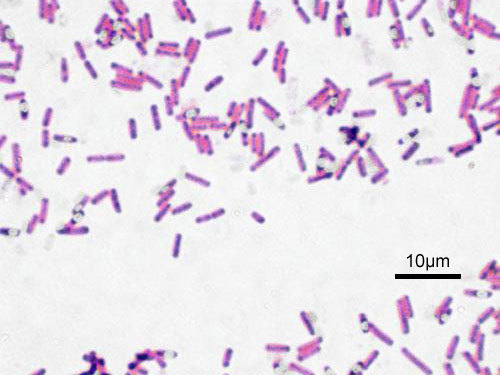
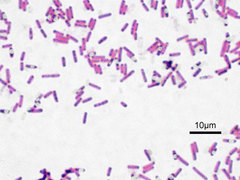 Bacillus pacificuse0symbiont
- Outcome
- plant height, leaf area, chlorophyll contente0
- Direction
- enhancementse0
- Qualifier
- under drought conditionse0
Not reportedComparator
Organisms pictured · Representative pictures of the matched species, not figures from the paper.
Verbatim
e0“inoculation with B. pacificus G124 resulted in significant enhancements in plant height, leaf area, chlorophyll content, relative water content, and root development in both Arabidopsis thaliana and Medicago sativa seedlings under drought conditions”
Claim · model-written summary
G124 inoculation significantly improved height, leaf area, chlorophyll, water content and root development in drought-stressed Medicago seedlings.
- Taxon
- Medicago sativaMedicago sativae0
- Treatment
- inoculation with B. pacificus G124e0
- Interactor
- B. pacificus G124Bacillus pacificuse0symbiont
- Outcome
- plant height, leaf area, chlorophyll contente0
- Direction
- enhancementse0
- Qualifier
- under drought conditionse0
Not reportedComparator
Organisms pictured · Representative pictures of the matched species, not figures from the paper.
Verbatim
e0“inoculation with B. pacificus G124 resulted in significant enhancements in plant height, leaf area, chlorophyll content, relative water content, and root development in both Arabidopsis thaliana and Medicago sativa seedlings under drought conditions”
Claim · model-written summary
G124 reduced MDA and ROS levels in drought-stressed Medicago.
- Taxon
- M. sativaMedicago sativae0
- Treatment
- G124e1
- Interactor
- G124e1symbiont
- Outcome
- malondialdehyde (MDA) and reactive oxygen species (ROS) levelse0
- Direction
- reducinge0
Not reportedComparator
Organisms pictured · Representative pictures of the matched species, not figures from the paper.
Verbatim
e0“reducing malondialdehyde (MDA) and reactive oxygen species (ROS) levels in M. sativa seedlings exposed to drought”
e1“G124 boosted antioxidant enzyme activities”
Claim · model-written summary
The authors propose G124 for crop management in arid conditions.
- Taxon
- plante0
- Interactor
- B. pacificus G124Bacillus pacificuse0symbiont
- Outcome
- crop management strategies under arid conditionse0
Organisms pictured · Representative pictures of the matched species, not figures from the paper.
Verbatim
e0“B. pacificus G124 holds significant promise for enhancing plant drought tolerance and could be effectively utilized in crop management strategies under arid conditions”
The same questions in other papers
inoculation · physiology: pigments · Medicago sativa (alfalfa)Positive and negative results
5 papers in the same direction as this paper · 1 in the opposite direction
- negative
- positive
- positive
3 papers more in this group
See all 7 papers →inoculation · physiology: pigments · Arabidopsis thaliana (thale cress)Positive and negative results
6 papers in the same direction as this paper · 2 in the opposite direction
- negative
- no effect
- positive
5 papers more in this group
See all 9 papers →Claims are grouped by organism, treatment and what was measured or targeted. A paper counts as positive when any of its claims in the group is positive.