Abstract
This study analysed the phenolic compound profile in the leaves of nine Cornus species ( C. alba , C. amomum , C. sericea var. baileyi , C. florida , C. kousa , C. mas , C. officinalis , C. coreana , and C. racemosa ) to evaluate their potential as stable sources of bioactive compounds. The main phenolic acids (gallic, ellagic and chlorogenic acids) and flavonoids were quantified by high-performance liquid chromatography with diode-array detection (HPLC-DAD). Among the phenolic acids, C. mas and C. officinalis contained the highest levels of chlorogenic acid, while C. coreana totally lacked this compound. Notably, the chlorogenic acid concentration in C. mas also exceeded previously reported values for other plant parts. The highest ellagic acid content was found in C. sericea var. baileyi , while the lowest was observed in C. racemosa . C. coreana showed the highest concentration of gallic acid. Flavonoid analysis revealed that quercetin-3- O -galactoside was present in all species studied, with the highest levels in C. racemosa and the lowest in C. florida . Quercetin-3- O -glucoside was abundant in C. kousa but absent in C. mas . Quercetin-3- O -rhamnoside was detected in significant amounts only in C. racemosa and C. amomum . Among the kaempferol derivatives, kaempferol-3- O -glucoside was the most abundant, with the highest concentration in C. coreana . Furthermore, C. racemosa and C. amomum were the richest sources of quercetin, while C. coreana was particularly rich in kaempferol. These results highlight the diverse phenolic profiles of Cornus species and their potential as valuable sources of bioactive compounds.
Abstract from the paper’s OpenAlex record; open copy licensed cc-by. Read at the source ↗
The text the model read, with the source record’s inline markup (italics, sub- and superscripts) rendered and its character entities decoded; quote offsets refer to the raw text.
Claims 19
Claim · model-written summary
C. mas had among the highest chlorogenic acid levels.
- Taxon
- C. mas
 Cornus mase0
- Outcome
- chlorogenic acide0
- Direction
- higheste0
Organisms pictured · Representative pictures of the matched species, not figures from the paper.

Verbatim
e0“C. mas and C. officinalis contained the highest levels of chlorogenic acid”
Claim · model-written summary
C. officinalis had among the highest chlorogenic acid levels.
- Taxon
- C. officinalis
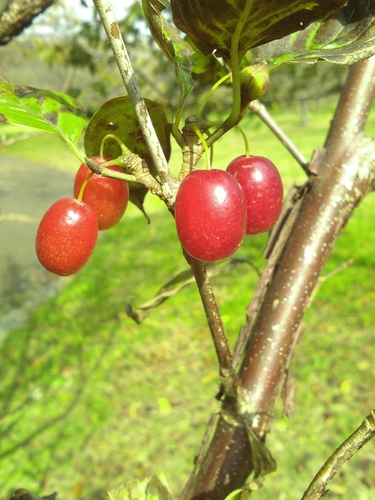
 Cornus officinalise0
- Outcome
- chlorogenic acide0
- Direction
- higheste0
Organisms pictured · Representative pictures of the matched species, not figures from the paper.
Verbatim
e0“C. mas and C. officinalis contained the highest levels of chlorogenic acid”
Claim · model-written summary
C. coreana lacked chlorogenic acid.
Verbatim
e0“C. coreana totally lacked this compound”
Claim · model-written summary
C. mas chlorogenic acid exceeded previously reported levels in other plant parts.
- Taxon
- C. masCornus mase0
- Outcome
- chlorogenic acid concentratione0
- Direction
- exceedede0
- Comparator
- other plant partse0
Organisms pictured · Representative pictures of the matched species, not figures from the paper.
Verbatim
e0“chlorogenic acid concentration in C. mas also exceeded previously reported values for other plant parts”
Claim · model-written summary
C. sericea var. baileyi had the highest ellagic acid content.
- Taxon
- C. sericea var. baileyi
 Cornus sericeae0
- Outcome
- ellagic acid contente0
- Direction
- higheste0
Organisms pictured · Representative pictures of the matched species, not figures from the paper.

Verbatim
e0“highest ellagic acid content was found in C. sericea var. baileyi”
Claim · model-written summary
C. racemosa had the lowest ellagic acid content.
- Taxon
- C. racemosa
 Cornus racemosae0
- Outcome
- loweste0
Organisms pictured · Representative pictures of the matched species, not figures from the paper.

Verbatim
e0“lowest was observed in C. racemosa”
Claim · model-written summary
C. coreana had the highest gallic acid concentration.
Verbatim
e0“C. coreana showed the highest concentration of gallic acid”
Claim · model-written summary
Quercetin-3- O -galactoside was present in every studied Cornus species.
Verbatim
e0“quercetin-3- O -galactoside was present in all species studied”
t0“dogwood species (Cornus L.)”
Claim · model-written summary
C. racemosa had the highest quercetin-3- O -galactoside levels.
- Taxon
- C. racemosaCornus racemosae0
- Outcome
- highest levelse0
- Direction
- higheste0
Organisms pictured · Representative pictures of the matched species, not figures from the paper.
Verbatim
e0“highest levels in C. racemosa”
Claim · model-written summary
C. florida had the lowest quercetin-3- O -galactoside levels.
- Taxon
- C. florida
 Cornus floridae0
- Outcome
- loweste0
- Direction
- loweste0
Organisms pictured · Representative pictures of the matched species, not figures from the paper.

Verbatim
e0“lowest in C. florida”
Claim · model-written summary
Quercetin-3- O -glucoside was abundant in C. kousa.
- Taxon
- C. kousa
 Cornus kousae0
- Outcome
- Quercetin-3- O -glucoside was abundante0
Organisms pictured · Representative pictures of the matched species, not figures from the paper.

Verbatim
e0“Quercetin-3- O -glucoside was abundant in C. kousa”
Claim · model-written summary
Quercetin-3- O -glucoside was absent in C. mas.
- Taxon
- C. masCornus mase0
- Outcome
- absente0
Organisms pictured · Representative pictures of the matched species, not figures from the paper.
Verbatim
e0“Quercetin-3- O -glucoside was abundant in C. kousa but absent in C. mas”
Claim · model-written summary
Quercetin-3- O -rhamnoside occurred in significant amounts in C. racemosa.
- Taxon
- C. racemosaCornus racemosae0
- Outcome
- Quercetin-3- O -rhamnosidee0
- Qualifier
- significant amountse0
Organisms pictured · Representative pictures of the matched species, not figures from the paper.
Verbatim
e0“Quercetin-3- O -rhamnoside was detected in significant amounts only in C. racemosa and C. amomum”
Claim · model-written summary
Quercetin-3- O -rhamnoside occurred in significant amounts in C. amomum.
- Taxon
- C. amomum
 Cornus amomume0
- Outcome
- Quercetin-3- O -rhamnosidee0
- Qualifier
- significant amountse0
Organisms pictured · Representative pictures of the matched species, not figures from the paper.

Verbatim
e0“Quercetin-3- O -rhamnoside was detected in significant amounts only in C. racemosa and C. amomum”
Claim · model-written summary
Kaempferol-3- O -glucoside was the most abundant kaempferol derivative.
Verbatim
e0“kaempferol-3- O -glucoside was the most abundant”
t0“dogwood species (Cornus L.)”
Claim · model-written summary
C. coreana had the highest kaempferol-3- O -glucoside concentration.
Verbatim
e0“highest concentration in C. coreana”
Claim · model-written summary
C. racemosa was among the richest sources of quercetin.
- Taxon
- C. racemosaCornus racemosae0
- Outcome
- quercetine0
- Direction
- richeste0
Organisms pictured · Representative pictures of the matched species, not figures from the paper.
Verbatim
e0“C. racemosa and C. amomum were the richest sources of quercetin”
Claim · model-written summary
C. amomum was among the richest sources of quercetin.
- Taxon
- C. amomumCornus amomume0
- Outcome
- quercetine0
- Direction
- richeste0
Organisms pictured · Representative pictures of the matched species, not figures from the paper.
Verbatim
e0“C. racemosa and C. amomum were the richest sources of quercetin”
Claim · model-written summary
C. coreana was particularly rich in kaempferol.
Verbatim
e0“C. coreana was particularly rich in kaempferol”