Abstract
The latex production in the natural rubber tree (Hevea brasiliensis) is adversely affected by phytopathogens, including Colletotrichum gloeosporioides, the causal agent of Anthracnose, and Pseudocercospora ulei, responsible for South American Rubber Leaf Disease (SALB). SALB, an endemic disease in the Amazon region, is the most significant constraint to H. brasiliensis cultivation, leading to annual losses of 15%–20% and the mortality of susceptible trees. The use of chemical inputs for SALB management is limited due to high costs and adverse environmental impacts. The aim of this study is to present biological control as an alternative strategy for the management of anthracnose and SALB. A screening of 50 bacterial isolates from marine environments was performed against C. gloeosporioides using dual confrontation and plate diffusion techniques. Metabolites produced by the selected bacterial isolates were evaluated for their capacity to inhibit the germination of P. ulei conidia. Isolates demonstrating high inhibitory activity were further assessed under controlled greenhouse conditions in seedlings of the RRIM 600 clone of natural rubber. Treatments with bacterial suspensions and filtrates showed that isolate 72, belonging to the genus Stenotrophomonas sp. and identified through 16S rRNA sequencing, effectively inhibited SALB symptoms compared to the control. This effect may be attributed to priming and a potential induction of systemic acquired resistance (SAR), as evidenced by differential RT-qPCR analysis of genes associated with the jasmonic acid (JA), salicylic acid (SA), and actin pathways.
Abstract from the paper’s OpenAlex record; open copy licensed cc-by. Read at the source ↗
The text the model read, with the source record’s inline markup (italics, sub- and superscripts) rendered and its character entities decoded; quote offsets refer to the raw text.
Claims 2
Claim · model-written summary
Stenotrophomonas isolate 72 suspensions and filtrates inhibited SALB symptoms versus control.
- Taxon
- Hevea brasiliensis
 Hevea brasiliensist0
- Material
- RRIM 600e1
- Treatment
- Treatments with bacterial suspensions and filtratese0
- Interactor
- Pseudocercospora uleiPseudocercospora uleit1pathogen
- Second interactor
- Stenotrophomonas sp.
 Stenotrophomonase0biocontrol_agent
- Outcome
- SALB symptomse0
- Direction
- inhibitede0
- Comparator
- the controle0
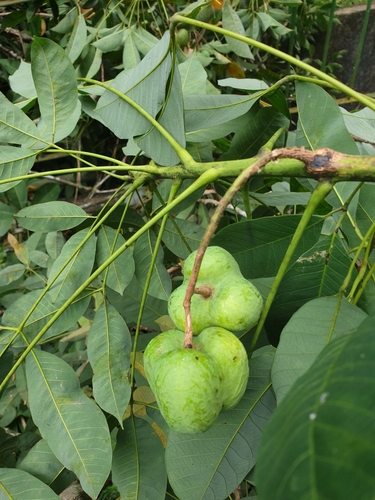
Organisms pictured · Representative pictures of the matched species, not figures from the paper.

Verbatim
e0“Treatments with bacterial suspensions and filtrates showed that isolate 72, belonging to the genus Stenotrophomonas sp. and identified through 16S rRNA sequencing, effectively inhibited SALB symptoms compared to the control.”
t0“Hevea brasiliensis”
t1“Pseudocercospora ulei and Colletotrichum gloeosporioides infecting Hevea brasiliensis”
e1“seedlings of the RRIM 600 clone of natural rubber”
Claim · model-written summary
The authors propose priming and systemic acquired resistance as possible explanations for SALB suppression.
- Taxon
- Hevea brasiliensisHevea brasiliensist0
- Outcome
- This effecte0
- Qualifier
- priming and a potential induction of systemic acquired resistance (SAR)e0
Organisms pictured · Representative pictures of the matched species, not figures from the paper.
Verbatim
e0“This effect may be attributed to priming and a potential induction of systemic acquired resistance (SAR), as evidenced by differential RT-qPCR analysis of genes associated with the jasmonic acid (JA), salicylic acid (SA), and actin pathways.”
t0“Hevea brasiliensis”