Abstract
Senescence constitutes the final stage of a plant organ and tissue development and is a subject to gene control and strict regulation. By the late growing season, when Alhagi sparsifolia entered the natural senescence period, a girdling treatment was carried out on the phloem to increase the sugar content in leaves and to investigate carbohydrate-induced leaf senescence. After the semi-girdling and full-girdling treatment, organic matter could not leave leaves due to the destruction of sieve tubes. This led to constantly increasing sugar contents in leaves. Girdling was shown to greatly accelerate the senescence of plants. In girdled leaves, chlorophyll (Chl) a, Chl b, carotenoids (Car), and both ratios of Chl a/b and Chl/Car were significantly reduced. On the donor side of PSII, the oxygen-evolving complex was inhibited under high concentrations of carbohydrates, which was manifested as the emergence of the K phase in fluorescence kinetic curves. On the acceptor side of PSII, the high carbohydrate content also led to the disruption of electron transport and reduced light-use efficiency, which was manifested as a reduction in numerous fluorescence parameters. We believe that the emergence and development of plant senescence was not necessarily induced by the high content of carbohydrates, because even a decrease in the carbohydrate concentration could not stop the senescence process. Although the high content of carbohydrates in plants could induce plant senescence, this kind of senescence was likely a pathological process, including degradations of physiological functions.
Abstract from the paper’s OpenAlex record, shown for indexing and research. Copyright remains with the authors or the publisher. Read at the source ↗
The text the model read, with the source record’s inline markup (italics, sub- and superscripts) rendered and its character entities decoded; quote offsets refer to the raw text.
Claims 11
Claim · model-written summary
Girdling greatly accelerated senescence of Alhagi sparsifolia.
- Taxon
- Alhagi sparsifolia
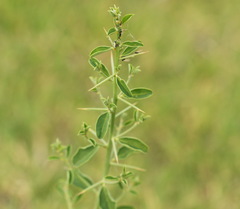 Alhagi sparsifoliat0
- Treatment
- Girdlinge1
- Outcome
- senescencee1
- Direction
- acceleratee1
Not reportedComparator
Organisms pictured · Representative pictures of the matched species, not figures from the paper.
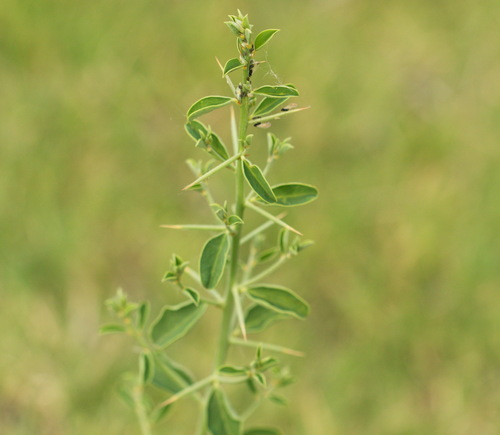
Verbatim
t0“Alhagi sparsifolia”
e1“Girdling was shown to greatly accelerate the senescence of plants”
Claim · model-written summary
Semi-girdling and full-girdling led to constantly increasing sugar contents in leaves of Alhagi sparsifolia.
- Taxon
- Alhagi sparsifoliaAlhagi sparsifoliat0
- Organ / stage
- leavese3
- Treatment
- semi-girdling and full-girdling treatmente2
- Outcome
- sugar contents in leavese3
- Direction
- increasinge3
Not reportedComparator
Organisms pictured · Representative pictures of the matched species, not figures from the paper.
Verbatim
t0“Alhagi sparsifolia”
e2“After the semi-girdling and full-girdling treatment, organic matter could not leave leaves due to the destruction of sieve tubes”
e3“This led to constantly increasing sugar contents in leaves”
Claim · model-written summary
In girdled leaves, chlorophyll a, chlorophyll b and carotenoids were significantly reduced.
- Taxon
- Alhagi sparsifoliaAlhagi sparsifoliat0
- Organ / stage
- leavese4
- Treatment
- girdlede4
- Outcome
- chlorophyll (Chl) a, Chl b, carotenoids (Car)e4
- Direction
- reducede4
Not reportedComparator
Organisms pictured · Representative pictures of the matched species, not figures from the paper.
Verbatim
t0“Alhagi sparsifolia”
e4“In girdled leaves, chlorophyll (Chl) a, Chl b, carotenoids (Car), and both ratios of Chl a/b and Chl/Car were significantly reduced”
Claim · model-written summary
In girdled leaves, both chlorophyll a/b and chlorophyll/carotenoid ratios were significantly reduced.
- Taxon
- Alhagi sparsifoliaAlhagi sparsifoliat0
- Organ / stage
- leavese4
- Treatment
- girdlede4
- Outcome
- both ratios of Chl a/b and Chl/Care4
- Direction
- reducede4
Not reportedComparator
Organisms pictured · Representative pictures of the matched species, not figures from the paper.
Verbatim
t0“Alhagi sparsifolia”
e4“In girdled leaves, chlorophyll (Chl) a, Chl b, carotenoids (Car), and both ratios of Chl a/b and Chl/Car were significantly reduced”
Claim · model-written summary
High carbohydrate concentrations inhibited the oxygen-evolving complex on the donor side of PSII in Alhagi sparsifolia, shown as a K phase in fluorescence kinetic curves.
- Taxon
- Alhagi sparsifoliaAlhagi sparsifoliat0
- Treatment
- high concentrations of carbohydratese5
- Outcome
- oxygen-evolving complexe5
- Direction
- inhibitede5
- Qualifier
- manifested as the emergence of the K phase in fluorescence kinetic curvese5
Not reportedComparator
Organisms pictured · Representative pictures of the matched species, not figures from the paper.
Verbatim
t0“Alhagi sparsifolia”
e5“On the donor side of PSII, the oxygen-evolving complex was inhibited under high concentrations of carbohydrates, which was manifested as the emergence of the K phase in fluorescence kinetic curves”
Claim · model-written summary
High carbohydrate content disrupted electron transport on the acceptor side of PSII in Alhagi sparsifolia.
- Taxon
- Alhagi sparsifoliaAlhagi sparsifoliat0
- Treatment
- high carbohydrate contente6
- Outcome
- electron transporte6
Not reportedComparatorDirection
Organisms pictured · Representative pictures of the matched species, not figures from the paper.
Verbatim
t0“Alhagi sparsifolia”
e6“On the acceptor side of PSII, the high carbohydrate content also led to the disruption of electron transport and reduced light-use efficiency, which was manifested as a reduction in numerous fluorescence parameters”
Claim · model-written summary
High carbohydrate content reduced light-use efficiency in Alhagi sparsifolia.
- Taxon
- Alhagi sparsifoliaAlhagi sparsifoliat0
- Treatment
- high carbohydrate contente6
- Outcome
- light-use efficiencye6
- Direction
- reducede6
Not reportedComparator
Organisms pictured · Representative pictures of the matched species, not figures from the paper.
Verbatim
t0“Alhagi sparsifolia”
e6“On the acceptor side of PSII, the high carbohydrate content also led to the disruption of electron transport and reduced light-use efficiency, which was manifested as a reduction in numerous fluorescence parameters”
Claim · model-written summary
High carbohydrate content reduced numerous fluorescence parameters in Alhagi sparsifolia.
- Taxon
- Alhagi sparsifoliaAlhagi sparsifoliat0
- Treatment
- high carbohydrate contente6
- Outcome
- numerous fluorescence parameterse6
- Direction
- reductione6
Not reportedComparator
Organisms pictured · Representative pictures of the matched species, not figures from the paper.
Verbatim
t0“Alhagi sparsifolia”
e6“On the acceptor side of PSII, the high carbohydrate content also led to the disruption of electron transport and reduced light-use efficiency, which was manifested as a reduction in numerous fluorescence parameters”
Claim · model-written summary
Organic matter could not leave the leaves of Alhagi sparsifolia after girdling, which the authors attribute to destruction of sieve tubes.
- Taxon
- Alhagi sparsifoliaAlhagi sparsifoliat0
- Treatment
- semi-girdling and full-girdling treatmente2
- Outcome
- organic matter could not leave leavese2
- Qualifier
- due to the destruction of sieve tubese2
Organisms pictured · Representative pictures of the matched species, not figures from the paper.
Verbatim
t0“Alhagi sparsifolia”
e2“After the semi-girdling and full-girdling treatment, organic matter could not leave leaves due to the destruction of sieve tubes”
Claim · model-written summary
Senescence was not necessarily induced by high carbohydrate content in Alhagi sparsifolia, because a decrease in carbohydrate concentration did not stop senescence.
- Taxon
- Alhagi sparsifoliaAlhagi sparsifoliat0
- Treatment
- high content of carbohydratese1
- Outcome
- emergence and development of plant senescencee1
- Qualifier
- even a decrease in the carbohydrate concentration could not stop the senescence processe1
Organisms pictured · Representative pictures of the matched species, not figures from the paper.
Verbatim
t0“Alhagi sparsifolia”
e1“We believe that the emergence and development of plant senescence was not necessarily induced by the high content of carbohydrates, because even a decrease in the carbohydrate concentration could not stop the senescence process”
Claim · model-written summary
High carbohydrate content could induce senescence in Alhagi sparsifolia, which was likely a pathological process.
- Taxon
- Alhagi sparsifoliaAlhagi sparsifoliat0
- Treatment
- the high content of carbohydrates in plantse2
- Outcome
- this kind of senescencee2
- Qualifier
- likely a pathological process, including degradations of physiological functionse2
Organisms pictured · Representative pictures of the matched species, not figures from the paper.
Verbatim
t0“Alhagi sparsifolia”
e2“Although the high content of carbohydrates in plants could induce plant senescence, this kind of senescence was likely a pathological process, including degradations of physiological functions”
The same questions in other papers
pruning · physiology: pigments · Alhagi sparsifoliaResults agree
1 paper in the same direction as this paper
- negative
pruning · quality: postharvest · Alhagi sparsifoliaResults agree
1 paper in the same direction as this paper
- negative
Claims are grouped by organism, treatment and what was measured or targeted. A paper counts as positive when any of its claims in the group is positive.