Abstract
Abstract High Andean grasslands are vulnerable to changes in their nutritional quality and carbon sequestration capacity, especially in grazing systems. This study evaluated soil quality and native grasses by measuring carbon, physicochemical parameters, and the nutritional quality of predominant species in the wet Puna of Junín, Peru. Significant differences were found in carbon storage and nutritional quality across different grazing grassland sites. Soil carbon levels were consistently high across all sites, with significant concentrations at San Pedro de Cajas (14.26% ± 11.7%; p < 0.05), and its carbon stock (210.7 ± 111.3 Mg/ha) exceeded that of Junín (+68%) and Ulcumayo (+107%). Also, the flat topography at this site is presumed to have influenced its soil fertility. No adverse relationship was observed between carbon content and animal units, regardless of continuous or rotational grazing system, and a strong negative Pearson correlation ( r = −0.84) between total carbon and bulk density indicated the prevalence of organic materials and no soil compaction. It emphasizes how landscape features affect soil quality and ecosystem processes. The protein content of key species exhibited a strong Pearson correlation with plant phosphorus ( r = 0.93), digestible organic matter (DOM), and metabolizable energy (ME; r = 0.75). The Redundandy Analysis (RDA) showed that plant functional traits are driven by chemical and physical gradients, underscoring the combined effects of nutrient availability and site constraints on pasture productivity and forage quality. Among native grasses, Cebadilla ( Calamagrostis vicunarum [Wedd.] Pilg.) emerged as the most favorable option for animal nutrition and exhibited a significantly higher crude protein content (8.23% ± 0.89%), Metabolizable energy value (8.16 MJ/kg), and C/N ratio (~40). Future research should focus on linking soil and forage quality with animal physiological responses to improve understanding of grazing impacts and guide sustainable management in high‐altitude grasslands.
Abstract from the paper’s OpenAlex record; open copy licensed cc-by-nc-nd. Read at the source ↗
The text the model read, with the source record’s inline markup (italics, sub- and superscripts) rendered and its character entities decoded; quote offsets refer to the raw text.
Claims 15
Claim · model-written summary
Carbon storage and nutritional quality differed significantly across grazing grassland sites.
Verbatim
t0“native high Andean grassland”
e0“Significant differences were found in carbon storage and nutritional quality across different grazing grassland sites”
Claim · model-written summary
Soil carbon was significantly high at San Pedro de Cajas (14.26% ± 11.7%; p < 0.05).
Verbatim
t0“native high Andean grassland”
e1“Soil carbon levels were consistently high across all sites, with significant concentrations at San Pedro de Cajas (14.26% ± 11.7%; p < 0.05)”
Claim · model-written summary
Carbon stock at San Pedro de Cajas (210.7 ± 111.3 Mg/ha) exceeded that of Junín by 68%.
Verbatim
t0“native high Andean grassland”
e2“its carbon stock (210.7 ± 111.3 Mg/ha) exceeded that of Junín (+68%) and Ulcumayo (+107%)”
Claim · model-written summary
Carbon stock at San Pedro de Cajas (210.7 ± 111.3 Mg/ha) exceeded that of Ulcumayo by 107%.
Verbatim
t0“native high Andean grassland”
e2“its carbon stock (210.7 ± 111.3 Mg/ha) exceeded that of Junín (+68%) and Ulcumayo (+107%)”
Claim · model-written summary
The flat topography at San Pedro de Cajas is presumed to have influenced its soil fertility.
Verbatim
t0“native high Andean grassland”
e3“the flat topography at this site is presumed to have influenced its soil fertility”
Claim · model-written summary
No adverse relationship was observed between carbon content and animal units, under either continuous or rotational grazing.
Verbatim
t0“native high Andean grassland”
e4“No adverse relationship was observed between carbon content and animal units, regardless of continuous or rotational grazing system”
Claim · model-written summary
Total carbon was strongly negatively correlated with bulk density (r = −0.84).
Verbatim
t0“native high Andean grassland”
e5“a strong negative Pearson correlation ( r = −0.84) between total carbon and bulk density”
Claim · model-written summary
Protein content of key species was strongly correlated with plant phosphorus (r = 0.93).
Not reportedDirection
Verbatim
e6“The protein content of key species exhibited a strong Pearson correlation with plant phosphorus ( r = 0.93)”
Claim · model-written summary
Protein content of key species was strongly correlated with metabolizable energy (r = 0.75).
Not reportedDirection
Verbatim
e6“The protein content of key species exhibited a strong Pearson correlation with plant phosphorus ( r = 0.93)”
e7“metabolizable energy (ME; r = 0.75)”
Claim · model-written summary
Protein content of key species was strongly correlated with digestible organic matter.
Not reportedDirection
Verbatim
e1“The protein content of key species exhibited a strong Pearson correlation with plant phosphorus”
e0“digestible organic matter (DOM)”
Claim · model-written summary
Redundancy analysis showed that plant functional traits are driven by chemical and physical gradients.
- Taxon
- native high Andean grasslandt0
- Treatment
- chemical and physical gradientse0
- Outcome
- plant functional traitse0
Not reportedDirection
Verbatim
t0“native high Andean grassland”
e0“The Redundandy Analysis (RDA) showed that plant functional traits are driven by chemical and physical gradients”
Claim · model-written summary
Cebadilla (Calamagrostis vicunarum) emerged as the most favorable native grass option for animal nutrition.
- Taxon
- Calamagrostis vicunarum
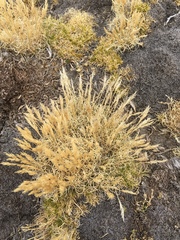 Cinnagrostis vicunarume0
- Outcome
- most favorable option for animal nutritione0
- Comparator
- native grassese1
Organisms pictured · Representative pictures of the matched species, not figures from the paper.
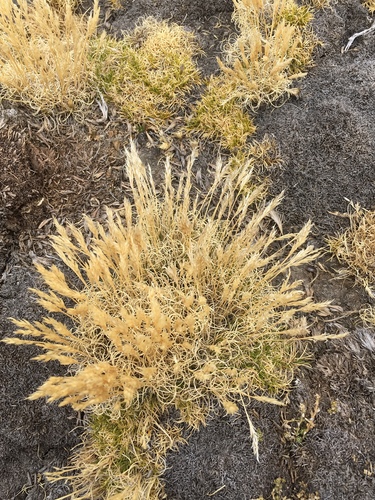
Verbatim
e0“Cebadilla ( Calamagrostis vicunarum [Wedd.] Pilg.) emerged as the most favorable option for animal nutrition”
e1“Among native grasses”
Claim · model-written summary
Cebadilla had a significantly higher crude protein content (8.23% ± 0.89%) than the other native grasses.
- Taxon
- Calamagrostis vicunarumCinnagrostis vicunarume0
- Outcome
- crude protein contente2
- Direction
- highere2
- Value
- 8.23% ± 0.89%e2
- Comparator
- native grassese1
Organisms pictured · Representative pictures of the matched species, not figures from the paper.
Verbatim
e0“Cebadilla ( Calamagrostis vicunarum [Wedd.] Pilg.) emerged as the most favorable option for animal nutrition”
e1“Among native grasses”
e2“significantly higher crude protein content (8.23% ± 0.89%)”
Claim · model-written summary
Cebadilla had a significantly higher metabolizable energy value (8.16 MJ/kg) than the other native grasses.
- Taxon
- Calamagrostis vicunarumCinnagrostis vicunarume0
- Outcome
- Metabolizable energy valuee3
- Direction
- highere2
- Value
- 8.16 MJ/kge3
- Comparator
- native grassese1
Organisms pictured · Representative pictures of the matched species, not figures from the paper.
Verbatim
e0“Cebadilla ( Calamagrostis vicunarum [Wedd.] Pilg.) emerged as the most favorable option for animal nutrition”
e1“Among native grasses”
e2“significantly higher crude protein content (8.23% ± 0.89%)”
e3“Metabolizable energy value (8.16 MJ/kg)”
Claim · model-written summary
Cebadilla had a significantly higher C/N ratio (~40) than the other native grasses.
- Taxon
- Calamagrostis vicunarumCinnagrostis vicunarume0
- Outcome
- C/N ratioe4
- Direction
- highere2
- Value
- ~40e4
- Comparator
- native grassese1
Organisms pictured · Representative pictures of the matched species, not figures from the paper.
Verbatim
e0“Cebadilla ( Calamagrostis vicunarum [Wedd.] Pilg.) emerged as the most favorable option for animal nutrition”
e1“Among native grasses”
e2“significantly higher crude protein content (8.23% ± 0.89%)”
e4“C/N ratio (~40)”