Abstract
To reveal the mechanism underlying the effects of dominant spoilage fungi on wheat quality during storage and provide a theoretical basis for targeted microbial control in wheat storage, this study characterized the structural features of fungal communities on the surface of stored wheat and at different depths of the grain bulk via high-throughput sequencing. Additionally, screening was performed for stably existing dominant spoilage fungi in a wheat storage environment. Subsequently, four isolated dominant spoilage fungal strains, Fusarium lateritium, Aspergillus niger, Penicillium citrinum and Talaromyces islandicus, were back-inoculated onto wheat kernels sterilized by 60Co gamma irradiation. Simulated storage trials were conducted at 28 °C and 80% relative humidity to investigate their impacts on wheat quality. The results show that F. lateritium and A. niger exhibited faster growth rates and were able to colonize the entire surface of wheat kernels within 8 days. After infection by these two fungi, wheat superoxide dismutase (SOD) activity decreased by 33.83 U/g and 21.90 U/g, peroxidase (POD) activity decreased by 1408 U/(g·min) and 745 U/(g·min), and electrical conductivity (EC) increased by 11.17 μS/(cm·g) and 7.74 μS/(cm·g), respectively. After 10 days of storage, A. niger significantly reduced the water absorption of wheat gluten to 175.91% and elevated the fatty acid value to 74.20 mg/100g, rendering the wheat unsuitable for storage. P. citrinum exerted the most significant effect on the solvent retention capacity (SRC) of wheat flour in water, sucrose, sodium carbonate, and lactic acid solutions. This study clarified the screening criteria for dominant spoilage fungi in stored wheat, as well as the threshold values and differential characteristics of the impacts of different dominant spoilage fungi on wheat quality, providing critical theoretical support for targeted microbial control during wheat storage.
Abstract from the paper’s OpenAlex record; open copy licensed cc-by. Read at the source ↗
The text the model read, with the source record’s inline markup (italics, sub- and superscripts) rendered and its character entities decoded; quote offsets refer to the raw text.
Claims 12
Claim · model-written summary
Fusarium lateritium grew faster on wheat kernels and colonized the whole kernel surface within 8 days.
- Taxon
- wheat
 Triticum aestivume1
- Interactor
- F. lateritium
 Fusarium lateritiume1pathogen
- Outcome
- growth ratese1
- Qualifier
- colonize the entire surface of wheat kernels within 8 dayse1
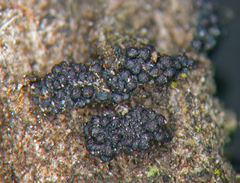
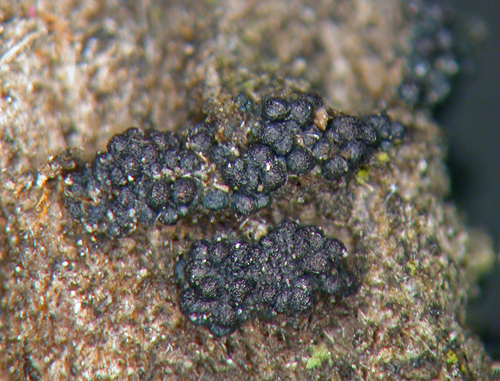
Organisms pictured · Representative pictures of the matched species, not figures from the paper.

Verbatim
e0“four isolated dominant spoilage fungal strains, Fusarium lateritium, Aspergillus niger, Penicillium citrinum and Talaromyces islandicus, were back-inoculated onto wheat kernels sterilized by 60Co gamma irradiation”
e1“The results show that F. lateritium and A. niger exhibited faster growth rates and were able to colonize the entire surface of wheat kernels within 8 days”
Claim · model-written summary
Fusarium lateritium infection decreased wheat superoxide dismutase activity by 33.83 U/g.
- Taxon
- wheatTriticum aestivume1
- Treatment
- back-inoculated onto wheat kernelse0
- Interactor
- F. lateritiumFusarium lateritiume1pathogen
- Outcome
- wheat superoxide dismutase (SOD) activitye2
- Direction
- decreasede2
- Value
- 33.83 U/ge2
Not reportedComparator
Organisms pictured · Representative pictures of the matched species, not figures from the paper.
Verbatim
e0“four isolated dominant spoilage fungal strains, Fusarium lateritium, Aspergillus niger, Penicillium citrinum and Talaromyces islandicus, were back-inoculated onto wheat kernels sterilized by 60Co gamma irradiation”
e1“The results show that F. lateritium and A. niger exhibited faster growth rates and were able to colonize the entire surface of wheat kernels within 8 days”
e2“After infection by these two fungi, wheat superoxide dismutase (SOD) activity decreased by 33.83 U/g and 21.90 U/g”
Claim · model-written summary
Fusarium lateritium infection decreased wheat peroxidase activity by 1408 U/(g·min).
- Taxon
- wheatTriticum aestivume1
- Treatment
- back-inoculated onto wheat kernelse0
- Interactor
- F. lateritiumFusarium lateritiume1pathogen
- Outcome
- peroxidase (POD) activitye3
- Direction
- decreasede3
- Value
- 1408 U/(g·min)e3
Not reportedComparator
Organisms pictured · Representative pictures of the matched species, not figures from the paper.
Verbatim
e0“four isolated dominant spoilage fungal strains, Fusarium lateritium, Aspergillus niger, Penicillium citrinum and Talaromyces islandicus, were back-inoculated onto wheat kernels sterilized by 60Co gamma irradiation”
e1“The results show that F. lateritium and A. niger exhibited faster growth rates and were able to colonize the entire surface of wheat kernels within 8 days”
e3“peroxidase (POD) activity decreased by 1408 U/(g·min) and 745 U/(g·min)”
Claim · model-written summary
Fusarium lateritium infection increased wheat electrical conductivity by 11.17 μS/(cm·g).
- Taxon
- wheatTriticum aestivume1
- Treatment
- back-inoculated onto wheat kernelse0
- Interactor
- F. lateritiumFusarium lateritiume1pathogen
- Outcome
- electrical conductivity (EC)e4
- Direction
- increasede4
- Value
- 11.17 μS/(cm·g)e4
Not reportedComparator
Organisms pictured · Representative pictures of the matched species, not figures from the paper.
Verbatim
e0“four isolated dominant spoilage fungal strains, Fusarium lateritium, Aspergillus niger, Penicillium citrinum and Talaromyces islandicus, were back-inoculated onto wheat kernels sterilized by 60Co gamma irradiation”
e1“The results show that F. lateritium and A. niger exhibited faster growth rates and were able to colonize the entire surface of wheat kernels within 8 days”
e4“electrical conductivity (EC) increased by 11.17 μS/(cm·g) and 7.74 μS/(cm·g)”
Claim · model-written summary
Aspergillus niger grew faster on wheat kernels and colonized the whole kernel surface within 8 days.
- Taxon
- wheatTriticum aestivume1
- Interactor
- A. niger
 Aspergillus nigere1pathogen
- Outcome
- growth ratese1
- Qualifier
- colonize the entire surface of wheat kernels within 8 dayse1
Organisms pictured · Representative pictures of the matched species, not figures from the paper.

Verbatim
e0“four isolated dominant spoilage fungal strains, Fusarium lateritium, Aspergillus niger, Penicillium citrinum and Talaromyces islandicus, were back-inoculated onto wheat kernels sterilized by 60Co gamma irradiation”
e1“The results show that F. lateritium and A. niger exhibited faster growth rates and were able to colonize the entire surface of wheat kernels within 8 days”
Claim · model-written summary
Aspergillus niger infection decreased wheat superoxide dismutase activity by 21.90 U/g.
- Taxon
- wheatTriticum aestivume1
- Treatment
- back-inoculated onto wheat kernelse0
- Interactor
- A. nigerAspergillus nigere1pathogen
- Outcome
- wheat superoxide dismutase (SOD) activitye2
- Direction
- decreasede2
- Value
- 21.90 U/ge2
Not reportedComparator
Organisms pictured · Representative pictures of the matched species, not figures from the paper.
Verbatim
e0“four isolated dominant spoilage fungal strains, Fusarium lateritium, Aspergillus niger, Penicillium citrinum and Talaromyces islandicus, were back-inoculated onto wheat kernels sterilized by 60Co gamma irradiation”
e1“The results show that F. lateritium and A. niger exhibited faster growth rates and were able to colonize the entire surface of wheat kernels within 8 days”
e2“After infection by these two fungi, wheat superoxide dismutase (SOD) activity decreased by 33.83 U/g and 21.90 U/g”
Claim · model-written summary
Aspergillus niger infection decreased wheat peroxidase activity by 745 U/(g·min).
- Taxon
- wheatTriticum aestivume1
- Treatment
- back-inoculated onto wheat kernelse0
- Interactor
- A. nigerAspergillus nigere1pathogen
- Outcome
- peroxidase (POD) activitye3
- Direction
- decreasede3
- Value
- 745 U/(g·min)e3
Not reportedComparator
Organisms pictured · Representative pictures of the matched species, not figures from the paper.
Verbatim
e0“four isolated dominant spoilage fungal strains, Fusarium lateritium, Aspergillus niger, Penicillium citrinum and Talaromyces islandicus, were back-inoculated onto wheat kernels sterilized by 60Co gamma irradiation”
e1“The results show that F. lateritium and A. niger exhibited faster growth rates and were able to colonize the entire surface of wheat kernels within 8 days”
e3“peroxidase (POD) activity decreased by 1408 U/(g·min) and 745 U/(g·min)”
Claim · model-written summary
Aspergillus niger infection increased wheat electrical conductivity by 7.74 μS/(cm·g).
- Taxon
- wheatTriticum aestivume1
- Treatment
- back-inoculated onto wheat kernelse0
- Interactor
- A. nigerAspergillus nigere1pathogen
- Outcome
- electrical conductivity (EC)e4
- Direction
- increasede4
- Value
- 7.74 μS/(cm·g)e4
Not reportedComparator
Organisms pictured · Representative pictures of the matched species, not figures from the paper.
Verbatim
e0“four isolated dominant spoilage fungal strains, Fusarium lateritium, Aspergillus niger, Penicillium citrinum and Talaromyces islandicus, were back-inoculated onto wheat kernels sterilized by 60Co gamma irradiation”
e1“The results show that F. lateritium and A. niger exhibited faster growth rates and were able to colonize the entire surface of wheat kernels within 8 days”
e4“electrical conductivity (EC) increased by 11.17 μS/(cm·g) and 7.74 μS/(cm·g)”
Claim · model-written summary
After 10 days, Aspergillus niger reduced water absorption of wheat gluten to 175.91%.
- Taxon
- wheatTriticum aestivume5
- Interactor
- A. nigerAspergillus nigere5pathogen
- Outcome
- water absorption of wheat glutene5
- Direction
- reducede5
- Value
- 175.91%e5
- Qualifier
- After 10 days of storagee5
Organisms pictured · Representative pictures of the matched species, not figures from the paper.
Verbatim
e0“four isolated dominant spoilage fungal strains, Fusarium lateritium, Aspergillus niger, Penicillium citrinum and Talaromyces islandicus, were back-inoculated onto wheat kernels sterilized by 60Co gamma irradiation”
e5“After 10 days of storage, A. niger significantly reduced the water absorption of wheat gluten to 175.91% and elevated the fatty acid value to 74.20 mg/100g, rendering the wheat unsuitable for storage”
Claim · model-written summary
After 10 days, Aspergillus niger elevated the fatty acid value of wheat to 74.20 mg/100g.
- Taxon
- wheatTriticum aestivume5
- Interactor
- A. nigerAspergillus nigere5pathogen
- Outcome
- fatty acid valuee5
- Direction
- elevatede5
- Value
- 74.20 mg/100ge5
Organisms pictured · Representative pictures of the matched species, not figures from the paper.
Verbatim
e0“four isolated dominant spoilage fungal strains, Fusarium lateritium, Aspergillus niger, Penicillium citrinum and Talaromyces islandicus, were back-inoculated onto wheat kernels sterilized by 60Co gamma irradiation”
e5“After 10 days of storage, A. niger significantly reduced the water absorption of wheat gluten to 175.91% and elevated the fatty acid value to 74.20 mg/100g, rendering the wheat unsuitable for storage”
Claim · model-written summary
Aspergillus niger infection rendered stored wheat unsuitable for storage.
- Taxon
- wheatTriticum aestivume5
- Interactor
- A. nigerAspergillus nigere5pathogen
- Outcome
- wheat unsuitable for storagee5
Organisms pictured · Representative pictures of the matched species, not figures from the paper.
Verbatim
e0“four isolated dominant spoilage fungal strains, Fusarium lateritium, Aspergillus niger, Penicillium citrinum and Talaromyces islandicus, were back-inoculated onto wheat kernels sterilized by 60Co gamma irradiation”
e5“After 10 days of storage, A. niger significantly reduced the water absorption of wheat gluten to 175.91% and elevated the fatty acid value to 74.20 mg/100g, rendering the wheat unsuitable for storage”
Claim · model-written summary
Penicillium citrinum had the most significant effect on solvent retention capacity of wheat flour.
- Taxon
- wheatTriticum aestivume6
- Interactor
- P. citrinumPenicillium citrinume6pathogen
- Outcome
- solvent retention capacity (SRC) of wheat floure6
- Qualifier
- in water, sucrose, sodium carbonate, and lactic acid solutionse6
Not reportedDirection
Organisms pictured · Representative pictures of the matched species, not figures from the paper.
Verbatim
e0“four isolated dominant spoilage fungal strains, Fusarium lateritium, Aspergillus niger, Penicillium citrinum and Talaromyces islandicus, were back-inoculated onto wheat kernels sterilized by 60Co gamma irradiation”
e6“P. citrinum exerted the most significant effect on the solvent retention capacity (SRC) of wheat flour in water, sucrose, sodium carbonate, and lactic acid solutions”