Abstract
This study documented the diversity, nutritional composition, community-based prioritisation, and agroecological adaptation of wild edible vegetable species (WEVs) in Aceh, Indonesia, to identify candidate taxa for targeted integration into low-input farming systems consistent with the principles of biological husbandry. Field surveys in three regencies employed stratified purposive sampling and participatory interviews with 120 respondents to evaluate species against seven selection criteria, after which the ten highest-ranked taxa were analysed for proximate and mineral composition and assessed for tolerance to drought, flooding and shade. A total of 31 WEVs were recorded across lowland and riparian habitats, with Diplazium esculentum (32.8), Ipomoea aquatica (31.9), Psophocarpus tetragonolobus (31.3) and Centella asiatica (31.3) emerging as top priorities. Protein content ranged from 2.78% to 3.82% FW, calcium from 80 to 340 mg 100 g−1 DW and iron from 270 to 437 mg kg−1 DW, while potassium was the most abundant macro-mineral (4800–6200 mg 100 g−1 DW), with the highest concentrations in Psophocarpus tetragonolobus and Ipomoea aquatica. Cluster analysis grouped species into dryland gardens, wetland margins and shaded agroforestry systems. These underutilised vegetables may contribute to diversified diets, climate-resilient production and multifunctional landscapes when integrated into low-input farming systems, subject to validation through on-farm trials. The findings aligned with the UN Sustainable Development Goals 2, 13 and 15, highlighting ecologically grounded pathways to strengthen biological agriculture in tropical smallholder contexts.
Abstract from the paper’s OpenAlex record, shown for indexing and research. Copyright remains with the authors or the publisher. Read at the source ↗
The text the model read, with the source record’s inline markup (italics, sub- and superscripts) rendered and its character entities decoded; quote offsets refer to the raw text.
Claims 12
Claim · model-written summary
Surveys recorded 31 wild edible vegetable species in lowland and riparian habitats.
Verbatim
e0“A total of 31 WEVs were recorded across lowland and riparian habitats”
t0“wild edible vegetables”
Claim · model-written summary
Diplazium esculentum was the highest ranked priority at 32.8.
- Taxon
- Diplazium esculentum
 Diplazium esculentume0
- Outcome
- Diplazium esculentume0
- Value
- 32.8e0
Organisms pictured · Representative pictures of the matched species, not figures from the paper.

Verbatim
e0“Diplazium esculentum (32.8)”
Claim · model-written summary
Ipomoea aquatica ranked at 31.9.
- Taxon
- Ipomoea aquatica
 Ipomoea aquaticae0
- Outcome
- Ipomoea aquaticae0
- Value
- 31.9e0
Organisms pictured · Representative pictures of the matched species, not figures from the paper.

Verbatim
e0“Ipomoea aquatica (31.9)”
Claim · model-written summary
Psophocarpus tetragonolobus ranked at 31.3.
- Taxon
- Psophocarpus tetragonolobus
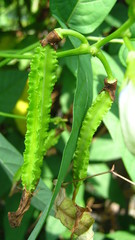 Psophocarpus tetragonolobuse0
- Outcome
- Psophocarpus tetragonolobuse0
- Value
- 31.3e0
Organisms pictured · Representative pictures of the matched species, not figures from the paper.
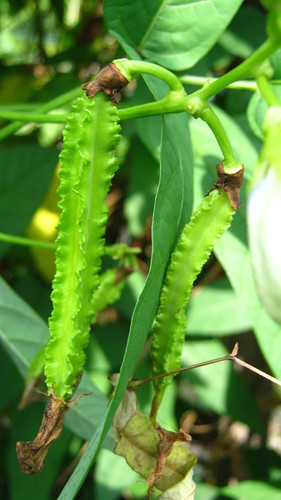
Verbatim
e0“Psophocarpus tetragonolobus (31.3)”
Claim · model-written summary
Centella asiatica ranked at 31.3.
- Taxon
- Centella asiatica
 Centella asiaticae0
- Outcome
- Centella asiaticae0
- Value
- 31.3e0
Organisms pictured · Representative pictures of the matched species, not figures from the paper.

Verbatim
e0“Centella asiatica (31.3)”
Claim · model-written summary
Protein content ranged from 2.78% to 3.82% fresh weight.
Verbatim
e0“Protein content ranged from 2.78% to 3.82% FW”
t0“wild edible vegetables”
Claim · model-written summary
Calcium content ranged from 80 to 340 mg per 100 g dry weight.
Verbatim
e0“calcium from 80 to 340 mg 100 g−1 DW”
t0“wild edible vegetables”
Claim · model-written summary
Iron content ranged from 270 to 437 mg per kg dry weight.
Verbatim
e0“iron from 270 to 437 mg kg−1 DW”
t0“wild edible vegetables”
Claim · model-written summary
Potassium was the most abundant macromineral at 4800–6200 mg per 100 g dry weight.
Verbatim
e0“potassium was the most abundant macro-mineral (4800–6200 mg 100 g−1 DW)”
t0“wild edible vegetables”
Claim · model-written summary
Psophocarpus tetragonolobus had among the highest mineral concentrations.
- Taxon
- Psophocarpus tetragonolobusPsophocarpus tetragonolobuse0
- Outcome
- highest concentrationse0
Organisms pictured · Representative pictures of the matched species, not figures from the paper.
Verbatim
e0“the highest concentrations in Psophocarpus tetragonolobus”
Claim · model-written summary
Ipomoea aquatica had among the highest mineral concentrations.
- Taxon
- Ipomoea aquaticaIpomoea aquaticae0
- Outcome
- highest concentrationse0
Organisms pictured · Representative pictures of the matched species, not figures from the paper.
Verbatim
e0“the highest concentrations in Psophocarpus tetragonolobus and Ipomoea aquatica”
Claim · model-written summary
Cluster analysis grouped species into dryland gardens, wetland margins and shaded agroforestry systems.
Verbatim
e0“Cluster analysis grouped species into dryland gardens, wetland margins and shaded agroforestry systems”
t0“wild edible vegetables”