Abstract
Abstract Postharvest green leafy vegetables are typically stored under cold conditions to preserve their quality during transportation, marketing, and consumption. This study examined the preservation of parsley in a cold chamber illuminated by light-emitting diodes (LEDs) and assessed its impact on quality attributes relative to storage in darkness (control). To do this, parsley was preserved for 25 days under consistent temperature and humidity settings, utilizing five distinct LED light colors (green, blue, yellow, red, and white) as well as a control compartment in darkness, by partitioning the cold chamber into six equal sections. An elevation in the significant constituents of parsley relative to the baseline values during storage was observed just on the fifth day, representing a key finding of the study. The maximum enhancements in ascorbic acid (AA), chlorophyll a, and chlorophyll b were recorded at 13.2, 6.32, and 6.31%, respectively, during blue LED application relative to the baseline measurement. The green LED samples had the greatest increase in antioxidant capacity at 34.97%, while the control samples demonstrated the biggest decrease at 26.9%. All applications exhibited a loss of phenolic substances relative to the starting value, with the lowest loss recorded at 0.87% in the green LED sample and the greatest at 40.33% in the control. LED application yielded superior outcomes compared to the control during the various storage periods and at the end of storage. LED applications influenced photochemical processes, affecting photosynthesis and causing changes in parsley components during cold storage. The findings indicate that blue and green LED light will aid in preserving the quality of parsley during postharvest cold storage.
Abstract from the paper’s OpenAlex record; open copy licensed cc-by. Read at the source ↗
The text the model read, with the source record’s inline markup (italics, sub- and superscripts) rendered and its character entities decoded; quote offsets refer to the raw text.
Claims 10
Claim · model-written summary
Blue LED storage increased parsley ascorbic acid by 13.2% versus baseline.
- Taxon
- parsley
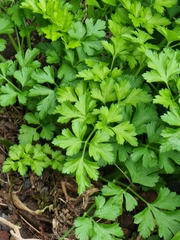 Petroselinum crispumt0
- Treatment
- blue LED applicatione0
- Outcome
- ascorbic acid (AA)e0
- Direction
- enhancementse0
- Value
- 13.2e0
- Comparator
- baseline measuremente0
Organisms pictured · Representative pictures of the matched species, not figures from the paper.
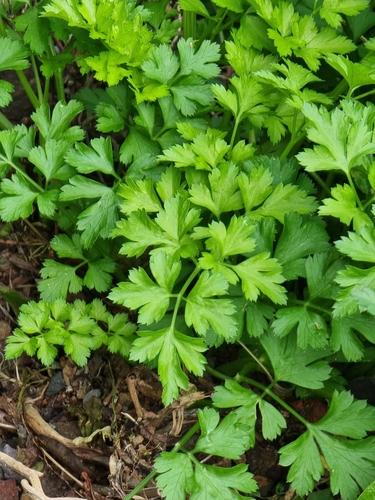
Verbatim
e0“The maximum enhancements in ascorbic acid (AA), chlorophyll a, and chlorophyll b were recorded at 13.2, 6.32, and 6.31%, respectively, during blue LED application relative to the baseline measurement.”
t0“parsley (Petroselinum crispum)”
Claim · model-written summary
Blue LED storage increased parsley chlorophyll a by 6.32% versus baseline.
- Taxon
- parsleyPetroselinum crispumt0
- Treatment
- blue LED applicatione0
- Outcome
- chlorophyll ae0
- Direction
- enhancementse0
- Value
- 6.32e0
- Comparator
- baseline measuremente0
Organisms pictured · Representative pictures of the matched species, not figures from the paper.
Verbatim
e0“The maximum enhancements in ascorbic acid (AA), chlorophyll a, and chlorophyll b were recorded at 13.2, 6.32, and 6.31%, respectively, during blue LED application relative to the baseline measurement.”
t0“parsley (Petroselinum crispum)”
Claim · model-written summary
Blue LED storage increased parsley chlorophyll b by 6.31% versus baseline.
- Taxon
- parsleyPetroselinum crispumt0
- Treatment
- blue LED applicatione0
- Outcome
- chlorophyll be0
- Direction
- enhancementse0
- Value
- 6.31%e0
- Comparator
- baseline measuremente0
Organisms pictured · Representative pictures of the matched species, not figures from the paper.
Verbatim
e0“The maximum enhancements in ascorbic acid (AA), chlorophyll a, and chlorophyll b were recorded at 13.2, 6.32, and 6.31%, respectively, during blue LED application relative to the baseline measurement.”
t0“parsley (Petroselinum crispum)”
Claim · model-written summary
Green LED samples had the greatest antioxidant capacity increase, 34.97%.
- Taxon
- parsleyPetroselinum crispumt0
- Treatment
- green LEDe0
- Outcome
- antioxidant capacitye0
- Direction
- increasee0
- Value
- 34.97%e0
Not reportedComparator
Organisms pictured · Representative pictures of the matched species, not figures from the paper.
Verbatim
e0“The green LED samples had the greatest increase in antioxidant capacity at 34.97%”
t0“parsley (Petroselinum crispum)”
Claim · model-written summary
Dark control samples had the largest antioxidant capacity decrease, 26.9%.
- Taxon
- parsleyPetroselinum crispumt0
- Treatment
- controle0
- Outcome
- antioxidant capacitye1
- Direction
- decreasee0
- Value
- 26.9%e0
Not reportedComparator
Organisms pictured · Representative pictures of the matched species, not figures from the paper.
Verbatim
e0“the control samples demonstrated the biggest decrease at 26.9%.”
t0“parsley (Petroselinum crispum)”
e1“The green LED samples had the greatest increase in antioxidant capacity at 34.97%”
Claim · model-written summary
All storage conditions decreased parsley phenolic substances relative to their starting value.
- Taxon
- parsleyPetroselinum crispumt0
- Treatment
- All applicationse0
- Outcome
- phenolic substancese0
- Direction
- losse0
- Comparator
- starting valuee0
Organisms pictured · Representative pictures of the matched species, not figures from the paper.
Verbatim
e0“All applications exhibited a loss of phenolic substances relative to the starting value”
t0“parsley (Petroselinum crispum)”
Claim · model-written summary
Green LED storage yielded the lowest phenolic loss, 0.87%.
- Taxon
- parsleyPetroselinum crispumt0
- Treatment
- green LEDe0
- Outcome
- phenolic substancese1
- Direction
- lowest losse0
- Value
- 0.87%e0
Not reportedComparator
Organisms pictured · Representative pictures of the matched species, not figures from the paper.
Verbatim
e0“with the lowest loss recorded at 0.87% in the green LED sample”
t0“parsley (Petroselinum crispum)”
e1“All applications exhibited a loss of phenolic substances relative to the starting value”
Claim · model-written summary
Dark control storage yielded the greatest phenolic loss, 40.33%.
- Taxon
- parsleyPetroselinum crispumt0
- Treatment
- controle0
- Outcome
- phenolic substancese1
- Direction
- greateste0
- Value
- 40.33%e0
Not reportedComparator
Organisms pictured · Representative pictures of the matched species, not figures from the paper.
Verbatim
e0“the greatest at 40.33% in the control.”
t0“parsley (Petroselinum crispum)”
e1“All applications exhibited a loss of phenolic substances relative to the starting value”
Claim · model-written summary
LED applications preserved parsley quality better than dark control storage.
- Taxon
- parsleyPetroselinum crispumt0
- Treatment
- LED applicatione0
- Outcome
- superior outcomese0
- Direction
- superiore0
- Qualifier
- during the various storage periods and at the end of storagee0
- Comparator
- controle0
Organisms pictured · Representative pictures of the matched species, not figures from the paper.
Verbatim
e0“LED application yielded superior outcomes compared to the control during the various storage periods and at the end of storage.”
t0“parsley (Petroselinum crispum)”
Claim · model-written summary
The authors concluded that blue and green LED light aid parsley quality preservation in cold storage.
- Taxon
- parsleyPetroselinum crispume0
- Treatment
- blue and green LED lighte0
- Outcome
- preserving the quality of parsleye0
- Setting
- postharvest cold storagee0
Organisms pictured · Representative pictures of the matched species, not figures from the paper.
Verbatim
e0“blue and green LED light will aid in preserving the quality of parsley during postharvest cold storage.”
The same questions in other papers
light · quality: phytochemicals · Petroselinum crispum (parsley)Positive and negative results
2 papers in the same direction as this paper · 1 in the opposite direction
- no effect
- positive
- positive
light · physiology: pigments · Petroselinum crispum (parsley)Results agree
1 paper in the same direction as this paper
- positive
Claims are grouped by organism, treatment and what was measured or targeted. A paper counts as positive when any of its claims in the group is positive.