Abstract
The composition and structure of plant-associated microbial communities are shaped by abiotic and biotic factors, with host-related traits and plant-microbe interactions playing key roles. While studies on soil-based cultivation systems have shown that pathogen infection can disrupt plant microbial communities, little is known about how pathogen interactions affect hydroponically grown crops, particularly leafy greens. Despite the controlled conditions of hydroponic cultivation, these systems remain vulnerable to waterborne pathogens like Pythium and Globisporangium spp. These oomycetes can rapidly spread through recirculated nutrient solutions and cause severe root diseases. This study aimed to examine how Pythium aphanidermatum inoculation affects the bacterial and fungal communities in the roots of hydroponically grown lettuce in deep-water culture systems under research greenhouse conditions. Our findings revealed that root inoculation with P. aphanidermatum significantly impacted lettuce biomass and microbial communities. Bacterial and fungal alpha diversity and evenness were significantly higher in inoculated roots compared with non-inoculated controls. Beta diversity and network analyses indicated different modes of microbial response to pathogen invasion. Bacterial communities responded with compositional shifts regardless of disease severity. In contrast, fungal communities showed dramatic reorganization of network structure. Differential abundance and network analyses identified Pseudomonas and Olpidium as taxa consistently associated with Pythium-inoculated roots. A deeper understanding of hydroponics-associated microbial communities, their interactions, and functional roles will allow us to leverage these relationships for improved food security and environmental sustainability. Moreover, understanding the microbial composition dynamics during pathogen infection can have significant implications for disease management and the effective use of biological control agents.
Abstract from the paper’s OpenAlex record, shown for indexing and research. Copyright remains with the authors or the publisher. Read at the source ↗
The text the model read, with the source record’s inline markup (italics, sub- and superscripts) rendered and its character entities decoded; quote offsets refer to the raw text.
Claims 7
Claim · model-written summary
Pythium aphanidermatum root inoculation significantly affected lettuce biomass compared with controls.
- Taxon
- lettuce
 Lactuca sativae1
- Treatment
- root inoculation with P. aphanidermatume1
- Interactor
- P. aphanidermatumPythium aphanidermatume1pathogen
- Outcome
- lettuce biomasse1
- Comparator
- non-inoculated controlse2
Not reportedDirection
Organisms pictured · Representative pictures of the matched species, not figures from the paper.

Verbatim
e1“root inoculation with P. aphanidermatum significantly impacted lettuce biomass and microbial communities”
e2“Bacterial and fungal alpha diversity and evenness were significantly higher in inoculated roots compared with non-inoculated controls”
Claim · model-written summary
Bacterial alpha diversity and evenness were higher in inoculated roots than in non-inoculated controls.
- Taxon
- lettuceLactuca sativat0
- Organ / stage
- rootse2
- Treatment
- root inoculation with P. aphanidermatume1
- Outcome
- alpha diversity and evennesse2
- Direction
- highere2
- Qualifier
- Bacteriale2
- Comparator
- non-inoculated controlse2
Organisms pictured · Representative pictures of the matched species, not figures from the paper.
Verbatim
t0“Hydroponically Grown Lettuce”
e1“root inoculation with P. aphanidermatum significantly impacted lettuce biomass and microbial communities”
e2“Bacterial and fungal alpha diversity and evenness were significantly higher in inoculated roots compared with non-inoculated controls”
Claim · model-written summary
Fungal alpha diversity and evenness were higher in inoculated roots than in non-inoculated controls.
- Taxon
- lettuceLactuca sativat0
- Organ / stage
- rootse2
- Treatment
- root inoculation with P. aphanidermatume1
- Outcome
- alpha diversity and evennesse2
- Direction
- highere2
- Qualifier
- fungale2
- Comparator
- non-inoculated controlse2
Organisms pictured · Representative pictures of the matched species, not figures from the paper.
Verbatim
t0“Hydroponically Grown Lettuce”
e1“root inoculation with P. aphanidermatum significantly impacted lettuce biomass and microbial communities”
e2“Bacterial and fungal alpha diversity and evenness were significantly higher in inoculated roots compared with non-inoculated controls”
Claim · model-written summary
Beta diversity and network analyses indicated different modes of microbial response to pathogen invasion in lettuce roots.
- Taxon
- lettuceLactuca sativat0
- Interactor
- pathogene3pathogen
- Outcome
- different modes of microbial responsee3
Organisms pictured · Representative pictures of the matched species, not figures from the paper.
Verbatim
t0“Hydroponically Grown Lettuce”
e3“Beta diversity and network analyses indicated different modes of microbial response to pathogen invasion”
Claim · model-written summary
Bacterial communities in lettuce roots showed compositional shifts regardless of disease severity.
- Taxon
- lettuceLactuca sativat0
- Outcome
- compositional shiftse4
- Qualifier
- regardless of disease severitye4
Organisms pictured · Representative pictures of the matched species, not figures from the paper.
Verbatim
t0“Hydroponically Grown Lettuce”
e4“Bacterial communities responded with compositional shifts regardless of disease severity”
Claim · model-written summary
Fungal communities in lettuce roots showed dramatic reorganization of network structure.
- Taxon
- lettuceLactuca sativat0
- Outcome
- dramatic reorganization of network structuree5
- Qualifier
- fungal communitiese5
Organisms pictured · Representative pictures of the matched species, not figures from the paper.
Verbatim
t0“Hydroponically Grown Lettuce”
e5“fungal communities showed dramatic reorganization of network structure”
Claim · model-written summary
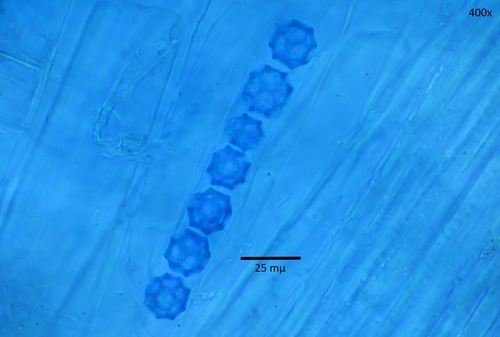
Pseudomonas and Olpidium were consistently associated with Pythium-inoculated lettuce roots.
- Taxon
- lettuceLactuca sativat0
- Treatment
- Pythium-inoculated rootse6
- Interactor
- Pseudomonas
 Pseudomonase6other
- Outcome
- consistently associated with Pythium-inoculated rootse6
 Olpidium
Not reportedDirection
Organisms pictured · Representative pictures of the matched species, not figures from the paper.

Verbatim
t0“Hydroponically Grown Lettuce”
e6“Differential abundance and network analyses identified Pseudomonas and Olpidium as taxa consistently associated with Pythium-inoculated roots”
The same questions in other papers
inoculation · growth · Lactuca sativa (garden lettuce)Positive and negative results
13 papers in the same direction as this paper · 97 in the opposite direction
- positive
- positive
- positive
107 papers more in this group
See all 111 papers →Claims are grouped by organism, treatment and what was measured or targeted. A paper counts as positive when any of its claims in the group is positive.