View: List Claim type Research area Organism Taxon as written Decade Paper Recommendation author interpretation original result basis n/a Claim · model-written summary
Screening for resistance to head blight requires aggressive isolates or a mixture of several isolates .
screening for resistance to FHB e5 aggressive isolates or a mixture of several isolates e5 Verbatim
t0 “Pathogenicity of Fusarium species causing head blight in barley ”
✓ located verbatim in the source · title, characters 0–63 e5 “suggesting that screening for resistance to FHB requires the use of aggressive isolates or a mixture of several isolates ”
✓ located verbatim in the source · abstract, characters 1115–1235 Other claims from this paper (7) Recommendation author interpretation original result basis n/a Claim · model-written summary
The authors recommend selecting suitably aggressive isolates for potato resistance evaluation.
selecting appropriately aggressive isolates for evaluation of host resistance to late blight within breeding programmes e0 Verbatim
e0 “indicate the importance of selecting appropriately aggressive isolates for evaluation of host resistance to late blight within breeding programmes. ”
✓ located verbatim in the source · abstract, characters 1643–1790 t0 “potato cultivars ”
✓ located verbatim in the source · title, characters 107–123 t1 “Phytophthora infestans
✓ located verbatim in the source · title, characters 54–76 Other claims from this paper (5) Recommendation author interpretation original result positive basis n/a Claim · model-written summary
Breeders should use the most aggressive C. zeae-maydis isolates in gray leaf spot trials.
use the most aggressive isolates of C. zeae-maydis e0 Verbatim
e0 “Breeders should use the most aggressive isolates of C. zeae-maydis to maximize discrimination between genotypes in gray leaf spot trials. ”
✓ located verbatim in the source · abstract, characters 1320–1457 t0 “Maize ”
✓ located verbatim in the source · title, characters 62–67 Other claims from this paper (4) Recommendation author interpretation original result positive basis n/a Claim · model-written summary
Highly aggressive isolates can be used to breed wheat resistance to SNB.
breeding wheat for resistance to SNB e0 Verbatim
e0 “AG 3 isolates can be utilized in breeding wheat for resistance to SNB ”
✓ located verbatim in the source · abstract, characters 1811–1880 e1 “caused by Stagonospora nodorum ”
✓ located verbatim in the source · abstract, characters 44–74 Other claims from this paper (7) Recommendation author interpretation original result positive basis n/a Claim · model-written summary
The authors suggest less aggressive isolates may better test low-resistance wheat.
Pathogen isolates with a lower aggressiveness could be more adequate for testing low-resistant wheat e0 Verbatim
e0 “Pathogen isolates with a lower aggressive ness could be more adequate for testing low-resistant wheat ”
✓ located verbatim in the source · abstract, characters 1170–1270 Other claims from this paper (8) Recommendation author interpretation original result positive basis n/a Claim · model-written summary
Aggressive isolates of either C. zeae-maydis sibling species should be used to select maize GLS resistance.
should be used to select for GLS resistance in field trials e0 Verbatim
e0 “ag- gressive isolates , regardless of which sibling species of C. zeae-maydis , should be used to select for GLS resistance in field trials ”
✓ located verbatim in the source · abstract, characters 1021–1158 t0 “maize ”
✓ located verbatim in the source · title, characters 110–115 Other claims from this paper (6) Recommendation author interpretation original result positive basis n/a Claim · model-written summary
The authors say the data permit choosing an aggressive isolate for dissemination against A. funesta .
selection of an aggressive isolate for dissemination for antagonism of A. funesta e0 Verbatim
e0 “The data allow selection of an aggressive isolate for dissemination for antagonism of A. funesta ”
✓ located verbatim in the source · abstract, characters 673–769 t0 “Lolium rigidum by isolates of Dilophospora alopecuri ”
✓ located verbatim in the source · title, characters 29–81 Other claims from this paper (5) Recommendation author interpretation original result positive basis n/a Claim · model-written summary
Pat 81 and derived hybrids were considered promising for breeding resistance to melon vine decline.
breeding melon verieties resistant to melon vine decline e0 Verbatim
e0 “The high resistance level found in Pat 81, and also in its derived hybrids, against the aggressive isolates found in this area, makes it promissing for breeding melon verieties resistant to melon vine decline ”
✓ located verbatim in the source · abstract, characters 1400–1608 Other claims from this paper (8) Lexical search (BM25). All words must match; if nothing does, any word. Organism names also match every spelling of the same organism. No semantic search yet.
 Hordeum vulgaret0
 Solanum tuberosum
 Phytophthora infestans
 Zea mays
 Cercospora zeae-maydis
 Triticum aestivum
 Parastagonospora nodorum
 Lolium rigidum
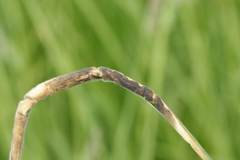 Dilophospora alopecuri
 Cucumis melo