View: List Claim type Research area Organism Taxon as written Decade Paper Taxon groups are the verbatim names found in the abstracts (case-insensitive), not normalised: maize, corn and Zea mays are separate groups here. The Organism view merges them through NCBI Taxonomy.
Observation observed original result measured Claim · model-written summary
Twelve isolates (75%) belonged to pathotype II, moderately aggressive
from pathotype II e2 moderate aggressive e2 western north of Algeria e7 Verbatim
t0 “Ascochyta rabiei , the agent of ascochyta blight in chickpea (Cicer arietinum L.)
✓ located verbatim in the source · title, characters 55–135 e2 “12 isolates (75%) from pathotype II (moderate aggressive ) ”
✓ located verbatim in the source · abstract, characters 530–587 e7 “Pathogenic determination of sixteen Ascochyta rabies isolates obtained from seven different provinces of western north of Algeria ”
✓ located verbatim in the source · abstract, characters 0–129 Other claims from this paper (7) Observation observed original result measured Claim · model-written summary
Three isolates (18.75%) belonged to pathotype III, highly aggressive
from pathotype III e3 highly aggressive e3 western north of Algeria e7 Verbatim
t0 “Ascochyta rabiei , the agent of ascochyta blight in chickpea (Cicer arietinum L.)
✓ located verbatim in the source · title, characters 55–135 e3 “three isolates (18.75%) from pathotype III (highly aggressive ) ”
✓ located verbatim in the source · abstract, characters 592–654 e7 “Pathogenic determination of sixteen Ascochyta rabies isolates obtained from seven different provinces of western north of Algeria ”
✓ located verbatim in the source · abstract, characters 0–129 Other claims from this paper (7) Observation observed original result measured Claim · model-written summary
Pathotype II accounted for 9.1% of surveyed isolates .
Verbatim
e0 “aggressive pathotype II (9.1%) ”
✓ located verbatim in the source · abstract, characters 1224–1254 t0 “chickpea ”
✓ located after whitespace/quote normalisation · title, characters 139–147 Other claims from this paper (13) Observation observed original result measured Claim · model-written summary
Of the 44 A. candida isolates , 06 were categorised as aggressive .
Verbatim
e0 “44 diverse A. candida isolates belonging to 06 different Brassica spp. ”
✓ located verbatim in the source · abstract, characters 916–986 e1 “aggressive (06), moderately aggressive (14) ”
✓ located verbatim in the source · abstract, characters 1556–1599 Other claims from this paper (10) Observation observed original result measured Claim · model-written summary
Of the 44 A. candida isolates , 08 were categorised as highly aggressive .
highly aggressive e1 Verbatim
e0 “44 diverse A. candida isolates belonging to 06 different Brassica spp. ”
✓ located verbatim in the source · abstract, characters 916–986 e1 “isolates were categorised as highly aggressive (08) ”
✓ located verbatim in the source · abstract, characters 1503–1554 Other claims from this paper (10) Observation observed original result measured Claim · model-written summary
Of the 44 A. candida isolates , 14 were categorised as moderately aggressive .
moderately aggressive e1 Verbatim
e0 “44 diverse A. candida isolates belonging to 06 different Brassica spp. ”
✓ located verbatim in the source · abstract, characters 916–986 e1 “moderately aggressive (14) ”
✓ located verbatim in the source · abstract, characters 1573–1599 Other claims from this paper (10) Observation author interpretation original result negative measured Claim · model-written summary
Armillaria mellea is considered a moderate to aggressive pathogen of conifers in Japan.
moderate to aggressive pathogens e0 Not reported Direction
Verbatim
e0 “On the basis of host condition when the isolates were collected, A. mellea , A. ostoyae , A. cepistipes and A. tabescens are considered as moderate to aggressive pathogens of conifers in Japan ”
✓ located verbatim in the source · abstract, characters 563–753 Other claims from this paper (11) Observation author interpretation original result negative measured Claim · model-written summary
Armillaria ostoyae is considered a moderate to aggressive pathogen of conifers in Japan.
moderate to aggressive pathogens e0 Not reported Direction
Verbatim
e0 “On the basis of host condition when the isolates were collected, A. mellea , A. ostoyae , A. cepistipes and A. tabescens are considered as moderate to aggressive pathogens of conifers in Japan ”
✓ located verbatim in the source · abstract, characters 563–753 Other claims from this paper (11) Observation author interpretation original result negative measured Claim · model-written summary
Armillaria cepistipes is considered a moderate to aggressive pathogen of conifers in Japan.
moderate to aggressive pathogens e0 Not reported Direction
Verbatim
e0 “On the basis of host condition when the isolates were collected, A. mellea , A. ostoyae , A. cepistipes and A. tabescens are considered as moderate to aggressive pathogens of conifers in Japan ”
✓ located verbatim in the source · abstract, characters 563–753 Other claims from this paper (11) Recommendation author interpretation original result basis n/a Claim · model-written summary
More TSWV isolates and tomato cultivars should be studied to screen for the most resistant ones in this area.
screen for most resistant ones e0 Verbatim
e0 “More isolates of TSWV and commercial cultivars of tomato should be studied to screen for most resistant ones ”
✓ located verbatim in the source · abstract, characters 938–1046 Other claims from this paper (12) Recommendation author interpretation original result basis n/a Claim · model-written summary
Introduced breeding materials must be tested against local isolates before their resistance genes are used.
introduced breeding materials must be tested to local isolates e3 Verbatim
e0 “Alternaria solani is a necrotroph fungus that causes three-phased diseases in tomato
✓ located verbatim in the source · abstract, characters 0–84 e3 “local isolates were more aggressive in inciting early blight and stem lesion than an imported isolate from USA. This implies that introduced breeding materials must be tested to local isolates to obtain effective resistance genes ”
✓ located verbatim in the source · abstract, characters 757–986 Other claims from this paper (7) Method / resource observed original result measured Claim · model-written summary
RAD-seq data produced a genetic linkage map containing 440 SNP markers.
genetic linkage map e5 440 single nucleotide polymorphism markers e5 Verbatim
e2 “identification of a new late blight resistant QTL in tomato ”
✓ located verbatim in the source · abstract, characters 1612–1671 e5 “The RAD-seq data were used to construct a genetic linkage map containing 440 single nucleotide polymorphism markers ”
✓ located verbatim in the source · abstract, characters 1126–1241 Other claims from this paper (3) Recommendation author interpretation original result basis n/a Claim · model-written summary
Wheat breeders should include aggressive isolates or a mixture of isolates in screenings for disease-resistant cultivars.
include aggressive isolates or a mixture of isolates e1 Verbatim
t0 “durum and bread wheat cultivars ”
✓ located verbatim in the source · title, characters 59–90 e1 “the need for breeders to include aggressive isolates or a mixture of isolates representative of the FHB diversity in their screenings for selection of disease resistant cultivars ”
✓ located verbatim in the source · abstract, characters 807–985 Other claims from this paper (5) Observation observed original result measured Claim · model-written summary
B. sorokiniana isolates with ToxA19, ToxA25 or ToxA-deficient showed various degrees of virulence on Australian wheat cultivars.
various degrees e5 Verbatim
e5 “Preliminary analysis of the B. sorokiniana isolates in Australian wheat cultivars showed that isolates with ToxA19, ToxA25, or ToxA-deficient displayed various degrees of virulence, with the most aggressive isolates observed for those producing ToxA ”
✓ located verbatim in the source · abstract, characters 1188–1437 Other claims from this paper (6) Mechanism author interpretation original result negative basis n/a Claim · model-written summary
The authors suggest that natural selection drives the spread of a more vigorous, more toxigenic Fusarium population on wheat.
spread of a more vigorous, more toxigenic pathogen population e7 natural selection e7 Verbatim
e0 “A large number of Fusarium isolates was collected from blighted wheat spikes ”
✓ located verbatim in the source · abstract, characters 0–76 e7 “These results suggest that natural selection drives the spread of a more vigorous, more toxigenic pathogen population which also shows higher levels of fungicide resistance ”
✓ located verbatim in the source · abstract, characters 1242–1414 Other claims from this paper (8) Observation author interpretation original result measured Claim · model-written summary
Highly aggressive Aphanomyces euteiches isolates likely occur naturally in pea-growing regions.
highly aggressive isolates occur naturally e5 Verbatim
t0 “Aggressive ness of Diverse French Aphanomyces euteiches Isolates on Pea ”
✓ located verbatim in the source · title, characters 0–70 e5 “The results suggest that highly aggressive isolates occur naturally, which may be selected by future partially resistant pea varieties carrying QTLs and increase the risk of erosion of QTL effect ”
✓ located verbatim in the source · abstract, characters 1319–1514 Other claims from this paper (8) Observation observed original result measured Claim · model-written summary
The second pathotype was weakly aggressive on broad bean.
weakly aggressive on broad bean e4 Verbatim
e0 “Aphanomyces root rot ( Aphanomyces euteiches ) has become a very destructive disease in French pea crops since 1993
✓ located verbatim in the source · abstract, characters 0–115 e4 “isolates preferentially agressive on pea/vetch/alfalfa and weakly aggressive on broad bean ”
✓ located verbatim in the source · abstract, characters 843–933 Other claims from this paper (8) Observation observed original result measured Claim · model-written summary
The second pathotype was preferentially aggressive on pea, vetch and alfalfa.
preferentially agressive on pea/vetch/alfalfa e4 Verbatim
e0 “Aphanomyces root rot ( Aphanomyces euteiches ) has become a very destructive disease in French pea crops since 1993
✓ located verbatim in the source · abstract, characters 0–115 e4 “isolates preferentially agressive on pea/vetch/alfalfa and weakly aggressive on broad bean ”
✓ located verbatim in the source · abstract, characters 843–933 Other claims from this paper (8) Observation observed original result measured Claim · model-written summary
Isolate FU6 (F. solani ) was among the two most aggressive isolates , with disease severity of 56.7%.
Verbatim
e0 “أصول برية للبندورة Solanum lycopersicum L. ”
✓ located verbatim in the source · abstract, characters 734–776 e2 “تم اختيار العزلتين الأكثر شراسة FU6 (F. solani ) وFU7 (F. oxysporum ) ذوات شدة المرض 56.7 % و73.3 %على التوالي ”
✓ located verbatim in the source · abstract, characters 555–663 Other claims from this paper (13) Observation observed original result measured Claim · model-written summary
Isolate FU7 (F. oxysporum ) was among the two most aggressive isolates , with disease severity of 73.3%.
Verbatim
e0 “أصول برية للبندورة Solanum lycopersicum L. ”
✓ located verbatim in the source · abstract, characters 734–776 e2 “تم اختيار العزلتين الأكثر شراسة FU6 (F. solani ) وFU7 (F. oxysporum ) ذوات شدة المرض 56.7 % و73.3 %على التوالي ”
✓ located verbatim in the source · abstract, characters 555–663 Other claims from this paper (13) Recommendation author interpretation original result basis n/a Claim · model-written summary
The authors emphasized identifying aggressive Pythium isolates for resistance screening or genetic mapping.
identifying aggressive isolates of Pythium species e0 Verbatim
e0 “importance of identifying aggressive isolates of Pythium species for applications like resistance screening or genetic mapping studies ”
✓ located verbatim in the source · abstract, characters 1513–1647 t0 “soybean cultivars ”
✓ located verbatim in the source · title, characters 96–113 Other claims from this paper (9) Recommendation author interpretation original result positive basis n/a Claim · model-written summary
The authors recommend favorable fungal conditions and aggressive isolates for soybean resistance studies.
use environmental conditions favorable to the fungus and aggressive isolates e0 Verbatim
e0 “when studying host resistance of soybean genotypes to S. sclerotiorum , it is important to use environmental conditions favorable to the fungus and aggressive isolates ”
✓ located verbatim in the source · abstract, characters 1120–1286 Other claims from this paper (5) Recommendation author interpretation original result basis n/a Claim · model-written summary
Screening for resistance to head blight requires aggressive isolates or a mixture of several isolates .
screening for resistance to FHB e5 aggressive isolates or a mixture of several isolates e5 Verbatim
t0 “Pathogenicity of Fusarium species causing head blight in barley ”
✓ located verbatim in the source · title, characters 0–63 e5 “suggesting that screening for resistance to FHB requires the use of aggressive isolates or a mixture of several isolates ”
✓ located verbatim in the source · abstract, characters 1115–1235 Other claims from this paper (7) Recommendation author interpretation original result basis n/a Claim · model-written summary
The authors recommend combining long and short term disease outcomes with lesion length for future host screening.
disease outcomes be combined with lesion length measurement e0 Verbatim
e0 “It was recommended that both long-term (such as inoculum production) and short-term (such as seed production) disease outcomes be combined with lesion length measurement (i.e., AUDPS) for future host screening studies ”
✓ located verbatim in the source · abstract, characters 1217–1434 t0 “Temperature and Isolate Are Important Determinants of Brassica napus Susceptibility to Aggressive Sclerotinia sclerotiorum Isolates ”
✓ located verbatim in the source · title, characters 0–131 Other claims from this paper (2) Lexical search (BM25). All words must match; if nothing does, any word. Organism names also match every spelling of the same organism. No semantic search yet.
 Cicer arietinumt0
 Ascochyta rabieit0pathogen
 Brassica
 Albugo candida
 Armillaria mellea
 Armillaria ostoyae
 Armillaria cepistipes
 Solanum lycopersicum
 Triticum aestivum
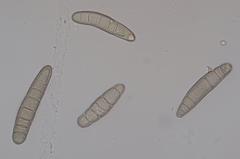 Bipolaris sorokiniana
 Lathyrus oleraceus
 Fusarium solani
 Fusarium oxysporum
 Glycine max
 Pythium
 Sclerotinia sclerotiorum
 Hordeum vulgare
 Brassica napus