Refine ·

Claim type

Research area

Polarity

Statistics

More filters

Clear filters
Intervention effectobservedoriginal resultpositivemeasured

Claim · model-written summary

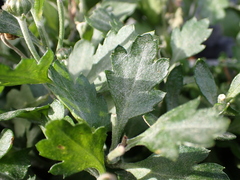
Chitosan treatment of dieffenbachia against Myrothecium gave more than 85% Myrothecium leaf spot response under leaf spraying.

Taxon
dieffenbachiaDieffenbachiae0
Treatment
chitosane0
Interactor
MyrotheciumMyrotheciume0pathogen
Outcome
Myrothecium leaf spote0
Direction
inhibitede0
Value
more than 85%e0
Qualifier
leaf sprayinge0

Not reportedComparator

Verbatim

e0

“Chitosan, (Biochikol 020 PC) a potential elicitor of plant defence and also an active inhibitor of fungal growth was used in experiments. The compound was used at concentrations 0.01 to 0.2% as a plant spray for rose protection against Sphaerotheca pannosa var. rosae, Peronospora sparsa and Diplocarpon rosae, Oidium chrysanthemi and Puccinia horiana on chrysanthemum, against Melampsora epitea on willow. Myrothecium r…” Show full quote

✓ located verbatim in the source · abstract, characters 0–2664

Title

Chitosan (biochikol 020 PC) in the control of some ornamental foliage diseases.

A T Wojdyła PubMed 2004

Other claims from this paper (15)
Intervention effectobservedoriginal resultpositivemeasured

Claim · model-written summary

Chitosan treatment of willow against Melampsora epitea gave 10 to 25% uredinia response under 01-0.04%.

Taxon
willowSalixe0
Treatment
chitosane0
Interactor
Melampsora epiteaMelampsora epiteae0pathogen
Outcome
urediniae0
Direction
dried upe0
Value
10 to 25%e0
Qualifier
01-0.04%e0

Not reportedComparator

Verbatim

e0

“Chitosan, (Biochikol 020 PC) a potential elicitor of plant defence and also an active inhibitor of fungal growth was used in experiments. The compound was used at concentrations 0.01 to 0.2% as a plant spray for rose protection against Sphaerotheca pannosa var. rosae, Peronospora sparsa and Diplocarpon rosae, Oidium chrysanthemi and Puccinia horiana on chrysanthemum, against Melampsora epitea on willow. Myrothecium r…” Show full quote

✓ located verbatim in the source · abstract, characters 0–2664

Title

Chitosan (biochikol 020 PC) in the control of some ornamental foliage diseases.

A T Wojdyła PubMed 2004

Other claims from this paper (15)
Intervention effectobservedoriginal resultpositivemeasured

Claim · model-written summary

Chitosan treatment of Pinus sylvestris against Lophodermium spp gave below 50% effectiveness of chitosan response under short programme.

Taxon
Pinus sylvestrisPinus sylvestrise0
Treatment
chitosane0
Interactor
Lophodermium sppLophodermiume0pathogen
Outcome
effectiveness of chitosane0
Direction
effectivenesse0
Value
below 50%e0
Qualifier
short programmee0

Not reportedComparator

Verbatim

e0

“Chitosan, (Biochikol 020 PC) a potential elicitor of plant defence and also an active inhibitor of fungal growth was used in experiments. The compound was used at concentrations 0.01 to 0.2% as a plant spray for rose protection against Sphaerotheca pannosa var. rosae, Peronospora sparsa and Diplocarpon rosae, Oidium chrysanthemi and Puccinia horiana on chrysanthemum, against Melampsora epitea on willow. Myrothecium r…” Show full quote

✓ located verbatim in the source · abstract, characters 0–2664

Title

Chitosan (biochikol 020 PC) in the control of some ornamental foliage diseases.

A T Wojdyła PubMed 2004

Other claims from this paper (15)
Intervention effectobservedoriginal resultpositivemeasured

Claim · model-written summary

Chitosan treatment of Pinus sylvestris against Lophodermium spp gave more than 50% effectiveness of chitosan response under long programme.

Taxon
Pinus sylvestrisPinus sylvestrise0
Treatment
chitosane0
Interactor
Lophodermium sppLophodermiume0pathogen
Outcome
effectiveness of chitosane0
Direction
effectivenesse0
Value
more than 50%e0
Qualifier
long programmee0

Not reportedComparator

Verbatim

e0

“Chitosan, (Biochikol 020 PC) a potential elicitor of plant defence and also an active inhibitor of fungal growth was used in experiments. The compound was used at concentrations 0.01 to 0.2% as a plant spray for rose protection against Sphaerotheca pannosa var. rosae, Peronospora sparsa and Diplocarpon rosae, Oidium chrysanthemi and Puccinia horiana on chrysanthemum, against Melampsora epitea on willow. Myrothecium r…” Show full quote

✓ located verbatim in the source · abstract, characters 0–2664

Title

Chitosan (biochikol 020 PC) in the control of some ornamental foliage diseases.

A T Wojdyła PubMed 2004

Other claims from this paper (15)
Intervention effectobservedoriginal resultpositivemeasured

Claim · model-written summary

Chitosan treatment of rose against D. rosae gave 18 to 60% effectiveness of the compound response under 3-week-protection.

Taxon
rosee0
Treatment
chitosane0
Interactor
D. rosaeDiplocarpon rosaee0pathogen
Outcome
effectiveness of the compounde0
Direction
effectivenesse0
Value
18 to 60%e0
Qualifier
3-week-protectione0

Not reportedComparator

Verbatim

e0

“Chitosan, (Biochikol 020 PC) a potential elicitor of plant defence and also an active inhibitor of fungal growth was used in experiments. The compound was used at concentrations 0.01 to 0.2% as a plant spray for rose protection against Sphaerotheca pannosa var. rosae, Peronospora sparsa and Diplocarpon rosae, Oidium chrysanthemi and Puccinia horiana on chrysanthemum, against Melampsora epitea on willow. Myrothecium r…” Show full quote

✓ located verbatim in the source · abstract, characters 0–2664

Title

Chitosan (biochikol 020 PC) in the control of some ornamental foliage diseases.

A T Wojdyła PubMed 2004

Other claims from this paper (15)
Intervention effectobservedoriginal resultpositivemeasured

Claim · model-written summary

Chitosan treatment of chrysanthemum against Puccinia horiana gave 54-97% Effectiveness of chitosan response under 0.01 to 0.05%.

Taxon
chrysanthemumChrysanthemume0
Treatment
chitosane0
Interactor
Puccinia horianaPuccinia horianae0pathogen
Outcome
Effectiveness of chitosane0
Direction
effectivenesse0
Value
54-97%e0
Qualifier
0.01 to 0.05%e0

Not reportedComparator

Verbatim

e0

“Chitosan, (Biochikol 020 PC) a potential elicitor of plant defence and also an active inhibitor of fungal growth was used in experiments. The compound was used at concentrations 0.01 to 0.2% as a plant spray for rose protection against Sphaerotheca pannosa var. rosae, Peronospora sparsa and Diplocarpon rosae, Oidium chrysanthemi and Puccinia horiana on chrysanthemum, against Melampsora epitea on willow. Myrothecium r…” Show full quote

✓ located verbatim in the source · abstract, characters 0–2664

Title

Chitosan (biochikol 020 PC) in the control of some ornamental foliage diseases.

A T Wojdyła PubMed 2004

Other claims from this paper (15)
Intervention effectobservedoriginal resultpositivemeasured

Claim · model-written summary

Chitosan treatment of rose against Sphaerotheca pannosa var. rosae gave 43-60% rose powdery mildew symptoms response under 2-week-protection.

Taxon
rosee0
Treatment
chitosane0
Interactor
Sphaerotheca pannosa var. rosaePodosphaera pannosae0pathogen
Outcome
rose powdery mildew symptomse0
Direction
effectivenesse0
Value
43-60%e0
Qualifier
2-week-protectione0

Not reportedComparator

Verbatim

e0

“Chitosan, (Biochikol 020 PC) a potential elicitor of plant defence and also an active inhibitor of fungal growth was used in experiments. The compound was used at concentrations 0.01 to 0.2% as a plant spray for rose protection against Sphaerotheca pannosa var. rosae, Peronospora sparsa and Diplocarpon rosae, Oidium chrysanthemi and Puccinia horiana on chrysanthemum, against Melampsora epitea on willow. Myrothecium r…” Show full quote

✓ located verbatim in the source · abstract, characters 0–2664

Title

Chitosan (biochikol 020 PC) in the control of some ornamental foliage diseases.

A T Wojdyła PubMed 2004

Other claims from this paper (15)
Intervention effectobservedoriginal resultpositivemeasured

Claim · model-written summary

Chitosan treatment of rose against D. rosae gave 16 to 23% effectiveness of tested product response under 9 weeks of protection.

Taxon
rosee0
Treatment
chitosane0
Interactor
D. rosaeDiplocarpon rosaee0pathogen
Outcome
effectiveness of tested producte0
Direction
effectivenesse0
Value
16 to 23%e0
Qualifier
9 weeks of protectione0

Not reportedComparator

Verbatim

e0

“Chitosan, (Biochikol 020 PC) a potential elicitor of plant defence and also an active inhibitor of fungal growth was used in experiments. The compound was used at concentrations 0.01 to 0.2% as a plant spray for rose protection against Sphaerotheca pannosa var. rosae, Peronospora sparsa and Diplocarpon rosae, Oidium chrysanthemi and Puccinia horiana on chrysanthemum, against Melampsora epitea on willow. Myrothecium r…” Show full quote

✓ located verbatim in the source · abstract, characters 0–2664

Title

Chitosan (biochikol 020 PC) in the control of some ornamental foliage diseases.

A T Wojdyła PubMed 2004

Other claims from this paper (15)
Intervention effectobservedoriginal resultpositivemeasured

Claim · model-written summary

Chitosan treatment of chrysanthemum against Oidium chrysanthemi gave 69 to 79% Effectiveness of chitosan response under 0.01 to 0.05%.

Taxon
chrysanthemumChrysanthemume0
Treatment
chitosane0
Interactor
Oidium chrysanthemiGolovinomyces chrysanthemie0pathogen
Outcome
Effectiveness of chitosane0
Direction
effectivenesse0
Value
69 to 79%e0
Qualifier
0.01 to 0.05%e0

Not reportedComparator

Verbatim

e0

“Chitosan, (Biochikol 020 PC) a potential elicitor of plant defence and also an active inhibitor of fungal growth was used in experiments. The compound was used at concentrations 0.01 to 0.2% as a plant spray for rose protection against Sphaerotheca pannosa var. rosae, Peronospora sparsa and Diplocarpon rosae, Oidium chrysanthemi and Puccinia horiana on chrysanthemum, against Melampsora epitea on willow. Myrothecium r…” Show full quote

✓ located verbatim in the source · abstract, characters 0–2664

Title

Chitosan (biochikol 020 PC) in the control of some ornamental foliage diseases.

A T Wojdyła PubMed 2004

Other claims from this paper (15)
Intervention effectobservedoriginal resultpositivemeasured

Claim · model-written summary

CO2 enrichment increased lettuce leaf dry weight gain by 39–75% at moderate PPF.

Taxon
lettuceLactuca sativae0
Organ / stage
leavese0
Treatment
Enrichment of CO2 to 46 mmol m-3 (1000 mm3 dm-3)e0
Outcome
dry weight gaine0
Direction
stimulatede0
Value
39% to 75%e0
Comparator
plants at 16 mmol m-3 CO2 (350 mm3 dm-3)e0

Verbatim

e0

“Enrichment of CO2 to 46 mmol m-3 (1000 mm3 dm-3) at a moderate photosynthetic photon flux (PPF) of 450 micromoles m-2 s-1 stimulated fresh and dry weight gain of lettuce leaves 39% to 75% relative to plants at 16 mmol m-3 CO2 (350 mm3 dm-3).”

✓ located verbatim in the source · abstract, characters 0–241
e1

“Enrichment of CO2 to 46 mmol m-3 (1000 mm3 dm-3) at a moderate photosynthetic photon flux (PPF) of 450 micromoles m-2 s-1 stimulated fresh and dry weight gain of lettuce leaves 39% to 75% relative to plants at 16 mmol m-3 CO2 (350 mm3 dm-3).”

✓ located verbatim in the source · abstract, characters 0–241
t0

“Effects of CO2and Photosynthetic Photon Flux on Yield, Gas Exchange and Growth Rate ofLactuca SativaL. ‘Waldmann’s Green”

✓ located verbatim in the source · title, characters 0–120
e2

“Enrichment of CO2 to 46 mmol m-3 (1000 mm3 dm-3) at a moderate photosynthetic photon flux (PPF) of 450 micromoles m-2 s-1 stimulated fresh and dry weight gain of lettuce leaves 39% to 75% relative to plants at 16 mmol m-3 CO2 (350 mm3 dm-3).”

✓ located verbatim in the source · abstract, characters 0–241
e3

“high PPF of 880-900 micromoles m-2 s-1 gave further, substantial increases in growth, RGR, net assimilation rate (NAR) and photosynthetic rate (Pn), but a decrease in leaf area ratio (LAR), at 46 or 69 mmol m-3 (1000 or 1500 mm3 dm-3) CO2”

✓ located verbatim in the source · abstract, characters 423–661
e4

“Enrichment of CO2 to a supraoptimal level of 92 mmol m-3 (2000 mm3 dm-3) at high PPF increased leaf area and LAR”

✓ located verbatim in the source · abstract, characters 718–830

Title

Effects of CO2and Photosynthetic Photon Flux on Yield, Gas Exchange and Growth Rate ofLactuca SativaL. ‘Waldmann’s Green'

SHARON L. KNIGHT; CARY A. MITCHELL Journal of Experimental Botany 1988. doi:10.1093/jxb/39.3.317

Other claims from this paper (9)

Lexical search (BM25). All words must match; if nothing does, any word. Organism names also match every spelling of the same organism. No semantic search yet.