Claim · model-written summary
Prevotella, Lactococcus and Candida were the dominant microbial genera during retting of white pepper.
- Taxon
- Piper nigrum
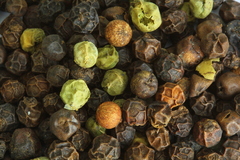 Piper nigrumt0
- Interactor
- Prevotella
 Prevotellae0other
- Second interactor
- Lactococcus
 Lactococcuse0other
- Outcome
- dominant microbial generae0
- Qualifier
- Candidae0
Verbatim
t0“Pepper (Piper nigrum L.)”
e0“Prevotella, Lactococcus, and Candida were the dominant microbial genera during the retting”
Title
Yuting Fu; Shuai Chen; Xinjun Wang; et al. Foods 2024. doi:10.3390/foods13111615
Other claims from this paper (10)
- Intervention effect Physical friction applied before retting effectively reduced the production time of white pepper.
- Observation Pectinase activity increased during the retting process.
- Observation Pectin content of the pepper pericarp decreased during retting.
- Association Changes in pH, pectin content and peeling rate were significantly correlated with the Shannon diversity index of bacteria and fungi.
- Mechanism Monosaccharides degraded from the pepper pericarp could have been utilized by microbes through sugar metabolism pathways.
- Observation The metabolic pathways of carbohydrates and amino acids were the main pathways altered during the pepper peeling process.
- Mechanism Degradation of pectin into galacturonic acid by polygalacturonase was identified as the key step in shortening the pepper peeling time.
- Observation The structure of the pepper pericarp collapsed after losing pectin support, as revealed by scanning electron microscopy.
- Mechanism Decomposition of the pepper pericarp was driven by key microbiota.
- Mechanism The succession of microbial communities was influenced by the metabolites of the pepper pericarp during retting.
 Moringa oleifera
 Leucaena leucocephala
 Atriplex halimus
 Acacia saligna
 Gossypium hirsutum
 Cucumis sativus
 Lolium perenne
 Treponema
 Ruminococcus