Claim · model-written summary
Enteromorpha flexuosa seed soaking reduced disease in the field.
- Treatment
- soaked seeds in the suspension of Enteromorpha flexuosae0
- Interactor
- Enteromorpha flexuosa
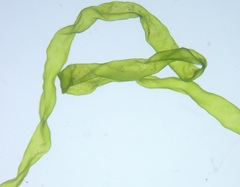 Ulva flexuosae0other
- Outcome
- diseasee0
- Direction
- reductione0
- Setting
- in the fielde0
 Zea mays
Not reportedComparator
Verbatim
e0“soaked seeds in the suspension of Enteromorpha flexuosa and Ulva fasciate exhibited high performance for disease reduction with both application doses in the field”
t0“Maize”
Title
Abd-Allah Ahmed Aly El-Naggar; Mohamed Abdallah Yassin Plant 2024. doi:10.11648/j.plant.20241201.13
Other claims from this paper (13)
- Intervention effect All tested fungicides completely inhibited M. maydis growth in vitro.
- Observation Fungicides ranked first in antifungal activity, followed by Pseudomonas fluorescens and silicates.
- Intervention effect Strong-X fungicide reduced disease incidence relative to control in greenhouse and field experiments.
- Intervention effect Tested fungicides did not significantly change yield parameters relative to control.
- Intervention effect Potassium silicate protected maize from wilt at least as well as tested fungicides.
- Intervention effect Sodium silicate protected maize from wilt at least as well as tested fungicides.
- Intervention effect P. fluorescens protected maize from wilt at least as well as tested fungicides.
- Intervention effect Sodium silicate significantly increased 100-kernel weight.
- Intervention effect Sodium silicate significantly increased net grains weight of ear per plant.
- Intervention effect Potassium silicate increased net grains weight per plant.
- Intervention effect Ulva fasciate seed soaking reduced disease in the field.
- Intervention effect Enteromorpha flexuosa seed soaking significantly affected NGWE per plant.
- Intervention effect Ulva fasciate seed soaking significantly affected NGWE per plant.
 Lactuca sativa
 Ulva lactuca
 Triticum aestivum
 Ulva rigida
 Vigna radiata
 Solanum lycopersicum
 Solanum lycopersicum var. cerasiforme
 Ulva linza