Literal values, not normalised. 183,098 distinct spellings cover 1,706,259 claims; only letter case and spacing are merged, so “maize”, “corn” and “Zea mays L.” are three separate entries here. The By interacting organism view merges spellings of one organism through NCBI Taxonomy.
Observation observed original result positive measured Claim · model-written summary
First-instar Menochilus sexmaculata consumed an average 13.13 guava aphids.
consuming an average number of 13.13, 25.00, 42.25, 58.38 A. punicae e0 laboratory conditions e7 Verbatim
t0 “guava aphid, A. punicae Passerini ”
✓ located verbatim in the source · title, characters 85–118 e7 “M. sexmaculata on guava aphid, Aphis punicae under laboratory conditions ”
✓ located verbatim in the source · abstract, characters 101–173 e0 “1st, 2nd, 3rd and 4th instars by consuming an average number of 13.13, 25.00, 42.25, 58.38 A. punicae respectively ”
✓ located verbatim in the source · abstract, characters 246–360 Other claims from this paper (4) Observation observed original result positive measured Claim · model-written summary
Second-instar Menochilus sexmaculata consumed an average 25.00 guava aphids.
consuming an average number of 13.13, 25.00, 42.25, 58.38 A. punicae e0 Verbatim
t0 “guava aphid, A. punicae Passerini ”
✓ located verbatim in the source · title, characters 85–118 e7 “M. sexmaculata on guava aphid, Aphis punicae under laboratory conditions ”
✓ located verbatim in the source · abstract, characters 101–173 e0 “1st, 2nd, 3rd and 4th instars by consuming an average number of 13.13, 25.00, 42.25, 58.38 A. punicae respectively ”
✓ located verbatim in the source · abstract, characters 246–360 Other claims from this paper (4) Observation observed original result positive measured Claim · model-written summary
Third-instar Menochilus sexmaculata consumed an average 42.25 guava aphids.
consuming an average number of 13.13, 25.00, 42.25, 58.38 A. punicae e0 Verbatim
t0 “guava aphid, A. punicae Passerini ”
✓ located verbatim in the source · title, characters 85–118 e7 “M. sexmaculata on guava aphid, Aphis punicae under laboratory conditions ”
✓ located verbatim in the source · abstract, characters 101–173 e0 “1st, 2nd, 3rd and 4th instars by consuming an average number of 13.13, 25.00, 42.25, 58.38 A. punicae respectively ”
✓ located verbatim in the source · abstract, characters 246–360 Other claims from this paper (4) Observation observed original result positive measured Claim · model-written summary
Fourth-instar Menochilus sexmaculata consumed an average 58.38 guava aphids.
consuming an average number of 13.13, 25.00, 42.25, 58.38 A. punicae e0 Verbatim
t0 “guava aphid, A. punicae Passerini ”
✓ located verbatim in the source · title, characters 85–118 e7 “M. sexmaculata on guava aphid, Aphis punicae under laboratory conditions ”
✓ located verbatim in the source · abstract, characters 101–173 e0 “1st, 2nd, 3rd and 4th instars by consuming an average number of 13.13, 25.00, 42.25, 58.38 A. punicae respectively ”
✓ located verbatim in the source · abstract, characters 246–360 Other claims from this paper (4) Observation observed original result positive measured Claim · model-written summary
Adult females consumed the maximum 90.69 aphids and preyed more than grubs.
aphid consumption e0 Verbatim
t0 “guava aphid, A. punicae Passerini ”
✓ located verbatim in the source · title, characters 85–118 e7 “M. sexmaculata on guava aphid, Aphis punicae under laboratory conditions ”
✓ located verbatim in the source · abstract, characters 101–173 e0 “maximum number of aphid consumption was by adult female 90.69 aphids ”
✓ located verbatim in the source · abstract, characters 365–433 e1 “Adult female beetles showed better predation than grub and devoured maximum number of A. punicae ”
✓ located verbatim in the source · abstract, characters 441–537 Other claims from this paper (4) Intervention effect observed original result positive measured Claim · model-written summary
C. aurantium EO at 2.5 μL/cm2 gave the highest repellence of A. punicae , 100% after 3 h.
C. aurantium EO, at 2.5 μL/cm2e3 after an exposure time of 3 h e3 Not reported Comparator
Verbatim
e0 “Aphids are serious pests of a wide range of agricultural crops, including pomegranates and grapevines ”
✓ located verbatim in the source · abstract, characters 0–101 e3 “The highest repellence effect was estimated for C. aurantium EO, at 2.5 μL/cm2, on A. punicae , with a value of 100% after an exposure time of 3 h ”
✓ located verbatim in the source · abstract, characters 827–972 Other claims from this paper (5) Observation observed original result positive measured Claim · model-written summary
Salvia oils showed strong aphid repellence and deterrence.
repellence and deterrence e0 Verbatim
e0 “the EOs of two species of Salvia sp. showed excellent repellence and deterrence against A. punicae . ”
✓ located verbatim in the source · abstract, characters 1472–1571 Other claims from this paper (12) Observation observed original result measured Claim · model-written summary
All lacewing larval stages fed on pomegranate aphids.
predator e0 biocontrol_agent feed on A. punicae e0 Verbatim
e0 “all the larval stages of the predator were found to feed on A. punicae ”
✓ located verbatim in the source · abstract, characters 175–245 t0 “pomegranate aphid Aphis punicae ”
✓ located verbatim in the source · title, characters 117–148 Other claims from this paper (4) Observation observed original result measured Claim · model-written summary
Coccinella septempunctata was identified as an A. punicae predator in Ilam.
predators of A. punicae e0 Verbatim
t0 “pomegranate aphid ”
✓ located verbatim in the source · title, characters 24–41 e0 “Coccinella septempunctata L., Oenopia congelobata L. (Col., Coccinellidae), Xanthogramma pedisseguum Haris (Dip., Syrphidae) and Chrysoperla carnea Stephens (Neu., Chryspidae) were identified as predators of A. punicae in Ilam
✓ located verbatim in the source · abstract, characters 416–642 Other claims from this paper (6) Observation observed original result measured Claim · model-written summary
Oenopia congelobata was identified as an A. punicae predator in Ilam.
Oenopia congelobata L. e0 biocontrol_agent predators of A. punicae e0 Verbatim
t0 “pomegranate aphid ”
✓ located verbatim in the source · title, characters 24–41 e0 “Oenopia congelobata L. (Col., Coccinellidae), Xanthogramma pedisseguum Haris (Dip., Syrphidae) and Chrysoperla carnea Stephens (Neu., Chryspidae) were identified as predators of A. punicae in Ilam ”
✓ located verbatim in the source · abstract, characters 446–642 Other claims from this paper (6)  Psidium guajavat0
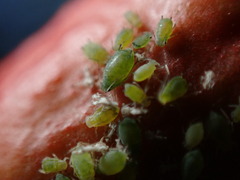 Aphis punicaee0pest
 Cheilomenes sexmaculatae7biocontrol_agent
 Punica granatum
 Salvia
 Coccinella septempunctata