Claim · model-written summary
Citrus aurantium essential oil was more toxic to pomegranate aphids (Aphis punicae), LC50 0.37 μL/mL at 48 h.
- Taxon
- pomegranate
 Punica granatume0
- Treatment
- C. aurantium L. EOe1
- Interactor
- Aphis punicae
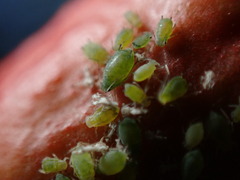 Aphis punicaee2pest
- Outcome
- toxicitye1
- Direction
- greatere1
- Value
- 0.37e1
- Qualifier
- at 48 h after applicatione1
Not reportedMaterialGeneCompoundOrgan / stageSecond interactorSecond interactor roleComparatorSetting
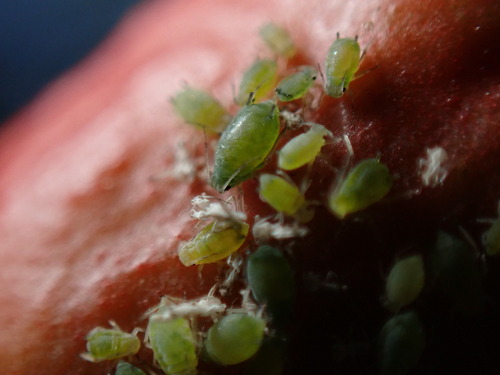
Organisms pictured · Representative pictures of the matched species, not figures from the paper.

Verbatim
e0“Aphids are serious pests of a wide range of agricultural crops, including pomegranates and grapevines”
e1“C. aurantium L. EO had greater toxicity against pomegranate and grapevine aphids, with LC50 of 0.37 and 0.82 μL/mL, respectively, at 48 h after application”
e2“pomegranate and grapevine aphids, Aphis punicae and A. illinoisensis”
Title
Saqer S. Alotaibi; Hadeer Darwish; Ahmed K. Alzahrani; et al. Agronomy 2022. doi:10.3390/agronomy12092040
Other claims from this paper (5)
- Intervention effect Citrus aurantium essential oil was more toxic to grapevine aphids (A. illinoisensis), LC50 0.82 μL/mL at 48 h.
- Intervention effect C. aurantium EO at 2.5 μL/cm2 gave the highest repellence of A. punicae, 100% after 3 h.
- Observation Repellence of A. illinoisensis on grapevine was 88%, in contrast to A. punicae.
- Observation GC-MS identified limonene, 3-carene, pinene and p-cymene as the active substances of the Citrus essential oils.
- Recommendation The results offer a potential tool to control the two aphid species in pomegranate and grapevine fields.