Abstract
The pomegranate (Punica granatum L.) (Lythraceae) is commonly infested with many insect pests, especially aphids. The pomegranate aphid, Aphis punicae (Hemiptera: Aphididae) is the important insect pest on pomegranate trees where it infests leaves, buds and fruits. It causes damage that reduces the yield of pomegranate fruits. This investigation estimated the control efficacy of leaf and fruit extracts of the usher plant, Calotropis procera (Apocynaceae) on A. punicae. The phenols and flavonoids in both extracts were determined by HPLC analysis. Total phenols and flavonoids were 23.089 and 2.223 mg/g in leaves and fruits, respectively. We found that LC50 and LC90 values of leaf extract (251.3 and 1017.9 µg/mL, respectively) were significantly lower than those of fruit extract (622.5 and 2521.8 µg/mL, respectively). Field experiments using leaf extract resulted in an LC50 within one- and two-week intervals. Results of field application showed there was always significantly greater aphid reductions in the treatment where the spray was two weeks old over treatment that was one week old. However, there were no differences always noticed for spraying that was a week old in both treatments. This result stated that the application of C. procera leaf extract at one-week intervals is efficient to control pomegranate aphids with more than 90% of a reduction rate. Further experiments could be done to estimate the safety of this plant extract on beneficial organisms such as insect predators and parasitoids associated with the insect pests.
Abstract from the paper’s OpenAlex record, shown for indexing and research. Copyright remains with the authors or the publisher. Read at the source ↗
The text the model read, with the source record’s inline markup (italics, sub- and superscripts) rendered and its character entities decoded; quote offsets refer to the raw text.
Claims 6
Claim · model-written summary
Total phenols in leaves were reported as 23.089 mg/g.
- Taxon
- Calotropis procera
 Calotropis procerae1
- Organ / stage
- leavese0
- Outcome
- Total phenolse0
- Value
- 23.089e0
Organisms pictured · Representative pictures of the matched species, not figures from the paper.

Verbatim
e0“Total phenols and flavonoids were 23.089 and 2.223 mg/g in leaves and fruits, respectively.”
e1“usher plant, Calotropis procera”
Claim · model-written summary
Total flavonoids in fruits were reported as 2.223 mg/g.
- Taxon
- Calotropis proceraCalotropis procerae1
- Organ / stage
- fruitse0
- Outcome
- flavonoidse0
- Value
- 2.223 mg/ge0
Organisms pictured · Representative pictures of the matched species, not figures from the paper.
Verbatim
e0“Total phenols and flavonoids were 23.089 and 2.223 mg/g in leaves and fruits, respectively.”
e1“usher plant, Calotropis procera”
Claim · model-written summary
Leaf extract had a significantly lower LC50 against pomegranate aphid than fruit extract.
- Taxon
- Pomegranate
 Punica granatumt0
- Treatment
- leaf extracte0
- Interactor
- Aphis punicae
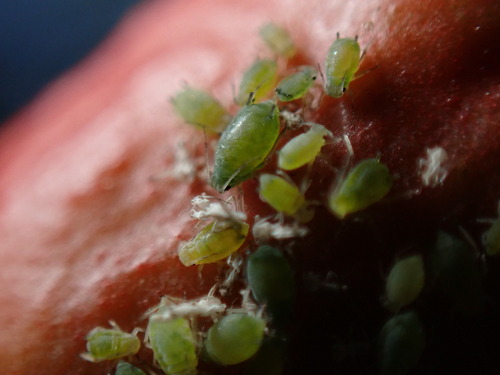
 Aphis punicaee1pest
- Outcome
- LC50e0
- Direction
- lowere0
- Value
- 251.3e0
- Qualifier
- 622.5e0
- Comparator
- fruit extracte0
Organisms pictured · Representative pictures of the matched species, not figures from the paper.

Verbatim
t0“Pomegranate Trees”
e0“We found that LC50 and LC90 values of leaf extract (251.3 and 1017.9 µg/mL, respectively) were significantly lower than those of fruit extract (622.5 and 2521.8 µg/mL, respectively).”
e1“pomegranate aphid, Aphis punicae”
Claim · model-written summary
Leaf extract had a significantly lower LC90 against pomegranate aphid than fruit extract.
- Taxon
- PomegranatePunica granatumt0
- Treatment
- leaf extracte0
- Interactor
- Aphis punicaeAphis punicaee1pest
- Outcome
- LC90e0
- Direction
- lowere0
- Value
- 1017.9 µg/mLe0
- Qualifier
- 2521.8 µg/mLe0
- Comparator
- fruit extracte0
Organisms pictured · Representative pictures of the matched species, not figures from the paper.
Verbatim
t0“Pomegranate Trees”
e0“We found that LC50 and LC90 values of leaf extract (251.3 and 1017.9 µg/mL, respectively) were significantly lower than those of fruit extract (622.5 and 2521.8 µg/mL, respectively).”
e1“pomegranate aphid, Aphis punicae”
Claim · model-written summary
A two-week-old field spray reduced aphids significantly more than a one-week-old spray.
- Taxon
- PomegranatePunica granatumt0
- Treatment
- spray was two weeks olde0
- Interactor
- Aphis punicaeAphis punicaee1pest
- Outcome
- aphid reductionse0
- Direction
- greatere0
- Comparator
- treatment that was one week olde0
- Setting
- field applicatione0
Organisms pictured · Representative pictures of the matched species, not figures from the paper.
Verbatim
t0“Pomegranate Trees”
e0“Results of field application showed there was always significantly greater aphid reductions in the treatment where the spray was two weeks old over treatment that was one week old.”
e1“pomegranate aphid, Aphis punicae”
Claim · model-written summary
Weekly Calotropis leaf extract application reduced pomegranate aphids by more than 90%.
- Taxon
- PomegranatePunica granatumt0
- Treatment
- C. procera leaf extract at one-week intervalse0
- Interactor
- pomegranate aphidse0pest
- Outcome
- pomegranate aphidse0
- Direction
- reductione0
- Value
- more than 90%e0
Not reportedComparator
Organisms pictured · Representative pictures of the matched species, not figures from the paper.
Verbatim
t0“Pomegranate Trees”
e0“the application of C. procera leaf extract at one-week intervals is efficient to control pomegranate aphids with more than 90% of a reduction rate.”
The same questions in other papers
application · Aphis punicae · Punica granatum (pomegranate)Results agree
1 paper in the same direction as this paper
- positive
botanical · Aphis punicae · Punica granatum (pomegranate)Results agree
2 papers in the same direction as this paper
- positive
- positive
botanical · pest · Punica granatum (pomegranate)Results agree
4 papers in the same direction as this paper
- positive
- positive
- positive
1 paper more in this group
See all 5 papers →Claims are grouped by organism, treatment and what was measured or targeted. A paper counts as positive when any of its claims in the group is positive.