Claim · model-written summary
High light interception occurred at leaf area index 4.0.
- Taxon
- Eucalyptus nitens
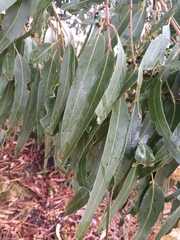 Eucalyptus nitenst0
- Outcome
- light interceptione0
- Value
- 95%e0
- Qualifier
- L of 4.0e0
Not reportedMaterialGeneCompoundOrgan / stageInteractorInteractor roleSecond interactorSecond interactor roleTreatmentComparatorSettingDirection
Organisms pictured · Representative pictures of the matched species, not figures from the paper.
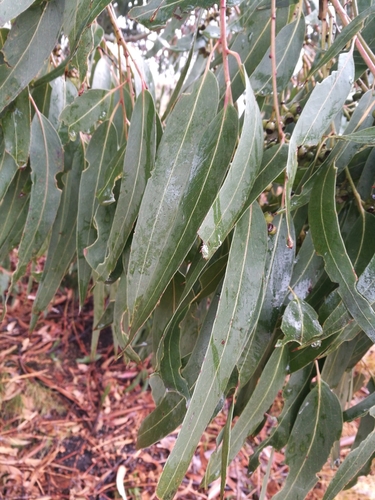
Verbatim
e0“high light interception (95%) occurred with an L of 4.0”
t0“Eucalyptus nitens”
Title
E. A. Pinkard; M. Battaglia; C. L. Beadle; et al. Tree Physiology 1999. doi:10.1093/treephys/19.1.1
Other claims from this paper (12)
- Intervention effect Green pruning increases light-saturated CO2 assimilation.
- Observation Green pruning changes total leaf area and foliage distribution.
- Intervention effect The 50% pruning treatment reduced daily net biomass production by 20% immediately.
- Intervention effect The 50% pruning treatment reduced leaf area index to 3.5.
- Observation Physiological responses compensated fully for lost intercepted radiation within 110 days after 50% pruning.
- Intervention effect The 70% pruning treatment reduced leaf area index to 1.9.
- Intervention effect The 70% pruning treatment reduced daily net biomass production by 77%.
- Intervention effect After 70% pruning, physiological responses did not restore daily net biomass production to unpruned levels.
- Association Increased assimilation after pruning raised modeled daily net biomass production by 20% in 50% pruned trees.
- Association Increased assimilation after pruning raised modeled daily net biomass production by 25% in 70% pruned trees.
- Association Changes in leaf area and foliage distribution increased daily net biomass production by 47% in 50% pruned trees.
- Mechanism Reduced photosynthetic potential following 70% pruning caused only small changes in leaf area and foliage distribution, with little effect on daily net biomass production.