Abstract
Green pruning of Eucalyptus nitens (Deane and Maiden) Maiden increases instantaneous rates of light-saturated CO(2) assimilation (A), and changes patterns of total leaf area and foliage distribution. We investigated the importance of such changes on the rate of recovery of growth following pruning. A simple process-based model was developed to estimate daily net biomass production (G(d)) of three-year-old plantation-grown trees over a 20-month period. The trees had been pruned by removal of 0, 50 or 70% of the length of green crown, equivalent to removal of 0, 55 or 88% of leaf area, respectively, when the plantation verged on canopy closure. Total G(d) was reduced by only 20% immediately following the 50%-pruning treatment, as a result of both the high leaf dark respiration and low A in the portion of the crown removed compared to the top of the crown. Pruning at the time of canopy closure preempted a natural and rapid decline in G(d) of the lower crown. Although leaf area index (L) was approximately 6.0 at the time of pruning, high light interception (95%) occurred with an L of 4.0. The 50%-pruning treatment reduced L to 3.5, but the physiological responses to pruning were sufficient to compensate fully for the reduction in intercepted radiation within 110 days of pruning. The 70%-pruning treatment reduced L to 1.9, and reduced G(d) by 77%, reflecting the removal of branches with high A in the mid and upper crown. Physiological responses to the 70%-pruning treatment were insufficient to increase G(d) to the value of unpruned trees during the study. Model sensitivity analysis showed that increases in A following pruning increased G(d) by 20 and 25% in the 50- and 70%-pruned trees, respectively, 20 months after pruning. Changes in leaf area/foliage distribution had a greater effect on G(d) of 50%-pruned trees (47% increase) than did changes in A. However, the reduction in photosynthetic potential associated with the 70%-pruning treatment resulted in only small changes in leaf area/foliage distribution, which consequently had little effect on G(d). The effects of physiological processes occurring within the crown and in response to green pruning on G(d) are discussed with respect to pruning of plantations.
Abstract from the paper’s OpenAlex record, shown for indexing and research. Copyright remains with the authors or the publisher. Read at the source ↗
The text the model read, with the source record’s inline markup (italics, sub- and superscripts) rendered and its character entities decoded; quote offsets refer to the raw text.
Claims 13
Claim · model-written summary
Green pruning increases light-saturated CO2 assimilation.
- Taxon
- Eucalyptus nitens
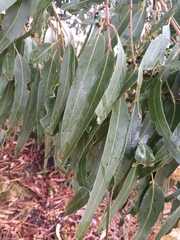 Eucalyptus nitense0
- Treatment
- Green pruninge0
- Outcome
- light-saturated CO(2) assimilation (A)e0
- Direction
- increasese0
Not reportedComparator
Organisms pictured · Representative pictures of the matched species, not figures from the paper.
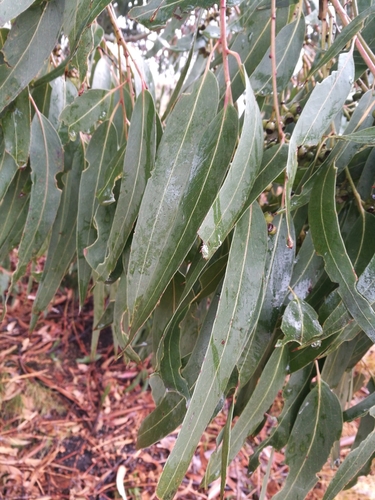
Verbatim
e0“Green pruning of Eucalyptus nitens (Deane and Maiden) Maiden increases instantaneous rates of light-saturated CO(2) assimilation (A)”
Claim · model-written summary
Green pruning changes total leaf area and foliage distribution.
- Taxon
- Eucalyptus nitensEucalyptus nitenst0
- Outcome
- total leaf area and foliage distributione0
Organisms pictured · Representative pictures of the matched species, not figures from the paper.
Verbatim
e0“changes patterns of total leaf area and foliage distribution”
t0“Eucalyptus nitens”
Claim · model-written summary
The 50% pruning treatment reduced daily net biomass production by 20% immediately.
- Taxon
- Eucalyptus nitensEucalyptus nitenst0
- Treatment
- 50%-pruning treatmente0
- Outcome
- G(d)e0
- Direction
- reducede0
- Value
- 20%e0
Not reportedComparator
Organisms pictured · Representative pictures of the matched species, not figures from the paper.
Verbatim
e0“Total G(d) was reduced by only 20% immediately following the 50%-pruning treatment”
t0“Eucalyptus nitens”
Claim · model-written summary
High light interception occurred at leaf area index 4.0.
- Taxon
- Eucalyptus nitensEucalyptus nitenst0
- Outcome
- light interceptione0
- Value
- 95%e0
- Qualifier
- L of 4.0e0
Organisms pictured · Representative pictures of the matched species, not figures from the paper.
Verbatim
e0“high light interception (95%) occurred with an L of 4.0”
t0“Eucalyptus nitens”
Claim · model-written summary
The 50% pruning treatment reduced leaf area index to 3.5.
- Taxon
- Eucalyptus nitensEucalyptus nitenst0
- Treatment
- 50%-pruning treatmente0
- Outcome
- Le0
- Direction
- reducede0
- Value
- 3.5e0
Not reportedComparator
Organisms pictured · Representative pictures of the matched species, not figures from the paper.
Verbatim
e0“The 50%-pruning treatment reduced L to 3.5”
t0“Eucalyptus nitens”
Claim · model-written summary
Physiological responses compensated fully for lost intercepted radiation within 110 days after 50% pruning.
- Taxon
- Eucalyptus nitensEucalyptus nitenst0
- Outcome
- reduction in intercepted radiatione0
- Qualifier
- within 110 days of pruninge0
Organisms pictured · Representative pictures of the matched species, not figures from the paper.
Verbatim
e0“physiological responses to pruning were sufficient to compensate fully for the reduction in intercepted radiation within 110 days of pruning”
t0“Eucalyptus nitens”
Claim · model-written summary
The 70% pruning treatment reduced leaf area index to 1.9.
- Taxon
- Eucalyptus nitensEucalyptus nitenst0
- Treatment
- 70%-pruning treatmente0
- Outcome
- Le0
- Direction
- reducede0
- Value
- 1.9e0
Not reportedComparator
Organisms pictured · Representative pictures of the matched species, not figures from the paper.
Verbatim
e0“The 70%-pruning treatment reduced L to 1.9”
t0“Eucalyptus nitens”
Claim · model-written summary
The 70% pruning treatment reduced daily net biomass production by 77%.
- Taxon
- Eucalyptus nitensEucalyptus nitenst0
- Treatment
- 70%-pruning treatmente1
- Outcome
- G(d)e0
- Direction
- reducede0
- Value
- 77%e0
Not reportedComparator
Organisms pictured · Representative pictures of the matched species, not figures from the paper.
Verbatim
e0“reduced G(d) by 77%”
t0“Eucalyptus nitens”
e1“The 70%-pruning treatment reduced L to 1.9, and reduced G(d) by 77%”
Claim · model-written summary
After 70% pruning, physiological responses did not restore daily net biomass production to unpruned levels.
- Taxon
- Eucalyptus nitensEucalyptus nitenst0
- Treatment
- 70%-pruning treatmente0
- Outcome
- G(d)e0
- Direction
- insufficient to increasee0
- Comparator
- unpruned treese0
Organisms pictured · Representative pictures of the matched species, not figures from the paper.
Verbatim
e0“Physiological responses to the 70%-pruning treatment were insufficient to increase G(d) to the value of unpruned trees during the study”
t0“Eucalyptus nitens”
Claim · model-written summary
Increased assimilation after pruning raised modeled daily net biomass production by 20% in 50% pruned trees.
Organisms pictured · Representative pictures of the matched species, not figures from the paper.
Verbatim
e0“increases in A following pruning increased G(d) by 20 and 25% in the 50- and 70%-pruned trees, respectively, 20 months after pruning”
t0“Eucalyptus nitens”
Claim · model-written summary
Increased assimilation after pruning raised modeled daily net biomass production by 25% in 70% pruned trees.
- Taxon
- Eucalyptus nitensEucalyptus nitenst0
- Treatment
- 70%-pruned treese0
- Outcome
- G(d)e0
- Direction
- increasede0
- Value
- 25%e0
Organisms pictured · Representative pictures of the matched species, not figures from the paper.
Verbatim
e0“increases in A following pruning increased G(d) by 20 and 25% in the 50- and 70%-pruned trees, respectively, 20 months after pruning”
t0“Eucalyptus nitens”
Claim · model-written summary
Changes in leaf area and foliage distribution increased daily net biomass production by 47% in 50% pruned trees.
- Taxon
- Eucalyptus nitensEucalyptus nitenst0
- Treatment
- 50%-pruned treese0
- Outcome
- G(d)e0
- Direction
- increasee0
- Value
- 47%e0
Organisms pictured · Representative pictures of the matched species, not figures from the paper.
Verbatim
e0“Changes in leaf area/foliage distribution had a greater effect on G(d) of 50%-pruned trees (47% increase) than did changes in A”
t0“Eucalyptus nitens”
Claim · model-written summary
Reduced photosynthetic potential following 70% pruning caused only small changes in leaf area and foliage distribution, with little effect on daily net biomass production.
- Taxon
- Eucalyptus nitensEucalyptus nitenst0
- Treatment
- 70%-pruning treatmente0
- Outcome
- G(d)e0
- Qualifier
- only small changes in leaf area/foliage distributione0
Organisms pictured · Representative pictures of the matched species, not figures from the paper.
Verbatim
e0“the reduction in photosynthetic potential associated with the 70%-pruning treatment resulted in only small changes in leaf area/foliage distribution, which consequently had little effect on G(d)”
t0“Eucalyptus nitens”