Claim · model-written summary
Increasing silica gel rates reduced the proportion of appressorial penetration by the rice blast fungus, compared with non-amended rice plants.
- Taxon
- rice
 Oryza sativae1
- Treatment
- silica gele1
- Interactor
- rice blast fungus
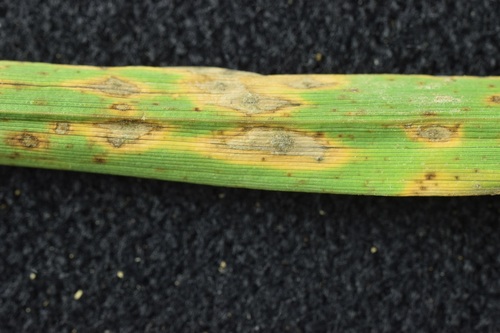
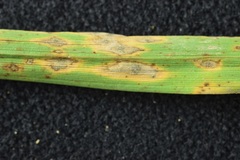 Pyricularia oryzaet0pathogen
- Outcome
- proportion of appressorial penetratione2
- Direction
- reducede2
- Comparator
- nonamendede1
Not reportedMaterialGeneCompoundOrgan / stageSecond interactorSecond interactor roleSettingValueQualifier
Organisms pictured · Representative pictures of the matched species, not figures from the paper.

Verbatim
e1“compared among rice plants amended with various rates of silica gel to those plants nonamended”
e2“the proportion of appressorial penetration was reduced by increasing amounts of silica gel applied and increased with the length of period after spray inoculation”
t0“Preventing Appressorial Penetration by the Rice Blast Fungus”
Title
The Role of Silicon in Preventing Appressorial Penetration by the Rice Blast Fungus
T. Hayasaka; H. Fujii; K. Ishiguro Phytopathology 2008. doi:10.1094/phyto-98-9-1038
Other claims from this paper (6)
- Association The number of lesions per rice leaf decreased with the amount of Si applied.
- Mechanism Si in the rice leaf epidermis may confer resistance against appressorial penetration by the rice blast fungus.
- Mechanism Si also confers physiological resistance against blast infection after penetration.
- Association Relative Si levels on the adaxial leaf surface increased with the amount of silica gel applied to rice plants.
- Observation Si amounts in the youngest rice leaves were consistent with the amounts of silica gel applied.
- Association The proportion of appressorial penetration increased with the length of the period after spray inoculation.