Claim · model-written summary
Glycine, dimethylglycine and TMG had no effect on adventitious roots in C. maxima.
- Taxon
- C . maxima
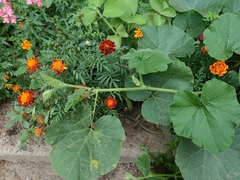 Cucurbita maximae0
- Treatment
- glycine, dimethylglycine, or TMGe0
- Outcome
- adventitious rootse0
- Direction
- no effecte0
Not reportedMaterialGeneCompoundOrgan / stageInteractorInteractor roleSecond interactorSecond interactor roleComparatorSettingValueQualifier
Organisms pictured · Representative pictures of the matched species, not figures from the paper.

Verbatim
e0“One milli molar MeGly inhibited the formation of adventitious roots and their elongation in C . maxima , but glycine, dimethylglycine, or TMG had no effect.”
Title
Atsushi Oda; Madoka Shimizu; Takeshi Kuroha; et al. Physiologia Plantarum 2005. doi:10.1111/j.1399-3054.2005.00528.x
Other claims from this paper (8)
- Observation Methylglycine and glutamine were major amino acids in C. maxima root xylem sap.
- Observation Methylglycine was not detected in cucumber xylem sap.
- Intervention effect Drought and rewatering raised root xylem sap methylglycine to 2.5 m M.
- Observation After flowering, xylem sap methylglycine fell significantly.
- Observation Glutamine concentration decreased only after fruit ripening.
- Intervention effect One millimolar methylglycine inhibited adventitious root formation and elongation in C. maxima.
- Intervention effect Methylglycine inhibited adventitious roots and stem elongation in cucumber cuttings.
- Intervention effect Methylglycine inhibited adventitious roots and stem elongation in Phaseolus angularis cuttings.