Claim · model-written summary
Higher water conductivity reduced water use efficiency, most at 25% P2O5.
- Taxon
- beet
 Beta vulgarist0
- Treatment
- higher electrical conductivity of the irrigation watere0
- Outcome
- water use efficiencye0
- Direction
- negatively affectede0
- Qualifier
- 25% P2O5 dosee0
Not reportedMaterialGeneCompoundOrgan / stageInteractorInteractor roleSecond interactorSecond interactor roleComparatorSettingValue
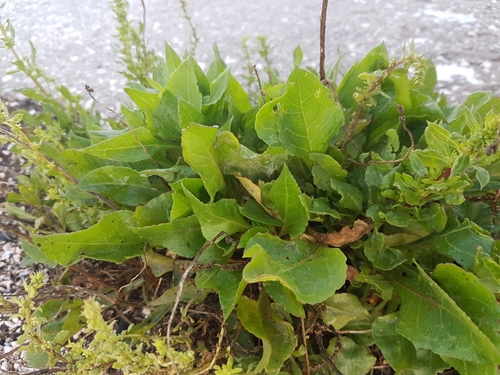
Organisms pictured · Representative pictures of the matched species, not figures from the paper.
Verbatim
e0“The higher electrical conductivity of the irrigation water negatively affected water use efficiency, most significantly at the 25% P2O5 dose”
t0“Beet Crops”
Title
Brackish Water, Phosphate Fertilization and Trichoderma in the Agronomic Performance of Beet Crops
Andreza Silva Barbosa; Alexsandro Oliveira da Silva; Geocleber Gomes de Sousa; et al. Agronomy 2024. doi:10.3390/agronomy14061306
Other claims from this paper (10)
- Intervention effect Salt stress reduced beet leaf area.
- Intervention effect Increasing water conductivity reduced shoot dry mass, especially at 25% P2O5.
- Intervention effect Salt stress reduced photosynthesis more at 25% P2O5 and without Trichoderma.
- Intervention effect Higher irrigation water conductivity reduced transpiration at 25% P2O5 with Trichoderma.
- Intervention effect Higher irrigation water conductivity increased leaf temperature at 25% P2O5 with Trichoderma.
- Intervention effect The 25% P2O5 dose increased stomatal conductance.
- Intervention effect The 50% P2O5 dose increased beet productivity and quality.
- Intervention effect The 100% P2O5 dose increased beet productivity and quality.
- Association Root diameter was higher with lower water conductivity and no Trichoderma.
- Association Root pH was high with lowest conductivity, 25% P2O5 and no Trichoderma.