Abstract
The study hypothesis proposes that the use of Trichoderma, associated with fertilization with 100% of the recommended phosphorus, may mitigate saline stress and maximize the productivity and quality of the tuberous root. This study aims to evaluate the mitigating effects of phosphate fertilization and Trichoderma harzianum in beet plants under salt stress, by measuring the initial growth, leaf gas exchange, productivity and quality of the beet. The experimental design used was entirely randomized, in a 3 × 2 × 2 factorial scheme, referring to three doses of phosphate fertilization (25%, 50% and 100%), with and without the use of Trichoderma-based inoculation, and two levels of electrical conductivity of the irrigation water (0.5 and 6.2 dS m−1). Salt stress negatively affected the leaf area of the beet. The shoots’ dry mass was reduced as the electrical conductivity of the irrigation water increased, especially in the treatment with the 25% P2O5 dose. Salt stress reduced photosynthesis to a greater extent at the 25% P2O5 dose and in the absence of Trichoderma harzianum. Increasing the electrical conductivity of the irrigation water reduced transpiration and increased leaf temperature at the 25% P2O5 dose and in the presence of Trichoderma harzianum. The 25% P2O5 dose increased the stomatal conductance of the beet. The higher electrical conductivity of the irrigation water negatively affected water use efficiency, most significantly at the 25% P2O5 dose. Our data showed that the doses of 50% and 100% P2O5 were more efficient at increasing the productivity and quality of the beet, with the tuberous root diameter being higher under the lower electrical conductivity of the water and the absence of Trichoderma harzianum. The pH was high under the lowest electrical conductivity of the water, with a dose of 25% P2O5 and the absence of Trichoderma harzianum.
Abstract from the paper’s OpenAlex record; open copy licensed cc-by. Read at the source ↗
The text the model read, with the source record’s inline markup (italics, sub- and superscripts) rendered and its character entities decoded; quote offsets refer to the raw text.
Claims 11
Claim · model-written summary
Salt stress reduced beet leaf area.
- Taxon
- beet
 Beta vulgarist0
- Treatment
- Salt stresse0
- Outcome
- leaf areae0
- Direction
- negatively affectede0
Not reportedComparator
Organisms pictured · Representative pictures of the matched species, not figures from the paper.
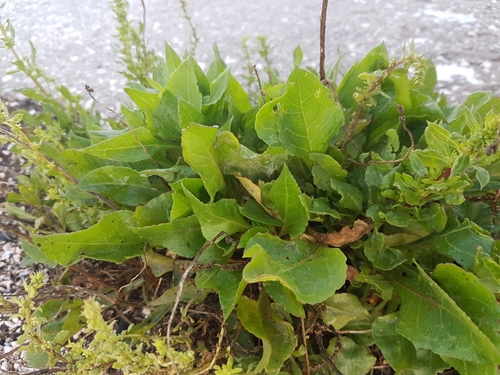
Verbatim
e0“Salt stress negatively affected the leaf area of the beet”
t0“Beet Crops”
Claim · model-written summary
Increasing water conductivity reduced shoot dry mass, especially at 25% P2O5.
- Taxon
- beetBeta vulgarist0
- Treatment
- electrical conductivity of the irrigation watere0
- Outcome
- shoots’ dry masse0
- Direction
- reducede0
- Qualifier
- 25% P2O5 dosee0
Not reportedComparator
Organisms pictured · Representative pictures of the matched species, not figures from the paper.
Verbatim
e0“The shoots’ dry mass was reduced as the electrical conductivity of the irrigation water increased, especially in the treatment with the 25% P2O5 dose”
t0“Beet Crops”
Claim · model-written summary
Salt stress reduced photosynthesis more at 25% P2O5 and without Trichoderma.
- Taxon
- beetBeta vulgarist0
- Treatment
- Salt stresse0
- Outcome
- photosynthesise0
- Direction
- reducede0
- Qualifier
- 25% P2O5 dosee0
Not reportedComparator
Organisms pictured · Representative pictures of the matched species, not figures from the paper.
Verbatim
e0“Salt stress reduced photosynthesis to a greater extent at the 25% P2O5 dose and in the absence of Trichoderma harzianum”
t0“Beet Crops”
Claim · model-written summary
Higher irrigation water conductivity reduced transpiration at 25% P2O5 with Trichoderma.
- Taxon
- beetBeta vulgarist0
- Treatment
- electrical conductivity of the irrigation watere0
- Outcome
- transpiratione0
- Direction
- reducede0
- Qualifier
- 25% P2O5 dosee0
Not reportedComparator
Organisms pictured · Representative pictures of the matched species, not figures from the paper.
Verbatim
e0“Increasing the electrical conductivity of the irrigation water reduced transpiration and increased leaf temperature at the 25% P2O5 dose and in the presence of Trichoderma harzianum”
t0“Beet Crops”
Claim · model-written summary
Higher irrigation water conductivity increased leaf temperature at 25% P2O5 with Trichoderma.
- Taxon
- beetBeta vulgarist0
- Treatment
- electrical conductivity of the irrigation watere0
- Outcome
- leaf temperaturee0
- Direction
- increasede0
- Qualifier
- 25% P2O5 dosee0
Not reportedComparator
Organisms pictured · Representative pictures of the matched species, not figures from the paper.
Verbatim
e0“Increasing the electrical conductivity of the irrigation water reduced transpiration and increased leaf temperature at the 25% P2O5 dose and in the presence of Trichoderma harzianum”
t0“Beet Crops”
Claim · model-written summary
The 25% P2O5 dose increased stomatal conductance.
- Taxon
- beetBeta vulgarist0
- Treatment
- 25% P2O5 dosee0
- Outcome
- stomatal conductancee0
- Direction
- increasede0
Not reportedComparator
Organisms pictured · Representative pictures of the matched species, not figures from the paper.
Verbatim
e0“The 25% P2O5 dose increased the stomatal conductance of the beet”
t0“Beet Crops”
Claim · model-written summary
Higher water conductivity reduced water use efficiency, most at 25% P2O5.
- Taxon
- beetBeta vulgarist0
- Treatment
- higher electrical conductivity of the irrigation watere0
- Outcome
- water use efficiencye0
- Direction
- negatively affectede0
- Qualifier
- 25% P2O5 dosee0
Not reportedComparator
Organisms pictured · Representative pictures of the matched species, not figures from the paper.
Verbatim
e0“The higher electrical conductivity of the irrigation water negatively affected water use efficiency, most significantly at the 25% P2O5 dose”
t0“Beet Crops”
Claim · model-written summary
The 50% P2O5 dose increased beet productivity and quality.
- Taxon
- beetBeta vulgarist0
- Treatment
- 50%e0
- Outcome
- productivity and qualitye0
- Direction
- increasinge0
Not reportedComparator
Organisms pictured · Representative pictures of the matched species, not figures from the paper.
Verbatim
e0“the doses of 50% and 100% P2O5 were more efficient at increasing the productivity and quality of the beet”
t0“Beet Crops”
Claim · model-written summary
The 100% P2O5 dose increased beet productivity and quality.
- Taxon
- beetBeta vulgarist0
- Treatment
- 100% P2O5e0
- Outcome
- productivity and qualitye0
- Direction
- increasinge0
Not reportedComparator
Organisms pictured · Representative pictures of the matched species, not figures from the paper.
Verbatim
e0“the doses of 50% and 100% P2O5 were more efficient at increasing the productivity and quality of the beet”
t0“Beet Crops”
Claim · model-written summary
Root diameter was higher with lower water conductivity and no Trichoderma.
- Taxon
- beetBeta vulgarist0
- Treatment
- lower electrical conductivity of the watere0
- Outcome
- tuberous root diametere0
- Direction
- highere0
- Qualifier
- absence of Trichoderma harzianume0
Organisms pictured · Representative pictures of the matched species, not figures from the paper.
Verbatim
e0“tuberous root diameter being higher under the lower electrical conductivity of the water and the absence of Trichoderma harzianum”
t0“Beet Crops”
Claim · model-written summary
Root pH was high with lowest conductivity, 25% P2O5 and no Trichoderma.
- Taxon
- beetBeta vulgarist0
- Treatment
- lowest electrical conductivity of the watere0
- Outcome
- pHe0
- Direction
- highe0
- Qualifier
- 25% P2O5e0
Organisms pictured · Representative pictures of the matched species, not figures from the paper.
Verbatim
e0“The pH was high under the lowest electrical conductivity of the water, with a dose of 25% P2O5 and the absence of Trichoderma harzianum”
t0“Beet Crops”
The same questions in other papers
salinity · growth · Beta vulgaris (beet)Results differ
40 papers in the same direction as this paper · 13 in the opposite direction
- positive
- positive
- positive
50 papers more in this group
See all 54 papers →irrigation · soil: physics · Beta vulgaris (beet)Positive and negative results
1 in the opposite direction
- positive
salinity · physiology: photosynthesis · Beta vulgaris (beet)Positive and negative results
11 papers in the same direction as this paper · 2 in the opposite direction
- negative
- positive
- positive
10 papers more in this group
See all 14 papers →irrigation · physiology: water · Beta vulgaris (beet)Positive and negative results
7 papers in the same direction as this paper · 33 in the opposite direction
- positive
- positive
- positive
37 papers more in this group
See all 41 papers →irrigation · growth · Beta vulgaris (beet)Positive and negative results
16 papers in the same direction as this paper · 34 in the opposite direction
- positive
- positive
- positive
47 papers more in this group
See all 51 papers →irrigation · physiology: gas exchange · Beta vulgaris (beet)Results agree
2 papers in the same direction as this paper
- negative
- negative
phosphorus · quality: general · Beta vulgaris (beet)Results agree
5 papers in the same direction as this paper
- positive
- positive
- positive
2 papers more in this group
See all 6 papers →Claims are grouped by organism, treatment and what was measured or targeted. A paper counts as positive when any of its claims in the group is positive.