Claim · model-written summary
In diseased bulk soils, bacterial richness and fungal diversity both increased markedly.
- Taxon
- Hevea brasiliensis
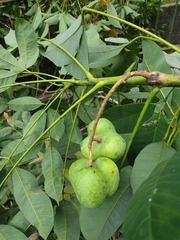 Hevea brasiliensist0
- Outcome
- bacterial richness and fungal diversitye0
- Direction
- increasede0
- Setting
- diseased bulk soilse0
Not reportedMaterialGeneCompoundOrgan / stageInteractorInteractor roleSecond interactorSecond interactor roleTreatmentComparatorValueQualifier
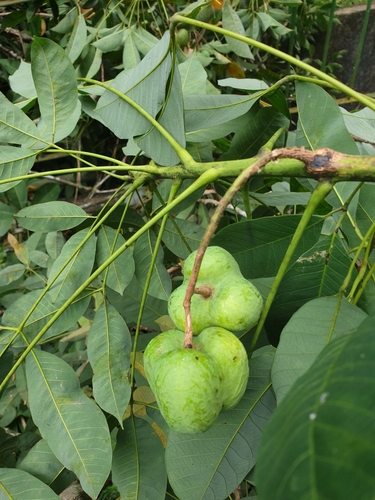
Organisms pictured · Representative pictures of the matched species, not figures from the paper.
Verbatim
e0“In diseased bulk soils, both bacterial richness and fungal diversity increased markedly”
t0“rubber tree (Hevea brasiliensis)”
Title
Xiangjia Meng; Haibin Cai; Yongwei Fu; et al. Plant and Soil 2026. doi:10.1007/s11104-026-08408-8
Other claims from this paper (12)
- Observation In diseased rhizosphere soils of rubber trees, bacterial abundance increased significantly.
- Observation In diseased rhizosphere soils of rubber trees, bacterial diversity decreased.
- Observation Fungal diversity in diseased rhizosphere soils showed a declining trend.
- Observation Co-occurrence network analysis showed enhanced microbial interaction density, particularly among fungi, in the rhizosphere diseased soil.
- Association Ganoderma was positively correlated with several functional microbial groups such as Bradyrhizobium.
- Association Ganoderma was strongly negatively correlated with biocontrol agents such as Trichoderma and Talaromyces.
- Observation The lignin-degrading fungi Trametes and Dichomitus were significantly enriched in the diseased rhizosphere.
- Association Trametes and Dichomitus were significantly positively correlated with Ganoderma.
- Observation Metagenomic analysis showed significant enrichment in diseased soils of gene abundances related to latex and lignin degradation, carbon and nitrogen cycling, and fungal signal transduction.
- Observation Defense-related metabolites such as 3-methylsalicylic acid, 5'-glucosyloxy-oxojasmonate and abscisic acid were upregulated in the diseased rhizosphere.
- Observation Plant cell wall-associated components such as ferulic acid were upregulated in the diseased rhizosphere.
- Mechanism The authors conclude that Ganoderma invasion leads to changes in the microbial community assembly process.