Abstract
Red root rot disease, caused by the soil-borne pathogen Ganoderma pseudoferreum, is a severe threat to the natural rubber industry. However, the mechanisms by which pathogen invasion affects the composition, function, and metabolic products of the soil microbial community in rubber trees (Hevea brasiliensis) remain unclear. Here, we compared different soil management patterns, including rhizosphere healthy soil (RHS), rhizosphere diseased soil (RDS), bulk healthy soil (BHS), and bulk diseased soil (BDS), to investigate the diversity, functions, and metabolic characteristics of soil microbial communities using metagenomic and metabolomic techniques. In diseased rhizosphere soils, bacterial abundance increased significantly while diversity decreased; fungal diversity showed a declining trend. In diseased bulk soils, both bacterial richness and fungal diversity increased markedly. Co-occurrence network analysis revealed enhanced microbial interaction density (particularly among fungi) in the rhizosphere diseased soil. Ganoderma positively correlated with several functional microbial (e.g., Bradyrhizobium) groups but strongly negatively correlated with biocontrol agents (e.g., Trichoderma and Talaromyces). Lignin-degrading fungi Trametes and Dichomitus, which are significantly enriched in the diseased rhizosphere, significantly positively correlated with Ganoderma. Metagenomic analysis revealed significant enrichment of gene abundances related to latex and lignin degradation, carbon and nitrogen cycling, and fungal signal transduction in diseased soils. Metabolomic analysis revealed the upregulation of defense-related metabolites (e.g., 3-methylsalicylic acid, 5'-glucosyloxy-oxojasmonate, and abscisic acid) and plant cell wall-associated components (e.g., ferulic acid) in the diseased rhizosphere. These findings indicate that the invasion of Ganoderma leads to changes in the microbial community assembly process, elucidating the pathogenesis of red root rot in rubber trees from a soil microecological perspective. Simultaneously, this study provides direction for future research focused on mitigating crop losses caused by this pathogen.
Abstract from the paper’s OpenAlex record; open copy licensed cc-by-nc-nd. Read at the source ↗
The text the model read, with the source record’s inline markup (italics, sub- and superscripts) rendered and its character entities decoded; quote offsets refer to the raw text.
Claims 13
Claim · model-written summary
In diseased rhizosphere soils of rubber trees, bacterial abundance increased significantly.
- Taxon
- Hevea brasiliensis
 Hevea brasiliensist0
- Outcome
- bacterial abundancee0
- Direction
- increasede0
- Setting
- diseased rhizosphere soilse0
Organisms pictured · Representative pictures of the matched species, not figures from the paper.
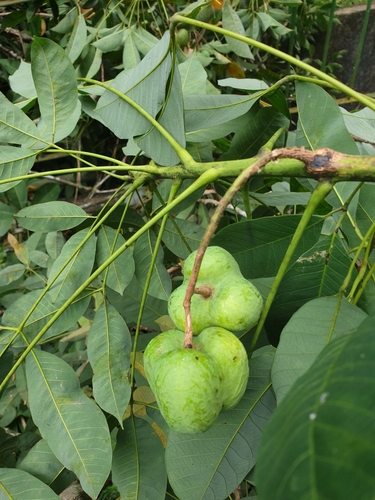
Verbatim
e0“In diseased rhizosphere soils, bacterial abundance increased significantly while diversity decreased”
t0“rubber tree (Hevea brasiliensis)”
Claim · model-written summary
In diseased rhizosphere soils of rubber trees, bacterial diversity decreased.
- Taxon
- Hevea brasiliensisHevea brasiliensist0
- Outcome
- diversitye0
- Direction
- decreasede0
- Setting
- diseased rhizosphere soilse0
Organisms pictured · Representative pictures of the matched species, not figures from the paper.
Verbatim
e0“In diseased rhizosphere soils, bacterial abundance increased significantly while diversity decreased”
t0“rubber tree (Hevea brasiliensis)”
Claim · model-written summary
Fungal diversity in diseased rhizosphere soils showed a declining trend.
- Taxon
- Hevea brasiliensisHevea brasiliensist0
- Outcome
- fungal diversitye0
- Direction
- declininge0
Organisms pictured · Representative pictures of the matched species, not figures from the paper.
Verbatim
e0“fungal diversity showed a declining trend”
t0“rubber tree (Hevea brasiliensis)”
Claim · model-written summary
In diseased bulk soils, bacterial richness and fungal diversity both increased markedly.
- Taxon
- Hevea brasiliensisHevea brasiliensist0
- Outcome
- bacterial richness and fungal diversitye0
- Direction
- increasede0
- Setting
- diseased bulk soilse0
Organisms pictured · Representative pictures of the matched species, not figures from the paper.
Verbatim
e0“In diseased bulk soils, both bacterial richness and fungal diversity increased markedly”
t0“rubber tree (Hevea brasiliensis)”
Claim · model-written summary
Co-occurrence network analysis showed enhanced microbial interaction density, particularly among fungi, in the rhizosphere diseased soil.
- Taxon
- Hevea brasiliensisHevea brasiliensist0
- Outcome
- microbial interaction densitye0
- Direction
- enhancede0
- Setting
- rhizosphere diseased soile0
Organisms pictured · Representative pictures of the matched species, not figures from the paper.
Verbatim
e0“Co-occurrence network analysis revealed enhanced microbial interaction density (particularly among fungi) in the rhizosphere diseased soil”
t0“rubber tree (Hevea brasiliensis)”
Claim · model-written summary
Ganoderma was positively correlated with several functional microbial groups such as Bradyrhizobium.
- Taxon
- Hevea brasiliensisHevea brasiliensist0
- Second interactor
- Bradyrhizobium
 Bradyrhizobiume0other
- Outcome
- functional microbial (e.g., Bradyrhizobium) groupse0
- Direction
- positively correlatede0
 Ganoderma
Organisms pictured · Representative pictures of the matched species, not figures from the paper.


Verbatim
e0“Ganoderma positively correlated with several functional microbial (e.g., Bradyrhizobium) groups but strongly negatively correlated with biocontrol agents (e.g., Trichoderma and Talaromyces)”
t0“rubber tree (Hevea brasiliensis)”
Claim · model-written summary
Ganoderma was strongly negatively correlated with biocontrol agents such as Trichoderma and Talaromyces.
- Taxon
- Hevea brasiliensisHevea brasiliensist0
- Second interactor
- Trichoderma
 Trichodermae0biocontrol_agent
- Outcome
- biocontrol agentse0
- Direction
- strongly negatively correlatede0
Organisms pictured · Representative pictures of the matched species, not figures from the paper.

Verbatim
e0“Ganoderma positively correlated with several functional microbial (e.g., Bradyrhizobium) groups but strongly negatively correlated with biocontrol agents (e.g., Trichoderma and Talaromyces)”
t0“rubber tree (Hevea brasiliensis)”
Claim · model-written summary
The lignin-degrading fungi Trametes and Dichomitus were significantly enriched in the diseased rhizosphere.
- Taxon
- Hevea brasiliensisHevea brasiliensist0
- Outcome
- Lignin-degrading fungi Trametes and Dichomituse0
- Direction
- enrichede0
- Setting
- diseased rhizospheree0
Organisms pictured · Representative pictures of the matched species, not figures from the paper.
Verbatim
e0“Lignin-degrading fungi Trametes and Dichomitus, which are significantly enriched in the diseased rhizosphere”
t0“rubber tree (Hevea brasiliensis)”
Claim · model-written summary
Trametes and Dichomitus were significantly positively correlated with Ganoderma.
- Taxon
- Hevea brasiliensisHevea brasiliensist0
- Outcome
- Trametes and Dichomituse0
- Direction
- positively correlatede0
Organisms pictured · Representative pictures of the matched species, not figures from the paper.
Verbatim
e0“Lignin-degrading fungi Trametes and Dichomitus, which are significantly enriched in the diseased rhizosphere, significantly positively correlated with Ganoderma”
t0“rubber tree (Hevea brasiliensis)”
Claim · model-written summary
Metagenomic analysis showed significant enrichment in diseased soils of gene abundances related to latex and lignin degradation, carbon and nitrogen cycling, and fungal signal transduction.
- Taxon
- Hevea brasiliensisHevea brasiliensist0
- Outcome
- gene abundances related to latex and lignin degradation, carbon and nitrogen cycling, and fungal signal transductione0
- Direction
- enrichmente0
- Setting
- diseased soilse0
Organisms pictured · Representative pictures of the matched species, not figures from the paper.
Verbatim
e0“Metagenomic analysis revealed significant enrichment of gene abundances related to latex and lignin degradation, carbon and nitrogen cycling, and fungal signal transduction in diseased soils”
t0“rubber tree (Hevea brasiliensis)”
Claim · model-written summary
Defense-related metabolites such as 3-methylsalicylic acid, 5'-glucosyloxy-oxojasmonate and abscisic acid were upregulated in the diseased rhizosphere.
- Taxon
- Hevea brasiliensisHevea brasiliensist0
- Outcome
- defense-related metabolitese0
- Direction
- upregulatione0
- Setting
- diseased rhizospheree0
Organisms pictured · Representative pictures of the matched species, not figures from the paper.
Verbatim
e0“Metabolomic analysis revealed the upregulation of defense-related metabolites (e.g., 3-methylsalicylic acid, 5'-glucosyloxy-oxojasmonate, and abscisic acid) and plant cell wall-associated components (e.g., ferulic acid) in the diseased rhizosphere”
t0“rubber tree (Hevea brasiliensis)”
Claim · model-written summary
Plant cell wall-associated components such as ferulic acid were upregulated in the diseased rhizosphere.
- Taxon
- Hevea brasiliensisHevea brasiliensist0
- Outcome
- plant cell wall-associated componentse0
- Direction
- upregulatione0
- Setting
- diseased rhizospheree0
Organisms pictured · Representative pictures of the matched species, not figures from the paper.
Verbatim
e0“Metabolomic analysis revealed the upregulation of defense-related metabolites (e.g., 3-methylsalicylic acid, 5'-glucosyloxy-oxojasmonate, and abscisic acid) and plant cell wall-associated components (e.g., ferulic acid) in the diseased rhizosphere”
t0“rubber tree (Hevea brasiliensis)”
Claim · model-written summary
The authors conclude that Ganoderma invasion leads to changes in the microbial community assembly process.
- Taxon
- Hevea brasiliensisHevea brasiliensist0
- Outcome
- microbial community assembly processe0
Organisms pictured · Representative pictures of the matched species, not figures from the paper.
Verbatim
e0“the invasion of Ganoderma leads to changes in the microbial community assembly process”
t0“rubber tree (Hevea brasiliensis)”