Claim · model-written summary
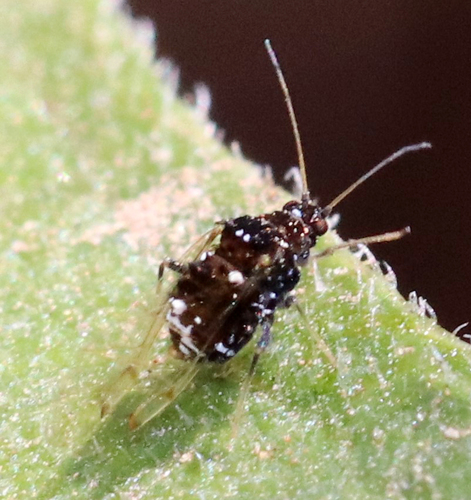
In the laboratory, eucalyptus extract, citrus extract-8.92%, citrus extract-19.4%, and C. subtsugae caused M. caryaefoliae mortality (mortality was reached approximately 78, 83, and 96%, respectively)
- Taxon
- pecan
 Carya illinoinensist0
- Treatment
- eucalyptus extracte0
- Interactor
- M. caryaefoliae
 Melanocallis caryaefoliaee0pest
- Outcome
- M. caryaefoliae mortalitye0
- Direction
- causede0
- Setting
- laboratorye0
Not reportedMaterialGeneCompoundOrgan / stageSecond interactorSecond interactor roleComparatorValueQualifier
Organisms pictured · Representative pictures of the matched species, not figures from the paper.

Verbatim
e0“In the laboratory, eucalyptus extract, citrus extract-8.92%, citrus extract-19.4%, and C. subtsugae caused M. caryaefoliae mortality (mortality was reached approximately 78, 83, and 96%, respectively)”
t0“pecan”
Title
Control of Key Pecan Insect Pests Using Biorational Pesticides
David I. Shapiro-Ilan; Ted E. Cottrell; Mark A. Jackson; et al. Journal of Economic Entomology 2013. doi:10.1603/ec12302
Other claims from this paper (14)
- Intervention effect citrus extract-8.92%, citrus extract-19.4%, and C. subtsugae caused M. caryaefoliae mortality (mortality was reached approximately 78, 83, and 96%, respectively)
- Intervention effect citrus extract-19.4%, and C. subtsugae caused M. caryaefoliae mortality
- Intervention effect C. subtsugae caused M. caryaefoliae mortality
- Intervention effect combined applications of I. fumosorosea with eucalyptus extract were synergistic and caused up to 82% mortality in M. caryaefoliae
- Intervention effect In laboratory assays focusing on C. caryae suppression, C. subtsugae reduced feeding and oviposition damage
- Intervention effect In laboratory assays focusing on C. caryae suppression, C. subtsugae reduced feeding and oviposition damage, eucalyptus extract and citrus extract-19.4% were ineffective
- Intervention effect In laboratory assays focusing on C. caryae suppression, C. subtsugae reduced feeding and oviposition damage, eucalyptus extract and citrus extract-19.4% were ineffective
- Intervention effect In laboratory assays focusing on C. caryae suppression, C. subtsugae reduced feeding and oviposition damage, eucalyptus extract and citrus extract-19.4% were ineffective, and antagonism was observed when citrus extract-19.4% was combined with the entomopathogenic nematode, Steinernema carpocapsae (Weiser)
- Intervention effect C. subtsugae reduced C. caryae damage by 55% within the first 3d
- Intervention effect C. subtsugae reduced C. caryae damage by 55% within the first 3d, and caused 74.5% corrected mortality within 7 d posttreatment
- Intervention effect C. subtsugae and eucalyptus extract did not cause mortality in the brown stink bug, Euschistus servus (Say)
- Intervention effect C. subtsugae and eucalyptus extract did not cause mortality in the brown stink bug, Euschistus servus (Say)
- Recommendation Applications of C. subtsugae for suppression of C. caryae, and eucalyptus extract plus I. fumosorosea for control of M. caryaefoliae show promise as alternative insecticides and should be evaluated further
- Recommendation eucalyptus extract plus I. fumosorosea for control of M. caryaefoliae show promise as alternative insecticides and should be evaluated further