Claim · model-written summary
High subfield herbicide rates generally affected Elymus glaucus reproduction.
- Taxon
- Elymus glaucus
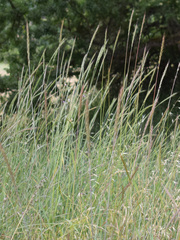 Elymus glaucuse0
- Treatment
- 0.1 to 0.2× f.a.r. of the herbicidese0
- Outcome
- reproductione0
Not reportedMaterialGeneCompoundOrgan / stageInteractorInteractor roleSecond interactorSecond interactor roleComparatorSettingDirectionValueQualifier
Organisms pictured · Representative pictures of the matched species, not figures from the paper.
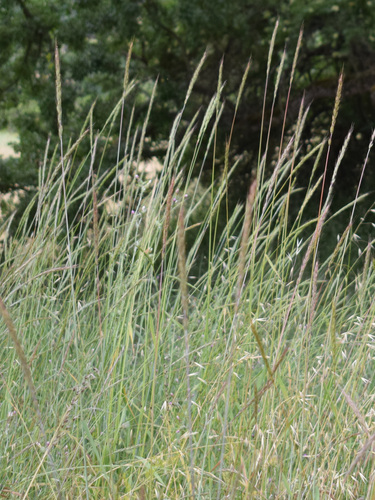
Verbatim
e0“0.1 to 0.2× f.a.r. of the herbicides were required to affect reproduction in Camassia leichtlinii, Elymus glaucus, Eriophyllum lanatum, Festuca idahoensis, Iris tenax, and Prunella vulgaris”
Title
Plant reproduction is altered by simulated herbicide drift to constructed plant communities
David Olszyk; Thomas Pfleeger; Tamotsu Shiroyama; et al. Environmental Toxicology and Chemistry 2017. doi:10.1002/etc.3839
Other claims from this paper (10)
- Observation Herbicide effects varied by species, year, and farm.
- Intervention effect High subfield herbicide rates generally affected Camassia leichtlinii reproduction.
- Intervention effect High subfield herbicide rates generally affected Eriophyllum lanatum reproduction.
- Intervention effect High subfield herbicide rates generally affected Festuca idahoensis reproduction.
- Intervention effect High subfield herbicide rates generally affected Iris tenax reproduction.
- Intervention effect High subfield herbicide rates generally affected Prunella vulgaris reproduction.
- Intervention effect Dicamba at 0.01 times field rate increased Eriophyllum immature seed dry weight percentage.
- Intervention effect Combined glyphosate and dicamba increased Eriophyllum immature seed dry weight percentage.
- Observation Other species showed similar trends with fewer significant responses.
- Method / resource The constructed-community protocol allowed ecological response evaluation.