Claim · model-written summary
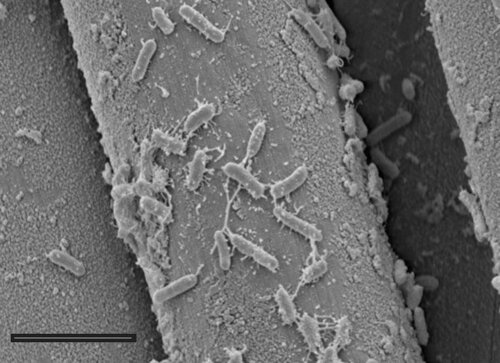
Maize seedlings pretreated with the PGPR consortium of S. succinus and B. stratosphericus showed increased biomass and sodium tolerance compared with the control.
- Treatment
- pretreated with a PGPR bacterial consortiume1
- Interactor
- Staphylococcus succinusStaphylococcus succinuse1symbiont
- Second interactor
- Bacillus stratosphericus
 Bacillus stratosphericuse1symbiont
- Outcome
- biomass and sodium tolerancee1
- Direction
- increasee1
- Comparator
- the controle1
 Zea mays
Verbatim
t0“Zea mays L.”
e1“The results showed an increase in biomass and sodium tolerance and even a reduction of oxidative stress in seedlings pretreated with a PGPR bacterial consortium ( Staphylococcus succinus + Bacillus stratosphericus ) over the control”
Title
Gianmaria Oliva; Giovanni Vigliotta; Mattia Terzaghi; et al. Frontiers in Microbiology 2023. doi:10.3389/fmicb.2023.1171980
Other claims from this paper (6)
- Intervention effect Maize seedlings pretreated with the PGPR consortium showed reduced oxidative stress compared with the control.
- Intervention effect Salt reduced growth of maize seedlings.
- Intervention effect Salt altered root system traits of maize seedlings.
- Intervention effect Bacterial treatment improved plant growth of maize under saline stress.
- Intervention effect Bacterial treatment partially restored the root architecture system of maize under saline stress.
- Recommendation The authors conclude that PGPR seed-coating or seedling treatment could be an effective strategy to enhance sustainable agriculture in saline soils.
 Oryza sativa
 Bacillus subtilis
 Solanum lycopersicum
 Citrus reticulata