Abstract
Physiological and demographic responses of three species of understory herbaceous bamboo to treefall gap formation were studied in Central Panama. These closely-related sympatric species have similar growth forms, but differ in leaf size and ability to grow in gaps and shaded understory. Photosynthesis, growth and reproduction were examined in contrasting light environments, and stomatal conductance and water relations parameters were measured during progressive drought. Pharus latifolius and Streptochaeta spicata showed a large increase in ramet production and sexual reproduction in the sun treatment, but only P. latifolius developed greater maximum photosynthetic capacity under high irradiance. Streptochaeta sodiroana showed high mortality when grown in the sun, and developed considerable photosynthetic efficiency when grown in shade. Water relations parameters were estimated from nonlinear regression analysis of pressure-volume isoclines derived from leaves of the three species during three sequential periods of drying. No acclimation in isocline parameters was observed. Species differences in drought resistance corresponded to differences in osmotic potentials at saturation. Drought tolerance correlates with the regional distribution of these species in wet and dry forest. Conductance decreased as leaf water potentials declined. While leaf water potentials remained high, P. latifolius and S. sodiroana showed marked stomatal closure after noon, whereas S. spicata was able to maintain gas exchange throughout the day. P. latifolius allocated a higher percentage of ramet biomass to fruit production under treatments of high light and nutrient availability, and produced larger leaves in gaps. S. spicata showed a direct relationship between light and nutrient availability, and fruit number and total biomass, and did not vary leaf size between gaps and shade. S. sodiroana was unable to use high levels of nutrients or light for growth and reproduction. A large increase in photosynthetic surface area and maximum photosynthetic capacity allows P. latifolius to grow and reproduce in gaps by maximizing carbon gain when environmental conditions permit high rates of gas exchange. Relatively continuous diurnal gas exchange permits S. spicata to grow and reproduce in gaps without the benefit of photosynthetic acclimation. Although P. latifolius and S. spicata have similar demographies, they employ contrasting mechanisms to maintain reproduction subsequent to environmental change.
Abstract from the paper’s OpenAlex record, shown for indexing and research. Copyright remains with the authors or the publisher. Read at the source ↗
The text the model read, with the source record’s inline markup (italics, sub- and superscripts) rendered and its character entities decoded; quote offsets refer to the raw text.
Claims 19
Claim · model-written summary
Pharus latifolius increased ramet production and sexual reproduction in the sun treatment.
- Taxon
- Pharus latifolius
 Pharus latifoliuse1
- Treatment
- the sun treatmente1
- Outcome
- ramet production and sexual reproductione1
- Direction
- increasee1
Not reportedComparator
Organisms pictured · Representative pictures of the matched species, not figures from the paper.

Verbatim
e1“Pharus latifolius and Streptochaeta spicata showed a large increase in ramet production and sexual reproduction in the sun treatment”
e0“Physiological and demographic responses of three species of understory herbaceous bamboo to treefall gap formation were studied in Central Panama”
Claim · model-written summary
Streptochaeta spicata increased ramet production and sexual reproduction in the sun treatment.
- Taxon
- Streptochaeta spicataStreptochaeta spicatae1
- Treatment
- the sun treatmente1
- Outcome
- ramet production and sexual reproductione1
- Direction
- increasee1
Not reportedComparator
Verbatim
e1“Pharus latifolius and Streptochaeta spicata showed a large increase in ramet production and sexual reproduction in the sun treatment”
e0“Physiological and demographic responses of three species of understory herbaceous bamboo to treefall gap formation were studied in Central Panama”
Claim · model-written summary
Only Pharus latifolius developed greater maximum photosynthetic capacity under high irradiance.
- Taxon
- P. latifoliusPharus latifoliuse2
- Treatment
- high irradiancee2
- Outcome
- maximum photosynthetic capacitye2
- Direction
- greatere2
Not reportedComparator
Organisms pictured · Representative pictures of the matched species, not figures from the paper.
Verbatim
e2“but only P. latifolius developed greater maximum photosynthetic capacity under high irradiance”
e0“Physiological and demographic responses of three species of understory herbaceous bamboo to treefall gap formation were studied in Central Panama”
Claim · model-written summary
Streptochaeta sodiroana showed high mortality when grown in the sun.
- Taxon
- Streptochaeta sodiroana
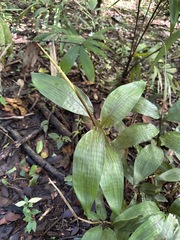 Streptochaeta sodiroanae3
- Treatment
- grown in the sune3
- Outcome
- mortalitye3
- Direction
- highe3
Not reportedComparator
Organisms pictured · Representative pictures of the matched species, not figures from the paper.
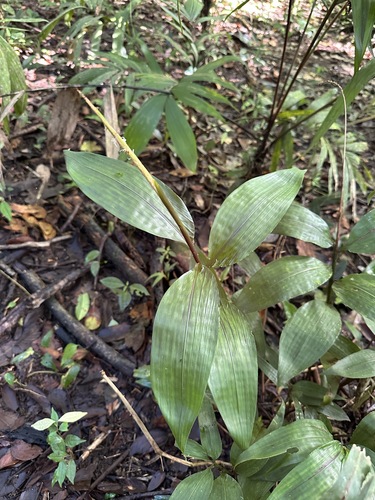
Verbatim
e3“Streptochaeta sodiroana showed high mortality when grown in the sun, and developed considerable photosynthetic efficiency when grown in shade”
e0“Physiological and demographic responses of three species of understory herbaceous bamboo to treefall gap formation were studied in Central Panama”
Claim · model-written summary
Streptochaeta sodiroana developed considerable photosynthetic efficiency when grown in shade.
- Taxon
- Streptochaeta sodiroanaStreptochaeta sodiroanae3
- Treatment
- grown in shadee3
- Outcome
- photosynthetic efficiencye3
- Direction
- increaseinferrede3
Not reportedComparator
Organisms pictured · Representative pictures of the matched species, not figures from the paper.
Verbatim
e3“Streptochaeta sodiroana showed high mortality when grown in the sun, and developed considerable photosynthetic efficiency when grown in shade”
e0“Physiological and demographic responses of three species of understory herbaceous bamboo to treefall gap formation were studied in Central Panama”
Claim · model-written summary
No acclimation in the isocline parameters of the understory herbaceous bamboo was observed during drying.
Not reportedDirection
Verbatim
e5“No acclimation in isocline parameters was observed”
e0“Physiological and demographic responses of three species of understory herbaceous bamboo to treefall gap formation were studied in Central Panama”
Claim · model-written summary
Species differences in drought resistance corresponded to differences in osmotic potentials at saturation.
- Taxon
- understory herbaceous bambooe0
- Outcome
- drought resistancee6
- Qualifier
- corresponded to differences in osmotic potentials at saturatione6
Not reportedDirection
Verbatim
e6“Species differences in drought resistance corresponded to differences in osmotic potentials at saturation”
e0“Physiological and demographic responses of three species of understory herbaceous bamboo to treefall gap formation were studied in Central Panama”
Claim · model-written summary
Drought tolerance correlates with the regional distribution of the understory herbaceous bamboo species in wet and dry forest.
Not reportedDirection
Verbatim
e7“Drought tolerance correlates with the regional distribution of these species in wet and dry forest”
e0“Physiological and demographic responses of three species of understory herbaceous bamboo to treefall gap formation were studied in Central Panama”
Claim · model-written summary
Stomatal conductance decreased as leaf water potentials declined.
Verbatim
e1“Conductance decreased as leaf water potentials declined”
e0“Physiological and demographic responses of three species of understory herbaceous bamboo to treefall gap formation were studied in Central Panama”
Claim · model-written summary
Pharus latifolius showed marked stomatal closure after noon while leaf water potentials remained high.
- Taxon
- P. latifoliusPharus latifoliuse1
- Outcome
- stomatal closuree1
- Direction
- decreaseinferrede1
- Qualifier
- While leaf water potentials remained highe1
Organisms pictured · Representative pictures of the matched species, not figures from the paper.
Verbatim
e1“While leaf water potentials remained high, P. latifolius and S. sodiroana showed marked stomatal closure after noon, whereas S. spicata was able to maintain gas exchange throughout the day”
e0“Physiological and demographic responses of three species of understory herbaceous bamboo to treefall gap formation were studied in Central Panama”
Claim · model-written summary
Streptochaeta sodiroana showed marked stomatal closure after noon while leaf water potentials remained high.
- Taxon
- S. sodiroanaStreptochaeta sodiroanae1
- Outcome
- stomatal closuree1
- Direction
- decreaseinferrede1
- Qualifier
- While leaf water potentials remained highe1
Organisms pictured · Representative pictures of the matched species, not figures from the paper.
Verbatim
e1“While leaf water potentials remained high, P. latifolius and S. sodiroana showed marked stomatal closure after noon, whereas S. spicata was able to maintain gas exchange throughout the day”
e0“Physiological and demographic responses of three species of understory herbaceous bamboo to treefall gap formation were studied in Central Panama”
Claim · model-written summary
Streptochaeta spicata maintained gas exchange throughout the day.
- Taxon
- S. spicataStreptochaeta spicatae1
- Outcome
- gas exchangee1
- Direction
- no_changeinferrede1
- Qualifier
- throughout the daye1
Verbatim
e1“While leaf water potentials remained high, P. latifolius and S. sodiroana showed marked stomatal closure after noon, whereas S. spicata was able to maintain gas exchange throughout the day”
e0“Physiological and demographic responses of three species of understory herbaceous bamboo to treefall gap formation were studied in Central Panama”
Claim · model-written summary
Pharus latifolius allocated a higher percentage of ramet biomass to fruit production under high light and nutrient availability.
- Taxon
- P. latifoliusPharus latifoliuse1
- Treatment
- high light and nutrient availabilitye1
- Outcome
- percentage of ramet biomass to fruit productione1
- Direction
- highere1
Not reportedComparator
Organisms pictured · Representative pictures of the matched species, not figures from the paper.
Verbatim
e1“P. latifolius allocated a higher percentage of ramet biomass to fruit production under treatments of high light and nutrient availability, and produced larger leaves in gaps”
e0“Physiological and demographic responses of three species of understory herbaceous bamboo to treefall gap formation were studied in Central Panama”
Claim · model-written summary
Pharus latifolius produced larger leaves in gaps.
- Taxon
- P. latifoliusPharus latifoliuse1
- Treatment
- in gapse1
- Outcome
- leavese1
- Direction
- largere1
Not reportedComparator
Organisms pictured · Representative pictures of the matched species, not figures from the paper.
Verbatim
e1“P. latifolius allocated a higher percentage of ramet biomass to fruit production under treatments of high light and nutrient availability, and produced larger leaves in gaps”
e0“Physiological and demographic responses of three species of understory herbaceous bamboo to treefall gap formation were studied in Central Panama”
Claim · model-written summary
Streptochaeta spicata fruit number and total biomass increased with light and nutrient availability.
- Taxon
- S. spicataStreptochaeta spicatae2
- Treatment
- light and nutrient availabilitye2
- Outcome
- fruit number and total biomasse2
- Direction
- increaseinferrede2
Verbatim
e2“S. spicata showed a direct relationship between light and nutrient availability, and fruit number and total biomass, and did not vary leaf size between gaps and shade”
e0“Physiological and demographic responses of three species of understory herbaceous bamboo to treefall gap formation were studied in Central Panama”
Claim · model-written summary
Streptochaeta spicata did not vary leaf size between gaps and shade.
Verbatim
e2“S. spicata showed a direct relationship between light and nutrient availability, and fruit number and total biomass, and did not vary leaf size between gaps and shade”
e0“Physiological and demographic responses of three species of understory herbaceous bamboo to treefall gap formation were studied in Central Panama”
Claim · model-written summary
Streptochaeta sodiroana was unable to use high levels of nutrients or light for growth and reproduction.
- Taxon
- S. sodiroanaStreptochaeta sodiroanae1
- Outcome
- growth and reproductione1
- Qualifier
- unable to use high levels of nutrients or lighte1
Not reportedDirection
Organisms pictured · Representative pictures of the matched species, not figures from the paper.
Verbatim
e1“S. sodiroana was unable to use high levels of nutrients or light for growth and reproduction”
e0“Physiological and demographic responses of three species of understory herbaceous bamboo to treefall gap formation were studied in Central Panama”
Claim · model-written summary
A large increase in photosynthetic surface area and maximum photosynthetic capacity allows Pharus latifolius to grow and reproduce in gaps.
- Taxon
- P. latifoliusPharus latifoliuse1
- Outcome
- grow and reproduce in gapse1
- Qualifier
- A large increase in photosynthetic surface area and maximum photosynthetic capacitye1
Organisms pictured · Representative pictures of the matched species, not figures from the paper.
Verbatim
e1“A large increase in photosynthetic surface area and maximum photosynthetic capacity allows P. latifolius to grow and reproduce in gaps by maximizing carbon gain”
e0“Physiological and demographic responses of three species of understory herbaceous bamboo to treefall gap formation were studied in Central Panama”
Claim · model-written summary
Relatively continuous diurnal gas exchange permits Streptochaeta spicata to grow and reproduce in gaps.
- Taxon
- S. spicataStreptochaeta spicatae1
- Outcome
- grow and reproduce in gapse1
- Qualifier
- Relatively continuous diurnal gas exchangee1
Verbatim
e1“Relatively continuous diurnal gas exchange permits S. spicata to grow and reproduce in gaps without the benefit of photosynthetic acclimation”
e0“Physiological and demographic responses of three species of understory herbaceous bamboo to treefall gap formation were studied in Central Panama”