Abstract
Use of recycled water to irrigate urban landscapes may be inevitable, because the freshwater supply has been diminishing and the population continues to grow in the arid and semiarid southwestern United States. However, little information exists on the performance of landscape plants irrigated with nonpotable water. Two greenhouse studies were conducted during the summer and the fall to characterize the relative salt tolerance of five herbaceous perennials by irrigating the plants with a saline solution at an electrical conductivity (EC) of 0.8 dS·m –1 (tap water), 2.0 dS·m –1 , or 4.0 dS·m –1 . In the summer study, after 10 weeks of treatment, Achillea millefolium L., Gaillardia aristata Foug., and Salvia coccinea Juss ex J. had an aesthetically acceptable appearance for landscape performance (visual quality scores of 4 points or more), whereas Agastache cana (Hook.) Woot. & Standl. and Echinacea purpurea (L.) Moench had relatively low tolerance to salinity. Dry weight of shoots of A. millefolium, A. cana , and G. arstata was lower at elevated salinity levels. In the fall study, A. millefolium, E. purpurea, G. arstata , and S. coccinea had acceptable growth and visual quality at elevated salinity levels, whereas A. cana had lower quality and reduced growth. Dry weight of shoots was lower in G. arstata and A. millefolium at an EC of 2.0 dS·m –1 or 4.0 dS·m –1 . Leaf osmotic potential of all species in the summer experiment was significantly lower at higher salinity compared with the control. In the fall experiment, leaf osmotic potential in A. millefolium, E. purpurea , and G. aristata at 4 dS·m –1 was lower compared with lower salinity treatment and the control. Leaf osmotic potential in the fall was higher than that of the same species at the same salinity level in the summer experiment, indicating that plants in the fall were less stressed than in the summer. Combined the results from both experiments, the authors concluded that A. millefolium, G. arstata , and S. coccinea had a relatively high salt tolerance (as much as 4 dS·m –1 of irrigation water under greenhouse conditions) among the tested species, whereas A. cana and E. purpurea were not tolerant to salt and should not be irrigated with low-quality water.
Abstract from the paper’s OpenAlex record, shown for indexing and research. Copyright remains with the authors or the publisher. Read at the source ↗
The text the model read, with the source record’s inline markup (italics, sub- and superscripts) rendered and its character entities decoded; quote offsets refer to the raw text.
Claims 20
Claim · model-written summary
Summer Achillea millefolium retained acceptable visual quality.
- Taxon
- Achillea millefolium L.
 Achillea millefoliume0
- Outcome
- aesthetically acceptable appearancee0
- Value
- 4 points or moree0
- Qualifier
- landscape performancee0
Organisms pictured · Representative pictures of the matched species, not figures from the paper.

Verbatim
e0“Achillea millefolium L., Gaillardia aristata Foug., and Salvia coccinea Juss ex J. had an aesthetically acceptable appearance for landscape performance (visual quality scores of 4 points or more)”
Claim · model-written summary
Summer Gaillardia aristata retained acceptable visual quality.
- Taxon
- Gaillardia aristata Foug.
 Gaillardia aristatae0
- Outcome
- aesthetically acceptable appearancee0
- Value
- 4 points or moree0
Organisms pictured · Representative pictures of the matched species, not figures from the paper.

Verbatim
e0“Achillea millefolium L., Gaillardia aristata Foug., and Salvia coccinea Juss ex J. had an aesthetically acceptable appearance for landscape performance (visual quality scores of 4 points or more)”
Claim · model-written summary
Summer Salvia coccinea retained acceptable visual quality.
- Taxon
- Salvia coccinea Juss ex J.
 Salvia coccineae0
- Outcome
- aesthetically acceptable appearancee0
- Value
- 4 points or moree0
Organisms pictured · Representative pictures of the matched species, not figures from the paper.

Verbatim
e0“Achillea millefolium L., Gaillardia aristata Foug., and Salvia coccinea Juss ex J. had an aesthetically acceptable appearance for landscape performance (visual quality scores of 4 points or more)”
Claim · model-written summary
Summer Agastache cana had relatively low salinity tolerance.
- Taxon
- Agastache cana
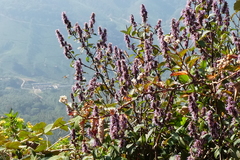 Agastache canae0
- Outcome
- relatively low tolerance to salinitye0
Organisms pictured · Representative pictures of the matched species, not figures from the paper.

Verbatim
e0“Agastache cana (Hook.) Woot. & Standl. and Echinacea purpurea (L.) Moench had relatively low tolerance to salinity”
Claim · model-written summary
Summer Echinacea purpurea had relatively low salinity tolerance.
- Taxon
- Echinacea purpurea
 Echinacea purpureae0
- Outcome
- relatively low tolerance to salinitye0
Organisms pictured · Representative pictures of the matched species, not figures from the paper.

Verbatim
e0“Agastache cana (Hook.) Woot. & Standl. and Echinacea purpurea (L.) Moench had relatively low tolerance to salinity”
Claim · model-written summary
Elevated salinity reduced Achillea shoot dry weight.
- Taxon
- A. millefoliumAchillea millefoliume0
- Treatment
- elevated salinity levelse0
- Outcome
- Dry weight of shootse0
- Direction
- lowere0
Not reportedComparator
Organisms pictured · Representative pictures of the matched species, not figures from the paper.
Verbatim
e0“Dry weight of shoots of A. millefolium, A. cana , and G. arstata was lower at elevated salinity levels.”
Claim · model-written summary
Elevated salinity reduced Agastache shoot dry weight.
- Taxon
- A. canaAgastache canae0
- Treatment
- elevated salinity levelse0
- Outcome
- Dry weight of shootse0
- Direction
- lowere0
Not reportedComparator
Organisms pictured · Representative pictures of the matched species, not figures from the paper.
Verbatim
e0“Dry weight of shoots of A. millefolium, A. cana , and G. arstata was lower at elevated salinity levels.”
Claim · model-written summary
Elevated salinity reduced Gaillardia shoot dry weight.
Not reportedComparator
Verbatim
e0“Dry weight of shoots of A. millefolium, A. cana , and G. arstata was lower at elevated salinity levels.”
Claim · model-written summary
Fall Achillea retained acceptable growth and visual quality at elevated salinity.
- Taxon
- A. millefoliumAchillea millefoliume0
- Outcome
- acceptable growth and visual qualitye0
- Qualifier
- elevated salinity levelse0
Organisms pictured · Representative pictures of the matched species, not figures from the paper.
Verbatim
e0“A. millefolium, E. purpurea, G. arstata , and S. coccinea had acceptable growth and visual quality at elevated salinity levels”
Claim · model-written summary
Fall Echinacea retained acceptable growth and visual quality at elevated salinity.
- Taxon
- E. purpureaEchinacea purpureae0
- Outcome
- acceptable growth and visual qualitye0
- Qualifier
- elevated salinity levelse0
Organisms pictured · Representative pictures of the matched species, not figures from the paper.
Verbatim
e0“A. millefolium, E. purpurea, G. arstata , and S. coccinea had acceptable growth and visual quality at elevated salinity levels”
Claim · model-written summary
Fall Gaillardia retained acceptable growth and visual quality at elevated salinity.
Verbatim
e0“A. millefolium, E. purpurea, G. arstata , and S. coccinea had acceptable growth and visual quality at elevated salinity levels”
Claim · model-written summary
Fall Salvia retained acceptable growth and visual quality at elevated salinity.
- Taxon
- S. coccineaSalvia coccineae0
- Outcome
- acceptable growth and visual qualitye0
- Qualifier
- elevated salinity levelse0
Organisms pictured · Representative pictures of the matched species, not figures from the paper.
Verbatim
e0“A. millefolium, E. purpurea, G. arstata , and S. coccinea had acceptable growth and visual quality at elevated salinity levels”
Claim · model-written summary
Fall Agastache had lower quality and reduced growth.
- Taxon
- A. canaAgastache canae0
- Outcome
- lower quality and reduced growthe0
- Direction
- lowere0
Organisms pictured · Representative pictures of the matched species, not figures from the paper.
Verbatim
e0“A. cana had lower quality and reduced growth”
Claim · model-written summary
Fall Gaillardia shoot dry weight fell at 2.0 or 4.0 dS·m –1.
- Taxon
- G. arstatae0
- Treatment
- EC of 2.0 dS·m –1 or 4.0 dS·m –1e0
- Outcome
- Dry weight of shootse0
- Direction
- lowere0
Not reportedComparator
Verbatim
e0“Dry weight of shoots was lower in G. arstata and A. millefolium at an EC of 2.0 dS·m –1 or 4.0 dS·m –1 .”
Claim · model-written summary
Fall Achillea shoot dry weight fell at 2.0 or 4.0 dS·m –1.
- Taxon
- A. millefoliumAchillea millefoliume0
- Treatment
- EC of 2.0 dS·m –1 or 4.0 dS·m –1e0
- Outcome
- Dry weight of shootse0
- Direction
- lowere0
Not reportedComparator
Organisms pictured · Representative pictures of the matched species, not figures from the paper.
Verbatim
e0“Dry weight of shoots was lower in G. arstata and A. millefolium at an EC of 2.0 dS·m –1 or 4.0 dS·m –1 .”
Claim · model-written summary
All species had significantly lower summer leaf osmotic potential at higher salinity.
Verbatim
e0“Leaf osmotic potential of all species in the summer experiment was significantly lower at higher salinity compared with the control.”
t0“Five Herbaceous Perennials”
Claim · model-written summary
At 4 dS·m –1 in fall, Achillea leaf osmotic potential was lower than at lower salinity and control.
- Taxon
- A. millefoliumAchillea millefoliume1
- Treatment
- 4 dS·m –1e1
- Outcome
- Leaf osmotic potentiale0
- Direction
- lowere1
- Comparator
- lower salinity treatment and the controle1
Organisms pictured · Representative pictures of the matched species, not figures from the paper.
Verbatim
e0“Leaf osmotic potential in the fall was higher than that of the same species at the same salinity level in the summer experiment”
e1“A. millefolium, E. purpurea , and G. aristata at 4 dS·m –1 was lower compared with lower salinity treatment and the control.”
Claim · model-written summary
At 4 dS·m –1 in fall, Echinacea leaf osmotic potential was lower than at lower salinity and control.
- Taxon
- E. purpureaEchinacea purpureae1
- Treatment
- 4 dS·m –1e1
- Outcome
- Leaf osmotic potentiale0
- Direction
- lowere1
- Comparator
- lower salinity treatment and the controle1
Organisms pictured · Representative pictures of the matched species, not figures from the paper.
Verbatim
e0“Leaf osmotic potential in the fall was higher than that of the same species at the same salinity level in the summer experiment”
e1“A. millefolium, E. purpurea , and G. aristata at 4 dS·m –1 was lower compared with lower salinity treatment and the control.”
Claim · model-written summary
At 4 dS·m –1 in fall, Gaillardia leaf osmotic potential was lower than at lower salinity and control.
- Taxon
- G. aristataGaillardia aristatae1
- Treatment
- 4 dS·m –1e1
- Outcome
- Leaf osmotic potentiale0
- Direction
- lowere1
- Comparator
- lower salinity treatment and the controle1
Organisms pictured · Representative pictures of the matched species, not figures from the paper.
Verbatim
e0“Leaf osmotic potential in the fall was higher than that of the same species at the same salinity level in the summer experiment”
e1“A. millefolium, E. purpurea , and G. aristata at 4 dS·m –1 was lower compared with lower salinity treatment and the control.”
Claim · model-written summary
The authors recommend against low quality irrigation water for salt-sensitive Agastache and Echinacea.
- Taxon
- A. cana and E. purpureaEchinacea purpureaAgastache canae0
- Outcome
- should not be irrigated with low-quality watere0
Organisms pictured · Representative pictures of the matched species, not figures from the paper.
Verbatim
e0“A. cana and E. purpurea were not tolerant to salt and should not be irrigated with low-quality water.”
The same questions in other papers
salinity · growth · Achillea millefoliumResults agree
3 papers in the same direction as this paper
- no effect
- no effect
- negative
Claims are grouped by organism, treatment and what was measured or targeted. A paper counts as positive when any of its claims in the group is positive.