Abstract
Rhizoctonia solani is an important soilborne pathogen of potato plants whose control typically depends on chemicals. Here, we screened six fungal endophytes for the suppression of R. solani growth both in vitro and in a greenhouse. These isolates were identified using morphology and internal transcribed spacer regions of rDNA as Alternaria longipes, Epicoccum nigrum, Phomopsis sp., and Trichoderma atroviride. Both T. atroviride and E. nigrum showed significant in vitro inhibition of mycelial growth of R. solani, with the greatest inhibition zone observed for E. nigrum species in dual cultures. The highest inhibition was observed for T. atroviride. The inhibition rate was also significantly correlated with the culture filtrates of these isolates. Confocal microscopy showed that T. atroviride acts as a mycoparasite and competitor. However, E. nigrum and A. longipes produce secondary metabolites, while Phomospsis sp. competes for nutrients and space. Greenhouse experiments confirmed that T. atroviride and E. nigrum improved potato yield significantly and decreased the stem disease severity index of sensitive potato.
Abstract from the paper’s OpenAlex record, shown for indexing and research. Copyright remains with the authors or the publisher. Read at the source ↗
The text the model read, with the source record’s inline markup (italics, sub- and superscripts) rendered and its character entities decoded; quote offsets refer to the raw text.
Claims 9
Claim · model-written summary
Trichoderma atroviride and Epicoccum nigrum significantly inhibited in vitro mycelial growth of Rhizoctonia solani.
- Taxon
- potato
 Solanum tuberosume0
- Treatment
- T. atroviride and E. nigrume1
- Interactor
- R. solani
 Rhizoctonia solanie1pathogen
- Second interactor
- T. atroviride
 Trichoderma atroviridee1biocontrol_agent
- Outcome
- mycelial growth of R. solanie1
- Direction
- inhibitione1
- Setting
- in vitroe1
Not reportedComparator
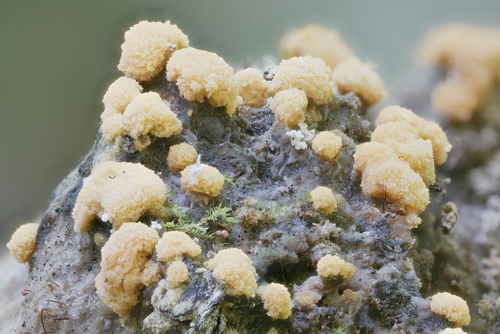
Organisms pictured · Representative pictures of the matched species, not figures from the paper.


Verbatim
e0“Rhizoctonia solani is an important soilborne pathogen of potato plants”
e1“Both T. atroviride and E. nigrum showed significant in vitro inhibition of mycelial growth of R. solani”
Claim · model-written summary
Epicoccum nigrum produced the greatest inhibition zone against Rhizoctonia solani in dual cultures.
- Taxon
- potatoSolanum tuberosume0
- Treatment
- E. nigrume2
- Interactor
- Rhizoctonia solaniRhizoctonia solanie0pathogen
- Outcome
- inhibition zonee2
- Direction
- greateste2
- Setting
- dual culturese2
Not reportedComparator
Organisms pictured · Representative pictures of the matched species, not figures from the paper.
Verbatim
e0“Rhizoctonia solani is an important soilborne pathogen of potato plants”
e2“with the greatest inhibition zone observed for E. nigrum species in dual cultures”
Claim · model-written summary
Trichoderma atroviride gave the highest inhibition of Rhizoctonia solani.
- Taxon
- potatoSolanum tuberosume0
- Treatment
- T. atroviridee3
- Interactor
- Rhizoctonia solaniRhizoctonia solanie0pathogen
- Outcome
- inhibitione3
- Direction
- higheste3
Not reportedComparator
Organisms pictured · Representative pictures of the matched species, not figures from the paper.
Verbatim
e0“Rhizoctonia solani is an important soilborne pathogen of potato plants”
e3“The highest inhibition was observed for T. atroviride”
Claim · model-written summary
Inhibition rate was significantly correlated with culture filtrates of the isolates.
- Taxon
- potatoSolanum tuberosume0
- Treatment
- culture filtratese4
- Outcome
- inhibition ratee4
Not reportedDirection
Organisms pictured · Representative pictures of the matched species, not figures from the paper.
Verbatim
e0“Rhizoctonia solani is an important soilborne pathogen of potato plants”
e4“The inhibition rate was also significantly correlated with the culture filtrates of these isolates”
Claim · model-written summary
Trichoderma atroviride acts as a mycoparasite and competitor, as shown by confocal microscopy.
- Taxon
- potatoSolanum tuberosume0
- Interactor
- T. atrovirideTrichoderma atroviridee5biocontrol_agent
- Outcome
- mycoparasite and competitore5
- Qualifier
- Confocal microscopye5
Organisms pictured · Representative pictures of the matched species, not figures from the paper.
Verbatim
e0“Rhizoctonia solani is an important soilborne pathogen of potato plants”
e5“Confocal microscopy showed that T. atroviride acts as a mycoparasite and competitor”
Claim · model-written summary
Epicoccum nigrum and Alternaria longipes produce secondary metabolites.
- Taxon
- potatoSolanum tuberosume0
- Interactor
- E. nigrum
 Epicoccum nigrume6biocontrol_agent
- Second interactor
- A. longipesAlternaria longipese6biocontrol_agent
- Outcome
- produce secondary metabolitese6
Organisms pictured · Representative pictures of the matched species, not figures from the paper.

Verbatim
e0“Rhizoctonia solani is an important soilborne pathogen of potato plants”
e6“E. nigrum and A. longipes produce secondary metabolites”
Claim · model-written summary
Phomospsis sp. competes for nutrients and space.
- Taxon
- potatoSolanum tuberosume0
- Interactor
- Phomospsis sp.e7biocontrol_agent
- Outcome
- competes for nutrients and spacee7
Organisms pictured · Representative pictures of the matched species, not figures from the paper.
Verbatim
e0“Rhizoctonia solani is an important soilborne pathogen of potato plants”
e7“Phomospsis sp. competes for nutrients and space”
Claim · model-written summary
Trichoderma atroviride and Epicoccum nigrum significantly improved potato yield in greenhouse experiments.
- Taxon
- potatoSolanum tuberosume0
- Treatment
- T. atroviride and E. nigrume0
- Outcome
- potato yielde0
- Direction
- improvede0
- Setting
- Greenhouse experimentse0
Not reportedComparator
Organisms pictured · Representative pictures of the matched species, not figures from the paper.
Verbatim
e0“Greenhouse experiments confirmed that T. atroviride and E. nigrum improved potato yield significantly”
Claim · model-written summary
Trichoderma atroviride and Epicoccum nigrum decreased the stem disease severity index of sensitive potato.
- Taxon
- potatoSolanum tuberosume1
- Treatment
- T. atroviride and E. nigrume0
- Outcome
- stem disease severity indexe1
- Direction
- decreasede1
Not reportedComparator
Organisms pictured · Representative pictures of the matched species, not figures from the paper.
Verbatim
e0“Greenhouse experiments confirmed that T. atroviride and E. nigrum improved potato yield significantly”
e1“decreased the stem disease severity index of sensitive potato”
The same questions in other papers
Trichoderma atroviride · Rhizoctonia solani · Solanum tuberosum (potato)Results agree
1 paper in the same direction as this paper
- positive
Trichoderma atroviride · yield · Solanum tuberosum (potato)Results agree
1 paper in the same direction as this paper
- positive
Trichoderma atroviride · disease · Solanum tuberosum (potato)Results agree
2 papers in the same direction as this paper
- positive
- positive
Claims are grouped by organism, treatment and what was measured or targeted. A paper counts as positive when any of its claims in the group is positive.