Abstract
Abstract Late blight ( Phytophthora infestans ) is a major disease in potato cultivation, managed primarily with synthetic fungicides. This reliance makes potatoes one of the crops with the highest fungicide load. To reduce chemical dependence and promote integrated pest management (IPM), alternative solutions are needed. This study explores biological control agents (BCAs) and plant resistance inducers (PRIs) as sustainable alternatives. We screened 17 BCAs and 3 PRIs in a detached leaf assay (DLA) and selected the most effective for further trials. The chosen BCAs—Polyversum ( Pythium oligandrum ), Nvs 2 ( Bacillus amyloliquefaciens ), TC 4 ( Trichoderma atroviride ), TC 6 ( T. harzianum )—and the PRI ChiProPlant (Chitosan hydrochloride) were tested in glasshouse and field trials across five European countries. In glasshouse trials, ChiProPlant and T. atroviride significantly controlled late blight. The applied doses did not affect the efficacy of most BCAs and PRI; however, application timing proved to be crucial in the glasshouse trials. Treatments applied 1 and 5 days before inoculation were most effective, while post-inoculation treatments were least effective. Field trials showed that weekly applications of ChiProPlant, Polyversum, and Bacillus amyloliquefaciens significantly reduced late blight infection. However, none matched the efficacy of synthetic fungicides. This study highlights the potential of BCAs and PRIs in late blight management but underscores the need for further research to optimize their integration into IPM strategies.
Abstract from the paper’s OpenAlex record; open copy licensed cc-by. Read at the source ↗
The text the model read, with the source record’s inline markup (italics, sub- and superscripts) rendered and its character entities decoded; quote offsets refer to the raw text.
Claims 10
Claim · model-written summary
ChiProPlant significantly controlled late blight in glasshouse trials.
- Taxon
- potato
 Solanum tuberosumt0
- Treatment
- ChiProPlante0
- Outcome
- late blighte0
- Direction
- controllede0
- Setting
- glasshousee0
Not reportedComparator
Organisms pictured · Representative pictures of the matched species, not figures from the paper.

Verbatim
e0“In glasshouse trials, ChiProPlant and T. atroviride significantly controlled late blight”
t0“Potato”
Claim · model-written summary
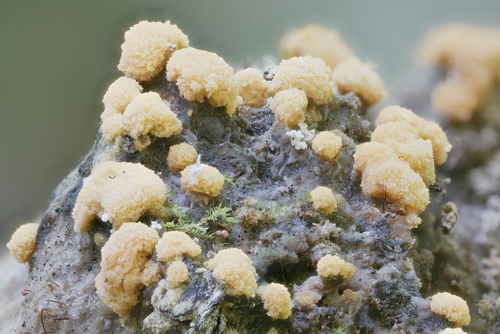
T. atroviride significantly controlled late blight in glasshouse trials.
- Taxon
- PotatoSolanum tuberosumt0
- Treatment
- T. atroviridee0
- Interactor
- T. atroviride
 Trichoderma atroviridee0biocontrol_agent
- Outcome
- late blighte0
- Direction
- controllede0
- Setting
- glasshousee0
Not reportedComparator
Organisms pictured · Representative pictures of the matched species, not figures from the paper.
Verbatim
e0“In glasshouse trials, ChiProPlant and T. atroviride significantly controlled late blight”
t0“Potato”
Claim · model-written summary
Applied dose did not change efficacy for most agents.
- Taxon
- PotatoSolanum tuberosumt0
- Treatment
- applied dosese0
- Outcome
- efficacy of most BCAs and PRIe0
- Direction
- did not affecte0
Not reportedComparator
Organisms pictured · Representative pictures of the matched species, not figures from the paper.
Verbatim
e0“applied doses did not affect the efficacy of most BCAs and PRI”
t0“Potato”
Claim · model-written summary
Application timing affected efficacy in glasshouse trials.
- Taxon
- PotatoSolanum tuberosumt0
- Outcome
- application timinge0
- Setting
- glasshouse trialse0
Organisms pictured · Representative pictures of the matched species, not figures from the paper.
Verbatim
e0“application timing proved to be crucial in the glasshouse trials”
t0“Potato”
Claim · model-written summary
Treatments applied one and five days before inoculation were most effective.
- Taxon
- PotatoSolanum tuberosumt0
- Treatment
- Treatments applied 1 and 5 days before inoculatione0
- Outcome
- most effectivee0
- Direction
- most effectivee0
Not reportedComparator
Organisms pictured · Representative pictures of the matched species, not figures from the paper.
Verbatim
e0“Treatments applied 1 and 5 days before inoculation were most effective”
t0“Potato”
Claim · model-written summary
Treatments applied after inoculation were least effective.
- Taxon
- PotatoSolanum tuberosumt0
- Treatment
- post-inoculation treatmentse0
- Outcome
- least effectivee0
- Direction
- least effectivee0
Not reportedComparator
Organisms pictured · Representative pictures of the matched species, not figures from the paper.
Verbatim
e0“post-inoculation treatments were least effective”
t0“Potato”
Claim · model-written summary
Weekly ChiProPlant applications significantly reduced late blight infection in field trials.
- Taxon
- PotatoSolanum tuberosumt0
- Treatment
- weekly applications of ChiProPlante0
- Outcome
- late blight infectione0
- Direction
- reducede0
Not reportedComparator
Organisms pictured · Representative pictures of the matched species, not figures from the paper.
Verbatim
e0“weekly applications of ChiProPlant, Polyversum, and Bacillus amyloliquefaciens significantly reduced late blight infection”
t0“Potato”
Claim · model-written summary
Weekly Polyversum applications significantly reduced late blight infection in field trials.
- Taxon
- PotatoSolanum tuberosumt0
- Treatment
- Polyversume0
- Interactor
- Polyversume0biocontrol_agent
- Outcome
- late blight infectione0
- Direction
- reducede0
Not reportedComparator
Organisms pictured · Representative pictures of the matched species, not figures from the paper.
Verbatim
e0“weekly applications of ChiProPlant, Polyversum, and Bacillus amyloliquefaciens significantly reduced late blight infection”
t0“Potato”
Claim · model-written summary
Weekly Bacillus amyloliquefaciens applications significantly reduced late blight infection in field trials.
- Taxon
- PotatoSolanum tuberosumt0
- Treatment
- Bacillus amyloliquefaciense0
- Interactor
- Bacillus amyloliquefaciens
 Bacillus amyloliquefaciense0biocontrol_agent
- Outcome
- late blight infectione0
- Direction
- reducede0
Not reportedComparator
Organisms pictured · Representative pictures of the matched species, not figures from the paper.

Verbatim
e0“weekly applications of ChiProPlant, Polyversum, and Bacillus amyloliquefaciens significantly reduced late blight infection”
t0“Potato”
Claim · model-written summary
None of the field treatments matched synthetic fungicide efficacy.
- Taxon
- PotatoSolanum tuberosumt0
- Outcome
- efficacye0
- Direction
- none matchede0
- Comparator
- synthetic fungicidese0
Not reportedTreatment
Organisms pictured · Representative pictures of the matched species, not figures from the paper.
Verbatim
e0“none matched the efficacy of synthetic fungicides”
t0“Potato”
The same questions in other papers
Bacillus amyloliquefaciens · disease · Solanum tuberosum (potato)Positive and negative results
1 paper in the same direction as this paper · 1 in the opposite direction
- no effect
- positive
Trichoderma atroviride · disease · Solanum tuberosum (potato)Results agree
2 papers in the same direction as this paper
- positive
- positive
Claims are grouped by organism, treatment and what was measured or targeted. A paper counts as positive when any of its claims in the group is positive.