Abstract
SUMMARY An attempt has been made to produce barley lines in accordance with an ideotype designed in 1968. Current lines are early maturing, uniculm, six-row barleys, of medium height, high harvest index, and moderate resistance to lodging. However, they have lax leaves of medium length, in contrast to the short, erect leaves of the ideotype. When sown in narrow rows at a rate three times that of tillered lines, they have given grain yields greater than the two- and six-row tillered controls, especially in favourable seasons, but less so in dry years. The quality of the grain has not been examined. In the absence of plasticity in number of tillers, uniculm lines show increased plasticity in number of grains per ear and weight per grain. It is possible that the uniculm habit, apart from effects on morphology and maturity, may permit more exacting selection of high-yielding plants than is possible among plants each comprising many mutually competing culms.
Abstract from the paper’s OpenAlex record, shown for indexing and research. Copyright remains with the authors or the publisher. Read at the source ↗
The text the model read, with the source record’s inline markup (italics, sub- and superscripts) rendered and its character entities decoded; quote offsets refer to the raw text.
Claims 6
Claim · model-written summary
Current lines are early maturing, uniculm, six-row, medium height, high harvest index, and moderately lodging resistant.
- Material
- Current linese0
- Outcome
- early maturing, uniculm, six-row barleys, of medium height, high harvest index, and moderate resistance to lodginge0
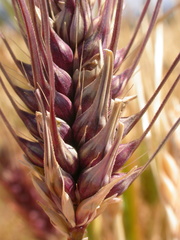 Hordeum
Organisms pictured · Representative pictures of the matched species, not figures from the paper.
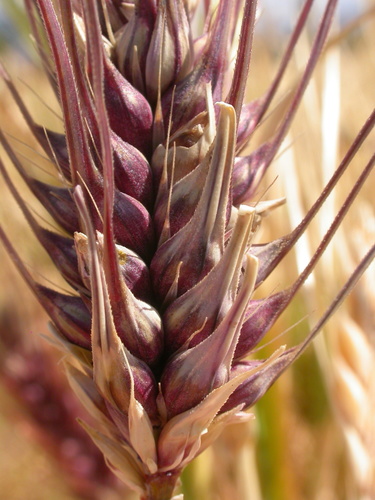
Verbatim
e0“Current lines are early maturing, uniculm, six-row barleys, of medium height, high harvest index, and moderate resistance to lodging.”
Claim · model-written summary
Current lines had medium length lax leaves instead of the ideotype’s short erect leaves.
- Taxon
- barley
 Hordeum vulgaret0
- Organ / stage
- leavese0
- Outcome
- lax leaves of medium lengthe0
- Comparator
- short, erect leaves of the ideotypee0
Organisms pictured · Representative pictures of the matched species, not figures from the paper.

Verbatim
e0“However, they have lax leaves of medium length, in contrast to the short, erect leaves of the ideotype.”
t0“barley breeding programme”
Claim · model-written summary
At triple sowing rate in narrow rows, uniculm lines yielded more grain than tillered controls, especially in favorable seasons and less so in dry years.
- Taxon
- barleyHordeum vulgaret0
- Treatment
- sown in narrow rows at a rate three times that of tillered linese0
- Outcome
- grain yieldse0
- Direction
- greatere0
- Qualifier
- especially in favourable seasons, but less so in dry yearse0
- Comparator
- two- and six-row tillered controlse0
Organisms pictured · Representative pictures of the matched species, not figures from the paper.
Verbatim
e0“When sown in narrow rows at a rate three times that of tillered lines, they have given grain yields greater than the two- and six-row tillered controls, especially in favourable seasons, but less so in dry years.”
t0“barley breeding programme”
Claim · model-written summary
Uniculm lines showed increased plasticity in grains per ear without tiller-number plasticity.
- Taxon
- barleyHordeum vulgaret0
- Material
- uniculm linese0
- Outcome
- plasticity in number of grains per eare0
- Direction
- increasede0
- Qualifier
- absence of plasticity in number of tillerse0
Organisms pictured · Representative pictures of the matched species, not figures from the paper.
Verbatim
e0“In the absence of plasticity in number of tillers, uniculm lines show increased plasticity in number of grains per ear”
t0“barley breeding programme”
Claim · model-written summary
Uniculm lines showed increased plasticity in weight per grain without tiller-number plasticity.
- Taxon
- barleyHordeum vulgaret0
- Material
- uniculm linese0
- Outcome
- weight per graine0
- Direction
- increasede0
- Qualifier
- absence of plasticity in number of tillerse0
Organisms pictured · Representative pictures of the matched species, not figures from the paper.
Verbatim
e0“In the absence of plasticity in number of tillers, uniculm lines show increased plasticity in number of grains per ear and weight per grain.”
t0“barley breeding programme”
Claim · model-written summary
Authors suggest uniculm habit may permit more exacting selection for high yield.
- Taxon
- barleyHordeum vulgaret0
- Outcome
- more exacting selection of high-yielding plantse0
- Qualifier
- It is possiblee0
Organisms pictured · Representative pictures of the matched species, not figures from the paper.
Verbatim
e0“It is possible that the uniculm habit, apart from effects on morphology and maturity, may permit more exacting selection of high-yielding plants than is possible among plants each comprising many mutually competing culms.”
t0“barley breeding programme”
The same questions in other papers
tillage · yield · Hordeum vulgare (barley)Positive and negative results
104 papers in the same direction as this paper · 43 in the opposite direction · 13 reporting no difference from an alternative
- positive
- no effect
- no effect
157 papers more in this group
See all 161 papers →Claims are grouped by organism, treatment and what was measured or targeted. A paper counts as positive when any of its claims in the group is positive.