Abstract
This study evaluated the relative responses of alfalfa (Medicago sativa L.), peanuts (Arachis hypogaea L.), and soybeans [Glycine max (Merr.)] on two calcareous Ontario soils. The B-horizon of a Pontypool sand (Typic Psammentic Hapludalf) and the Ap-horizon of a Plainfield Fine Sand (Typic Udipsamment) were each cropped to all three species in the greenhouse. Thirty-six treatments comprised factorial combinations of three rates (0, 0.25 and 1.00 μg/g) of B, two rates (0 and 25 μg/g) of Mn, the two soils, and the three crops with three replications. Plants were clipped at soil level at flowering stage, oven-dried to constant weight, and analyzed for nutrient content. Boron and Mn additions significantly increased concentrations of these elements in plant tissue. Boron uptake was significantly higher on the coarser-textured Pontypool soil and toxicity significantly reduced soybean yields on this soil, but alfalfa and peanut yields were unaffected. Peanuts appeared least sensitive to B toxicity and Mn deficiency. Soybeans were most sensitive to B toxicity and alfalfa most sensitive to Mn deficiency. The differences in tolerance to B seem attributable to the relative abilities of the three species to withstand high B concentrations in plant tissue rather than to differences in uptake. Differential susceptibility to Mn deficiency on the other hand seems attributable to relative efficiencies of the crops to extract Mn from Mn-deficient soils. Soil organic matter may have had some ameliorative effect on B toxicity. Yield and nutrient uptake were not significantly affected by B × Mn interactions.
Abstract from the paper’s OpenAlex record, shown for indexing and research. Copyright remains with the authors or the publisher. Read at the source ↗
The text the model read, with the source record’s inline markup (italics, sub- and superscripts) rendered and its character entities decoded; quote offsets refer to the raw text.
Claims 15
Claim · model-written summary
Boron additions significantly raised plant tissue boron concentrations.
- Taxon
- alfalfa
 Medicago sativat0
- Treatment
- Borone0
- Outcome
- concentrations of these elements in plant tissuee0
- Direction
- increasede0
Not reportedComparator
Organisms pictured · Representative pictures of the matched species, not figures from the paper.

Verbatim
e0“Boron and Mn additions significantly increased concentrations of these elements in plant tissue”
t0“alfalfa”
Claim · model-written summary
Manganese additions significantly raised tissue manganese concentrations.
- Taxon
- peanuts
 Arachis hypogaeat0
- Treatment
- Mne0
- Outcome
- concentrations of these elements in plant tissuee0
- Direction
- increasede0
Not reportedComparator
Organisms pictured · Representative pictures of the matched species, not figures from the paper.
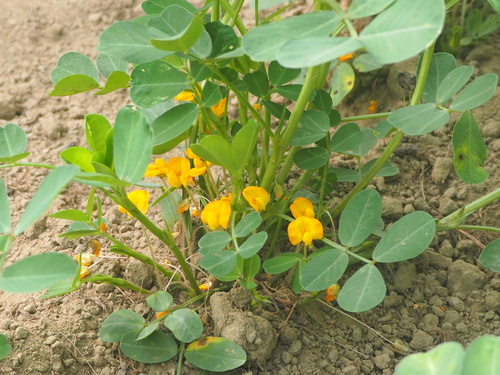
Verbatim
e0“Boron and Mn additions significantly increased concentrations of these elements in plant tissue”
t0“PEANUTS”
Claim · model-written summary
Boron uptake was significantly higher on Pontypool soil.
- Taxon
- soybeans
 Glycine maxt0
- Outcome
- Boron uptakee0
- Direction
- highere0
- Setting
- Pontypool soile0
Organisms pictured · Representative pictures of the matched species, not figures from the paper.

Verbatim
e0“Boron uptake was significantly higher on the coarser-textured Pontypool soil”
t0“SOYBEANS”
Claim · model-written summary
Boron toxicity significantly reduced soybean yields on Pontypool soil.
- Taxon
- soybeanGlycine maxe0
- Outcome
- soybean yieldse0
- Direction
- reducede0
- Setting
- this soile0
Organisms pictured · Representative pictures of the matched species, not figures from the paper.
Verbatim
e0“toxicity significantly reduced soybean yields on this soil”
Claim · model-written summary
Alfalfa yields were unaffected by boron toxicity on Pontypool soil.
- Taxon
- alfalfaMedicago sativae0
- Outcome
- alfalfae0
- Direction
- unaffectede0
Organisms pictured · Representative pictures of the matched species, not figures from the paper.
Verbatim
e0“alfalfa and peanut yields were unaffected”
Claim · model-written summary
Peanut yields were unaffected by boron toxicity on Pontypool soil.
- Taxon
- peanutArachis hypogaeae0
- Outcome
- peanut yieldse0
- Direction
- unaffectede0
Organisms pictured · Representative pictures of the matched species, not figures from the paper.
Verbatim
e0“peanut yields were unaffected”
Claim · model-written summary
Peanuts appeared least sensitive to boron toxicity.
- Taxon
- PeanutsArachis hypogaeae0
- Outcome
- B toxicitye0
- Direction
- least sensitivee0
Organisms pictured · Representative pictures of the matched species, not figures from the paper.
Verbatim
e0“Peanuts appeared least sensitive to B toxicity and Mn deficiency”
Claim · model-written summary
Peanuts appeared least sensitive to manganese deficiency.
- Taxon
- PeanutsArachis hypogaeae0
- Outcome
- Mn deficiencye0
- Direction
- least sensitivee0
Organisms pictured · Representative pictures of the matched species, not figures from the paper.
Verbatim
e0“Peanuts appeared least sensitive to B toxicity and Mn deficiency”
Claim · model-written summary
Soybeans were most sensitive to boron toxicity.
- Taxon
- SoybeansGlycine maxe0
- Outcome
- B toxicitye0
- Direction
- most sensitivee0
Organisms pictured · Representative pictures of the matched species, not figures from the paper.
Verbatim
e0“Soybeans were most sensitive to B toxicity”
Claim · model-written summary
Alfalfa was most sensitive to manganese deficiency.
- Taxon
- alfalfaMedicago sativae0
- Outcome
- Mn deficiencye0
- Direction
- most sensitivee0
Organisms pictured · Representative pictures of the matched species, not figures from the paper.
Verbatim
e0“alfalfa most sensitive to Mn deficiency”
Claim · model-written summary
Tolerance differences to boron appear due to tissue concentration tolerance rather than uptake differences.
Verbatim
e0“The differences in tolerance to B seem attributable to the relative abilities of the three species to withstand high B concentrations in plant tissue rather than to differences in uptake”
t0“PEANUTS”
Claim · model-written summary
Manganese deficiency susceptibility appears linked to extraction efficiency from deficient soil.
- Taxon
- SOYBEANSGlycine maxt0
- Outcome
- Differential susceptibility to Mn deficiencye0
- Qualifier
- relative efficiencies of the crops to extract Mn from Mn-deficient soilse0
Organisms pictured · Representative pictures of the matched species, not figures from the paper.
Verbatim
e0“Differential susceptibility to Mn deficiency on the other hand seems attributable to relative efficiencies of the crops to extract Mn from Mn-deficient soils”
t0“SOYBEANS”
Claim · model-written summary
Soil organic matter may have ameliorated boron toxicity.
- Taxon
- ALFALFAMedicago sativat0
- Outcome
- B toxicitye0
- Qualifier
- Soil organic mattere0
Organisms pictured · Representative pictures of the matched species, not figures from the paper.
Verbatim
e0“Soil organic matter may have had some ameliorative effect on B toxicity”
t0“ALFALFA”
Claim · model-written summary
Boron-by-manganese interactions did not significantly affect yield.
- Taxon
- SOYBEANSGlycine maxt0
- Treatment
- B × Mn interactionse0
- Outcome
- Yielde0
- Direction
- not significantly affectede0
Organisms pictured · Representative pictures of the matched species, not figures from the paper.
Verbatim
e0“Yield and nutrient uptake were not significantly affected by B × Mn interactions”
t0“SOYBEANS”
Claim · model-written summary
Boron-by-manganese interactions did not significantly affect nutrient uptake.
- Taxon
- SOYBEANSGlycine maxt0
- Treatment
- B × Mn interactionse0
- Outcome
- nutrient uptakee0
- Direction
- not significantly affectede0
Organisms pictured · Representative pictures of the matched species, not figures from the paper.
Verbatim
e0“Yield and nutrient uptake were not significantly affected by B × Mn interactions”
t0“SOYBEANS”