Abstract
Abstract Field experiments were conducted on a Vertisol to study the effect of shade and fertilizer applications in reducing lime‐induced iron chlorosis, thereby improving crop growth and yield of ginger. Plant height and tiller number were increased with shade treatment, while the severity of iron chlorosis was reduced. Ginger growth under 66% saran netting, inter‐cropped with ochro and inter‐cropped with corn and peas, significantly outyielded those plants intercropped with corn only and those with no shade. Fertilizer applications did not have any significant effect on yield in comparison to shade treatments.
Abstract from the paper’s OpenAlex record, shown for indexing and research. Copyright remains with the authors or the publisher. Read at the source ↗
The text the model read, with the source record’s inline markup (italics, sub- and superscripts) rendered and its character entities decoded; quote offsets refer to the raw text.
Claims 6
Claim · model-written summary
Shade increased ginger height and tiller number.
- Taxon
- ginger
 Zingiber officinalet0
- Treatment
- shade treatmente0
- Outcome
- Plant height and tiller numbere0
- Direction
- increasede0
Not reportedComparator
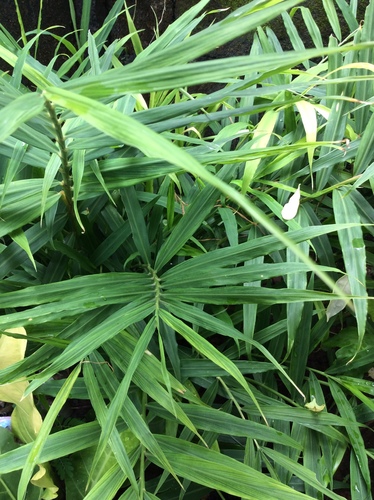
Organisms pictured · Representative pictures of the matched species, not figures from the paper.
Verbatim
e0“Plant height and tiller number were increased with shade treatment, while the severity of iron chlorosis was reduced.”
t0“ginger (Zingiber officinaleRoscoe)”
Claim · model-written summary
Shade reduced iron chlorosis severity.
- Taxon
- gingerZingiber officinalet0
- Treatment
- shade treatmente0
- Outcome
- severity of iron chlorosise0
- Direction
- reducede0
Not reportedComparator
Organisms pictured · Representative pictures of the matched species, not figures from the paper.
Verbatim
e0“Plant height and tiller number were increased with shade treatment, while the severity of iron chlorosis was reduced.”
t0“ginger (Zingiber officinaleRoscoe)”
Claim · model-written summary
Ginger under 66% netting significantly outyielded corn only and no shade.
- Taxon
- gingerZingiber officinalee0
- Treatment
- 66% saran nettinge0
- Outcome
- outyieldede0
- Direction
- outyieldede0
- Comparator
- intercropped with corn onlye0
Organisms pictured · Representative pictures of the matched species, not figures from the paper.
Verbatim
e0“Ginger growth under 66% saran netting, inter‐cropped with ochro and inter‐cropped with corn and peas, significantly outyielded those plants intercropped with corn only and those with no shade.”
t0“ginger (Zingiber officinaleRoscoe)”
Claim · model-written summary
Ginger intercropped with ochro significantly outyielded corn only and no shade.
- Taxon
- gingerZingiber officinalee0
- Treatment
- inter‐cropped with ochroe0
- Outcome
- outyieldede0
- Direction
- outyieldede0
- Comparator
- intercropped with corn onlye0
Organisms pictured · Representative pictures of the matched species, not figures from the paper.
Verbatim
e0“Ginger growth under 66% saran netting, inter‐cropped with ochro and inter‐cropped with corn and peas, significantly outyielded those plants intercropped with corn only and those with no shade.”
t0“ginger (Zingiber officinaleRoscoe)”
Claim · model-written summary
Ginger intercropped with corn and peas significantly outyielded corn only and no shade.
- Taxon
- gingerZingiber officinalee0
- Treatment
- inter‐cropped with corn and pease0
- Outcome
- outyieldede0
- Direction
- outyieldede0
- Comparator
- intercropped with corn onlye0
Organisms pictured · Representative pictures of the matched species, not figures from the paper.
Verbatim
e0“Ginger growth under 66% saran netting, inter‐cropped with ochro and inter‐cropped with corn and peas, significantly outyielded those plants intercropped with corn only and those with no shade.”
t0“ginger (Zingiber officinaleRoscoe)”
Claim · model-written summary
Fertilizer applications did not significantly affect yield relative to shade treatments.
- Taxon
- gingerZingiber officinalet0
- Treatment
- Fertilizer applicationse0
- Outcome
- yielde0
- Comparator
- shade treatmentse0
Not reportedDirection
Organisms pictured · Representative pictures of the matched species, not figures from the paper.
Verbatim
e0“Fertilizer applications did not have any significant effect on yield in comparison to shade treatments.”
t0“ginger (Zingiber officinaleRoscoe)”
The same questions in other papers
shade · yield · Zingiber officinale (ginger)Results differ
2 papers in the same direction as this paper · 1 in the opposite direction
- no effect
- positive
- positive
fertilization · yield · Zingiber officinale (ginger)Positive and negative results
1 paper in the same direction as this paper · 21 reporting no difference from an alternative
- positive
- positive
- positive
19 papers more in this group
See all 23 papers →shade · physiology: pigments · Zingiber officinale (ginger)Results agree
1 paper in the same direction as this paper
- positive
Claims are grouped by organism, treatment and what was measured or targeted. A paper counts as positive when any of its claims in the group is positive.