Abstract
Ginger bacterial wilt is the most destructive disease that causes qualitative and quantitative rhizome yield losses in Ethiopia. Field studies were conducted to assess yield loss caused by bacterial wilt of ginger in different wilt management systems at Teppi and Jimma, Ethiopia, during 2017. Management systems were host resistance (Boziab and Local) and cultural practices (lemon grass, potassium fertilizer and soil solarization), which were applied as sole and in different levels of integrations. The experiments were factorial arranged in a randomized complete block design with three replications. Disease, growth, yield and yield-related data were collected from central rows of each experimental plot. Data were subjected to analysis of variance using linear general model (GLM) procedure of SAS version 9.3. Mean separation was made using least significant difference test. Correlation among parameters and linear regression of rhizome yield versus final wilt incidence were computed using Minitab 14 statistical package. Analysis of variance indicated that variety, cultural practices and variety × cultural practice interaction effects significantly reduced wilt incidence and increased rhizome yield and its components. Variety Boziab recorded relatively more yield and yield components than the Local variety. Rhizome yield gains of about 51.4% in Local and 51.9% in Boziab at Teppi and 39.4% in Local and 49.1% in Boziab at Jimma were obtained due to integrated application of lemon grass with soil solarization and soil fertilization. The mean relative yield loss calculated for control plots due to bacterial wilt ranged from 51.4 to 51.9% at Teppi and 39.4 to 49.1% at Jimma. The lowest relative yield loss was computed from plots treated with either lemon grass with soil fertilization and solarization or lemon grass with soil fertilization. Final wilt incidence was inversely and highly significantly (P ≤ 0.001) correlated (r = − 0.90** and − 0.88**) with rhizome yield of Boziab and Local, respectively, at Teppi. The slope of the regression line also estimated that for each unit increase in percent of final mean wilt incidence, there was a rhizome yield reduction of 0.18 t ha−1 for Boziab and 0.19 t ha−1 for Local variety at Teppi. Similar trends were observed at Jimma. Moreover, the most integrated treatment provided higher net benefit with optimum marginal rate of return than others. The overall results indicated that integration of host resistance with cultural practices reduces yield loss, improves ginger productivity and significantly reduces bacterial wilt epidemics, and thus, it is recommended in the study areas and other related agroecologies.
Abstract from the paper’s OpenAlex record; open copy licensed cc-by. Read at the source ↗
The text the model read, with the source record’s inline markup (italics, sub- and superscripts) rendered and its character entities decoded; quote offsets refer to the raw text.
Claims 17
Claim · model-written summary
Variety, cultural practices and their interaction significantly reduced wilt incidence.
- Taxon
- ginger
 Zingiber officinalet0
- Treatment
- cultural practicese0
- Interactor
- Ralstonia solanacearum
 Ralstonia solanacearumt0pathogen
- Outcome
- wilt incidencee0
- Direction
- reducede0
Not reportedComparator
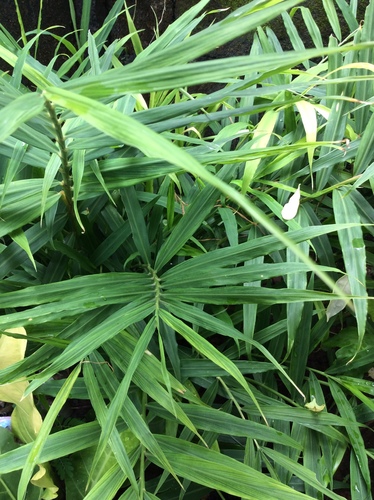
Organisms pictured · Representative pictures of the matched species, not figures from the paper.

Verbatim
e0“variety, cultural practices and variety × cultural practice interaction effects significantly reduced wilt incidence and increased rhizome yield and its components”
t0“ginger (Zingiber officinale) due to bacterial wilt (Ralstonia solanacearum)”
Claim · model-written summary
Variety, cultural practices and their interaction significantly increased rhizome yield and components.
- Taxon
- gingerZingiber officinalet0
- Treatment
- cultural practicese0
- Outcome
- rhizome yield and its componentse0
- Direction
- increasede0
Not reportedComparator
Organisms pictured · Representative pictures of the matched species, not figures from the paper.
Verbatim
e0“variety, cultural practices and variety × cultural practice interaction effects significantly reduced wilt incidence and increased rhizome yield and its components”
t0“ginger (Zingiber officinale)”
Claim · model-written summary
Boziab had more yield and yield components than Local.
- Taxon
- gingerZingiber officinalet0
- Material
- Boziabe0
- Outcome
- yield and yield componentse0
- Direction
- moree0
- Comparator
- Local varietye0
Organisms pictured · Representative pictures of the matched species, not figures from the paper.
Verbatim
e0“Variety Boziab recorded relatively more yield and yield components than the Local variety.”
t0“ginger (Zingiber officinale)”
Claim · model-written summary
Integrated management gave 51.4% rhizome yield gain for Local at Teppi.
- Taxon
- gingerZingiber officinalet0
- Material
- Locale0
- Treatment
- integrated application of lemon grass with soil solarization and soil fertilizatione0
- Outcome
- Rhizome yield gainse0
- Direction
- gainse0
- Value
- 51.4%e0
- Setting
- Teppie0
Not reportedComparator
Organisms pictured · Representative pictures of the matched species, not figures from the paper.
Verbatim
e0“Rhizome yield gains of about 51.4% in Local and 51.9% in Boziab at Teppi and 39.4% in Local and 49.1% in Boziab at Jimma were obtained due to integrated application of lemon grass with soil solarization and soil fertilization.”
t0“ginger (Zingiber officinale)”
Claim · model-written summary
Integrated management gave 51.9% rhizome yield gain for Boziab at Teppi.
- Taxon
- gingerZingiber officinalet0
- Material
- Boziabe0
- Treatment
- integrated application of lemon grass with soil solarization and soil fertilizatione0
- Outcome
- Rhizome yield gainse0
- Direction
- gainse0
- Value
- 51.9%e0
- Setting
- Teppie0
Not reportedComparator
Organisms pictured · Representative pictures of the matched species, not figures from the paper.
Verbatim
e0“Rhizome yield gains of about 51.4% in Local and 51.9% in Boziab at Teppi and 39.4% in Local and 49.1% in Boziab at Jimma were obtained due to integrated application of lemon grass with soil solarization and soil fertilization.”
t0“ginger (Zingiber officinale)”
Claim · model-written summary
Integrated management gave 39.4% rhizome yield gain for Local at Jimma.
- Taxon
- gingerZingiber officinalet0
- Material
- Locale0
- Treatment
- integrated application of lemon grass with soil solarization and soil fertilizatione0
- Outcome
- Rhizome yield gainse0
- Direction
- gainse0
- Value
- 39.4%e0
- Setting
- Jimmae0
Not reportedComparator
Organisms pictured · Representative pictures of the matched species, not figures from the paper.
Verbatim
e0“Rhizome yield gains of about 51.4% in Local and 51.9% in Boziab at Teppi and 39.4% in Local and 49.1% in Boziab at Jimma were obtained due to integrated application of lemon grass with soil solarization and soil fertilization.”
t0“ginger (Zingiber officinale)”
Claim · model-written summary
Integrated management gave 49.1% rhizome yield gain for Boziab at Jimma.
- Taxon
- gingerZingiber officinalet0
- Material
- Boziabe0
- Treatment
- integrated application of lemon grass with soil solarization and soil fertilizatione0
- Outcome
- Rhizome yield gainse0
- Direction
- gainse0
- Value
- 49.1%e0
- Setting
- Jimmae0
Not reportedComparator
Organisms pictured · Representative pictures of the matched species, not figures from the paper.
Verbatim
e0“Rhizome yield gains of about 51.4% in Local and 51.9% in Boziab at Teppi and 39.4% in Local and 49.1% in Boziab at Jimma were obtained due to integrated application of lemon grass with soil solarization and soil fertilization.”
t0“ginger (Zingiber officinale)”
Claim · model-written summary
Control plots had 51.4 to 51.9% relative yield loss at Teppi due to wilt.
- Taxon
- gingerZingiber officinalet0
- Interactor
- Ralstonia solanacearumRalstonia solanacearumt0pathogen
- Outcome
- relative yield losse0
- Value
- 51.4 to 51.9%e0
- Setting
- Teppie0
Organisms pictured · Representative pictures of the matched species, not figures from the paper.
Verbatim
e0“The mean relative yield loss calculated for control plots due to bacterial wilt ranged from 51.4 to 51.9% at Teppi and 39.4 to 49.1% at Jimma.”
t0“ginger (Zingiber officinale) due to bacterial wilt (Ralstonia solanacearum)”
Claim · model-written summary
Control plots had 39.4 to 49.1% relative yield loss at Jimma due to wilt.
- Taxon
- gingerZingiber officinalet0
- Interactor
- Ralstonia solanacearumRalstonia solanacearumt0pathogen
- Outcome
- relative yield losse0
- Value
- 39.4 to 49.1%e0
- Setting
- Jimmae0
Organisms pictured · Representative pictures of the matched species, not figures from the paper.
Verbatim
e0“The mean relative yield loss calculated for control plots due to bacterial wilt ranged from 51.4 to 51.9% at Teppi and 39.4 to 49.1% at Jimma.”
t0“ginger (Zingiber officinale) due to bacterial wilt (Ralstonia solanacearum)”
Claim · model-written summary
Two lemon grass combinations produced the lowest relative yield loss.
- Taxon
- gingerZingiber officinalet0
- Treatment
- lemon grass with soil fertilizatione0
- Outcome
- relative yield losse0
- Direction
- loweste0
Not reportedComparator
Organisms pictured · Representative pictures of the matched species, not figures from the paper.
Verbatim
e0“The lowest relative yield loss was computed from plots treated with either lemon grass with soil fertilization and solarization or lemon grass with soil fertilization.”
t0“ginger (Zingiber officinale)”
Claim · model-written summary
Final wilt incidence was inversely correlated with rhizome yield of Boziab at Teppi (− 0.90**).
- Taxon
- gingerZingiber officinalet0
- Material
- Boziabe0
- Interactor
- Ralstonia solanacearumRalstonia solanacearumt0pathogen
- Outcome
- rhizome yielde0
- Direction
- inverselye0
- Value
- − 0.90**e0
- Setting
- Teppie0
Organisms pictured · Representative pictures of the matched species, not figures from the paper.
Verbatim
e0“Final wilt incidence was inversely and highly significantly (P ≤ 0.001) correlated (r = − 0.90** and − 0.88**) with rhizome yield of Boziab and Local, respectively, at Teppi.”
t0“ginger (Zingiber officinale) due to bacterial wilt (Ralstonia solanacearum)”
Claim · model-written summary
Final wilt incidence was inversely correlated with rhizome yield of Local at Teppi (− 0.88**).
- Taxon
- gingerZingiber officinalet0
- Material
- Locale0
- Interactor
- Ralstonia solanacearumRalstonia solanacearumt0pathogen
- Outcome
- rhizome yielde0
- Direction
- inverselye0
- Value
- − 0.88**e0
- Setting
- Teppie0
Organisms pictured · Representative pictures of the matched species, not figures from the paper.
Verbatim
e0“Final wilt incidence was inversely and highly significantly (P ≤ 0.001) correlated (r = − 0.90** and − 0.88**) with rhizome yield of Boziab and Local, respectively, at Teppi.”
t0“ginger (Zingiber officinale) due to bacterial wilt (Ralstonia solanacearum)”
Claim · model-written summary
Each unit increase in final wilt incidence corresponded to 0.18 t ha−1 rhizome yield reduction in Boziab at Teppi.
- Taxon
- gingerZingiber officinalet0
- Material
- Boziabe0
- Interactor
- Ralstonia solanacearumRalstonia solanacearumt0pathogen
- Outcome
- rhizome yield reductione0
- Direction
- reductione0
- Value
- 0.18 t ha−1e0
- Setting
- Teppie0
Organisms pictured · Representative pictures of the matched species, not figures from the paper.
Verbatim
e0“for each unit increase in percent of final mean wilt incidence, there was a rhizome yield reduction of 0.18 t ha−1 for Boziab and 0.19 t ha−1 for Local variety at Teppi.”
t0“ginger (Zingiber officinale) due to bacterial wilt (Ralstonia solanacearum)”
Claim · model-written summary
Each unit increase in final wilt incidence corresponded to 0.19 t ha−1 rhizome yield reduction in Local at Teppi.
- Taxon
- gingerZingiber officinalet0
- Material
- Locale0
- Interactor
- Ralstonia solanacearumRalstonia solanacearumt0pathogen
- Outcome
- rhizome yield reductione0
- Direction
- reductione0
- Value
- 0.19 t ha−1e0
- Setting
- Teppie0
Organisms pictured · Representative pictures of the matched species, not figures from the paper.
Verbatim
e0“for each unit increase in percent of final mean wilt incidence, there was a rhizome yield reduction of 0.18 t ha−1 for Boziab and 0.19 t ha−1 for Local variety at Teppi.”
t0“ginger (Zingiber officinale) due to bacterial wilt (Ralstonia solanacearum)”
Claim · model-written summary
Similar wilt and yield trends were observed at Jimma.
- Taxon
- gingerZingiber officinalet0
- Outcome
- Similar trendse0
- Setting
- Jimmae0
Organisms pictured · Representative pictures of the matched species, not figures from the paper.
Verbatim
e0“Similar trends were observed at Jimma.”
t0“ginger (Zingiber officinale) due to bacterial wilt (Ralstonia solanacearum)”
Claim · model-written summary
The most integrated treatment gave higher net benefit and optimum marginal rate of return.
- Taxon
- gingerZingiber officinalet0
- Treatment
- the most integrated treatmente0
- Outcome
- net benefit with optimum marginal rate of returne0
- Direction
- highere0
- Comparator
- otherse0
Organisms pictured · Representative pictures of the matched species, not figures from the paper.
Verbatim
e0“the most integrated treatment provided higher net benefit with optimum marginal rate of return than others.”
t0“ginger (Zingiber officinale)”
Claim · model-written summary
The authors recommend integrating host resistance with cultural practices in the study areas and related agroecologies.
- Taxon
- gingerZingiber officinalet0
- Outcome
- integration of host resistance with cultural practicese0
- Setting
- the study areas and other related agroecologiese0
Organisms pictured · Representative pictures of the matched species, not figures from the paper.
Verbatim
e0“integration of host resistance with cultural practices reduces yield loss, improves ginger productivity and significantly reduces bacterial wilt epidemics, and thus, it is recommended in the study areas and other related agroecologies.”
t0“ginger (Zingiber officinale)”
The same questions in other papers
Cymbopogon citratus · yield · Zingiber officinale (ginger)Results agree
1 paper in the same direction as this paper
- positive
fertilization · yield · Zingiber officinale (ginger)Positive and negative results
20 papers in the same direction as this paper · 1 in the opposite direction · 1 reporting no difference from an alternative
- no effect
- no effect
- positive
19 papers more in this group
See all 23 papers →solarization · yield · Zingiber officinale (ginger)Results agree
3 papers in the same direction as this paper
- positive
- positive
- positive
Claims are grouped by organism, treatment and what was measured or targeted. A paper counts as positive when any of its claims in the group is positive.