Abstract
Ginger (Zingiber officinale Roscoe.,) is a slender herbaceous perennial plant belonging to the family Zingiberaceae, medicinally important and commercial spice crop. India is the largest producer of ginger and accounts for about 1/3rd of the total world output. Ginger is grown in Kerala, Karnataka, West Bengal, Andhra Pradesh, Orissa, Arunachal Pradesh, Sikkim and other parts of India. The production of ginger is greatly influenced by diseases caused by bacteria, fungi, viruses, mycoplasma and nematodes. One of the diseases of ginger is bacterial wilt caused by Ralstonia solanacearum, which causes yield loss of up to 80 percent. A field experiment was conducted with integrated approaches to manage the ginger rhizome rot caused by R. solanacearum (Smith). The experiment was laid out with a Randomized Completely Block Design (RCBD) including nine treatments and four replications. The experiment results revealed that, rhizome treatment with Streptocycline @ 0.5 g + COC @ 3.0 g/l of water + soil application with neem cake 3q/ha followed by drenching with bleaching powder (33%) @ 2.0 g/l + Metalaxyl MZ @ 1.0 g/lit for water three times at 20 days intervals + Ginger special spray 45 DAS, starting with the initiation of the disease was significantly most effective and recorded a higher yield of 110.27 q/ha with least disease incidence of disease (14.23 %). Integrated management of rhizome rot of ginger through soil solarization revealed that, among the different treatments, the treatment treated with soil solarization + rhizome treatment with Streptocycline @ 0.5 g + Copper Oxy Chloride @ 3.0 g/lit of water + Soil application of Pseudomonas fluorescens @ 10 kg along with 25t FYM /ha recorded higher yield of 115.23 q/ha with less percent disease incidence (8.20 %).
Abstract from the paper’s OpenAlex record, shown for indexing and research. Copyright remains with the authors or the publisher. Read at the source ↗
The text the model read, with the source record’s inline markup (italics, sub- and superscripts) rendered and its character entities decoded; quote offsets refer to the raw text.
Claims 4
Claim · model-written summary
The Streptocycline, COC, neem cake, bleaching powder, Metalaxyl MZ and ginger-special treatment yielded 110.27 q/ha.
- Taxon
- Ginger
 Zingiber officinalet0
- Treatment
- rhizome treatment with Streptocycline @ 0.5 g + COC @ 3.0 g/l of water + soil application with neem cake 3q/ha followed by drenching with bleaching powder (33%) @ 2.0 g/l + Metalaxyl MZ @ 1.0 g/lit for water three times at 20 days intervals + Ginger special spray 45 DASe0
- Outcome
- yielde0
- Direction
- highere0
- Value
- 110.27 q/hae0
Not reportedComparator
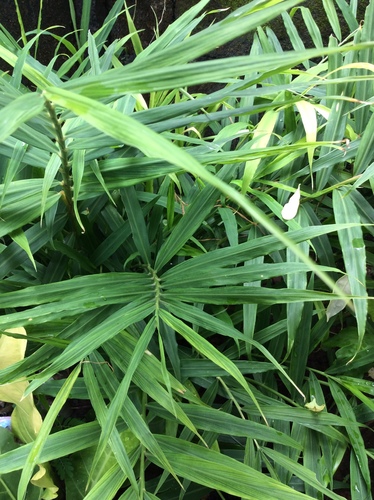
Organisms pictured · Representative pictures of the matched species, not figures from the paper.
Verbatim
e0“rhizome treatment with Streptocycline @ 0.5 g + COC @ 3.0 g/l of water + soil application with neem cake 3q/ha followed by drenching with bleaching powder (33%) @ 2.0 g/l + Metalaxyl MZ @ 1.0 g/lit for water three times at 20 days intervals + Ginger special spray 45 DAS, starting with the initiation of the disease was significantly most effective and recorded a higher yield of 110.27 q/ha with least disease incidence of disease (14.23 %).”
t0“Ginger (Zingiber officinale Roscoe.)”
Claim · model-written summary
That treatment had the least disease incidence, 14.23%.
- Taxon
- GingerZingiber officinalet0
- Treatment
- rhizome treatment with Streptocycline @ 0.5 g + COC @ 3.0 g/l of water + soil application with neem cake 3q/ha followed by drenching with bleaching powder (33%) @ 2.0 g/l + Metalaxyl MZ @ 1.0 g/lit for water three times at 20 days intervals + Ginger special spray 45 DASe0
- Outcome
- disease incidence of diseasee0
- Direction
- leaste0
- Value
- 14.23 %e0
Not reportedComparator
Organisms pictured · Representative pictures of the matched species, not figures from the paper.
Verbatim
e0“rhizome treatment with Streptocycline @ 0.5 g + COC @ 3.0 g/l of water + soil application with neem cake 3q/ha followed by drenching with bleaching powder (33%) @ 2.0 g/l + Metalaxyl MZ @ 1.0 g/lit for water three times at 20 days intervals + Ginger special spray 45 DAS, starting with the initiation of the disease was significantly most effective and recorded a higher yield of 110.27 q/ha with least disease incidence of disease (14.23 %).”
t0“Ginger (Zingiber officinale Roscoe.)”
Claim · model-written summary
Soil solarization with Streptocycline, copper oxychloride and Pseudomonas fluorescens yielded 115.23 q/ha.
- Taxon
- GingerZingiber officinalet0
- Treatment
- soil solarization + rhizome treatment with Streptocycline @ 0.5 g + Copper Oxy Chloride @ 3.0 g/lit of water + Soil application of Pseudomonas fluorescens @ 10 kg along with 25t FYM /hae0
- Interactor
- Pseudomonas fluorescens
 Pseudomonas fluorescense0biocontrol_agent
- Outcome
- yielde0
- Direction
- highere0
- Value
- 115.23 q/hae0
Not reportedComparator
Organisms pictured · Representative pictures of the matched species, not figures from the paper.

Verbatim
e0“soil solarization + rhizome treatment with Streptocycline @ 0.5 g + Copper Oxy Chloride @ 3.0 g/lit of water + Soil application of Pseudomonas fluorescens @ 10 kg along with 25t FYM /ha recorded higher yield of 115.23 q/ha with less percent disease incidence (8.20 %).”
t0“Ginger (Zingiber officinale Roscoe.)”
Claim · model-written summary
That soil-solarization treatment had 8.20% disease incidence.
- Taxon
- GingerZingiber officinalet0
- Treatment
- soil solarization + rhizome treatment with Streptocycline @ 0.5 g + Copper Oxy Chloride @ 3.0 g/lit of water + Soil application of Pseudomonas fluorescens @ 10 kg along with 25t FYM /hae0
- Interactor
- Pseudomonas fluorescensPseudomonas fluorescense0biocontrol_agent
- Outcome
- percent disease incidencee0
- Direction
- lesse0
- Value
- 8.20 %e0
Not reportedComparator
Organisms pictured · Representative pictures of the matched species, not figures from the paper.
Verbatim
e0“soil solarization + rhizome treatment with Streptocycline @ 0.5 g + Copper Oxy Chloride @ 3.0 g/lit of water + Soil application of Pseudomonas fluorescens @ 10 kg along with 25t FYM /ha recorded higher yield of 115.23 q/ha with less percent disease incidence (8.20 %).”
t0“Ginger (Zingiber officinale Roscoe.)”
The same questions in other papers
Pseudomonas fluorescens · disease · Zingiber officinale (ginger)Results agree
1 paper in the same direction as this paper
- positive
Calcium hypochlorite · disease · Zingiber officinale (ginger)Results agree
1 paper in the same direction as this paper
- positive
metalaxyl · yield · Zingiber officinale (ginger)Results agree
2 papers in the same direction as this paper
- positive
- positive
Calcium hypochlorite · yield · Zingiber officinale (ginger)Results agree
2 papers in the same direction as this paper
- positive
- positive
botanical · yield · Zingiber officinale (ginger)Positive and negative results
2 in the opposite direction
- negative
- no effect
fertilization · yield · Zingiber officinale (ginger)Positive and negative results
20 papers in the same direction as this paper · 1 in the opposite direction · 1 reporting no difference from an alternative
- no effect
- no effect
- positive
19 papers more in this group
See all 23 papers →solarization · yield · Zingiber officinale (ginger)Results agree
3 papers in the same direction as this paper
- positive
- positive
- positive
botanical · disease · Zingiber officinale (ginger)Results agree
3 papers in the same direction as this paper
- positive
- positive
- positive
8 of 12 groups shown: named compounds and organisms first, then groups whose results differ (checked claim by claim), then those with positive and negative results, then the smaller groups.
Claims are grouped by organism, treatment and what was measured or targeted. A paper counts as positive when any of its claims in the group is positive.