Abstract
Flours produced from the seeds of Cleome rutidosperma (DC), Lagenaria siceraria (Mol.), and Cucurbita maxima (Duch) were evaluated for proximate and elemental compositions. Preliminary phytochemical screening was also carried out on the seed flours, which revealed the presence of alkaloids, steroids, pentose, and reducing sugars in all the seed types. Tannins, flavonoids, and cardiac glycosides were also detected in only C. rutidosperma seed. The results also showed that the seeds of C. rutidosperma, L. siceraria, and C. maxima contained carbohydrates (74.43%, 45.93%, and 24.30%), fats (7.20%, 38.92%, and 51.49%), and proteins (11.73%, 8.93%, and 16.80%), respectively. The major mineral contents of the three defatted seed flours were found to include potassium (39.00 ppm, 19.50 ppm, and 39.00 ppm), sodium (23.00 ppm, 11.50 ppm, and 11.50 ppm), and calcium (18.00 ppm, 12.00 ppm, and 15.00 ppm), respectively. They were also found to contain zinc (0.013 ppm, 0.04 ppm, and 0.084 ppm) and iron (0.014 ppm, 0.028 ppm, and 0.032 ppm), respectively. The proximate and mineral compositions suggest that the seeds are potential sources of carbohydrate, fats, protein, and micro- and macrominerals and may find use as human food or for incorporation into livestock feed. However, the seeds were revealed to also contain slight traces of lead, although at such very low concentrations they may be artifacts. This calls for further research into possible lead toxicity after prolonged consumption of these seeds.
Abstract from the paper’s OpenAlex record, shown for indexing and research. Copyright remains with the authors or the publisher. Read at the source ↗
The text the model read, with the source record’s inline markup (italics, sub- and superscripts) rendered and its character entities decoded; quote offsets refer to the raw text.
Claims 20
Claim · model-written summary
C. rutidosperma seed flour contained 74.43% carbohydrates.
- Taxon
- C. rutidospermaSieruela rutidospermae0
- Organ / stage
- seedse1
- Outcome
- carbohydratese0
- Value
- 74.43%e0
Verbatim
e0“The results also showed that the seeds of C. rutidosperma, L. siceraria, and C. maxima contained carbohydrates (74.43%, 45.93%, and 24.30%), fats (7.20%, 38.92%, and 51.49%), and proteins (11.73%, 8.93%, and 16.80%), respectively.”
e1“Flours produced from the seeds of Cleome rutidosperma (DC), Lagenaria siceraria (Mol.), and Cucurbita maxima (Duch)”
Claim · model-written summary
L. siceraria seed flour contained 45.93% carbohydrates.
- Taxon
- L. siceraria
 Lagenaria sicerariae0
- Organ / stage
- seedse1
- Outcome
- carbohydratese0
- Value
- 45.93%e0
Organisms pictured · Representative pictures of the matched species, not figures from the paper.

Verbatim
e0“The results also showed that the seeds of C. rutidosperma, L. siceraria, and C. maxima contained carbohydrates (74.43%, 45.93%, and 24.30%), fats (7.20%, 38.92%, and 51.49%), and proteins (11.73%, 8.93%, and 16.80%), respectively.”
e1“Flours produced from the seeds of Cleome rutidosperma (DC), Lagenaria siceraria (Mol.), and Cucurbita maxima (Duch)”
Claim · model-written summary
C. maxima seed flour contained 24.30% carbohydrates.
- Taxon
- C. maxima
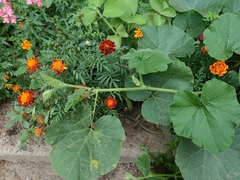 Cucurbita maximae0
- Organ / stage
- seedse1
- Outcome
- carbohydratese0
- Value
- 24.30%e0
Organisms pictured · Representative pictures of the matched species, not figures from the paper.

Verbatim
e0“The results also showed that the seeds of C. rutidosperma, L. siceraria, and C. maxima contained carbohydrates (74.43%, 45.93%, and 24.30%), fats (7.20%, 38.92%, and 51.49%), and proteins (11.73%, 8.93%, and 16.80%), respectively.”
e1“Flours produced from the seeds of Cleome rutidosperma (DC), Lagenaria siceraria (Mol.), and Cucurbita maxima (Duch)”
Claim · model-written summary
C. rutidosperma seed flour contained 7.20% fats.
- Taxon
- C. rutidospermaSieruela rutidospermae0
- Organ / stage
- seedse1
- Outcome
- fatse0
- Value
- 7.20%e0
Verbatim
e0“The results also showed that the seeds of C. rutidosperma, L. siceraria, and C. maxima contained carbohydrates (74.43%, 45.93%, and 24.30%), fats (7.20%, 38.92%, and 51.49%), and proteins (11.73%, 8.93%, and 16.80%), respectively.”
e1“Flours produced from the seeds of Cleome rutidosperma (DC), Lagenaria siceraria (Mol.), and Cucurbita maxima (Duch)”
Claim · model-written summary
L. siceraria seed flour contained 38.92% fats.
- Taxon
- L. sicerariaLagenaria sicerariae0
- Organ / stage
- seedse1
- Outcome
- fatse0
- Value
- 38.92%e0
Organisms pictured · Representative pictures of the matched species, not figures from the paper.
Verbatim
e0“The results also showed that the seeds of C. rutidosperma, L. siceraria, and C. maxima contained carbohydrates (74.43%, 45.93%, and 24.30%), fats (7.20%, 38.92%, and 51.49%), and proteins (11.73%, 8.93%, and 16.80%), respectively.”
e1“Flours produced from the seeds of Cleome rutidosperma (DC), Lagenaria siceraria (Mol.), and Cucurbita maxima (Duch)”
Claim · model-written summary
C. maxima seed flour contained 51.49% fats.
- Taxon
- C. maximaCucurbita maximae0
- Organ / stage
- seedse1
- Outcome
- fatse0
- Value
- 51.49%e0
Organisms pictured · Representative pictures of the matched species, not figures from the paper.
Verbatim
e0“The results also showed that the seeds of C. rutidosperma, L. siceraria, and C. maxima contained carbohydrates (74.43%, 45.93%, and 24.30%), fats (7.20%, 38.92%, and 51.49%), and proteins (11.73%, 8.93%, and 16.80%), respectively.”
e1“Flours produced from the seeds of Cleome rutidosperma (DC), Lagenaria siceraria (Mol.), and Cucurbita maxima (Duch)”
Claim · model-written summary
C. rutidosperma seed flour contained 11.73% proteins.
- Taxon
- C. rutidospermaSieruela rutidospermae0
- Organ / stage
- seedse1
- Outcome
- proteinse0
- Value
- 11.73%e0
Verbatim
e0“The results also showed that the seeds of C. rutidosperma, L. siceraria, and C. maxima contained carbohydrates (74.43%, 45.93%, and 24.30%), fats (7.20%, 38.92%, and 51.49%), and proteins (11.73%, 8.93%, and 16.80%), respectively.”
e1“Flours produced from the seeds of Cleome rutidosperma (DC), Lagenaria siceraria (Mol.), and Cucurbita maxima (Duch)”
Claim · model-written summary
L. siceraria seed flour contained 8.93% proteins.
- Taxon
- L. sicerariaLagenaria sicerariae0
- Organ / stage
- seedse1
- Outcome
- proteinse0
- Value
- 8.93%e0
Organisms pictured · Representative pictures of the matched species, not figures from the paper.
Verbatim
e0“The results also showed that the seeds of C. rutidosperma, L. siceraria, and C. maxima contained carbohydrates (74.43%, 45.93%, and 24.30%), fats (7.20%, 38.92%, and 51.49%), and proteins (11.73%, 8.93%, and 16.80%), respectively.”
e1“Flours produced from the seeds of Cleome rutidosperma (DC), Lagenaria siceraria (Mol.), and Cucurbita maxima (Duch)”
Claim · model-written summary
C. maxima seed flour contained 16.80% proteins.
- Taxon
- C. maximaCucurbita maximae0
- Organ / stage
- seedse1
- Outcome
- proteinse0
- Value
- 16.80%e0
Organisms pictured · Representative pictures of the matched species, not figures from the paper.
Verbatim
e0“The results also showed that the seeds of C. rutidosperma, L. siceraria, and C. maxima contained carbohydrates (74.43%, 45.93%, and 24.30%), fats (7.20%, 38.92%, and 51.49%), and proteins (11.73%, 8.93%, and 16.80%), respectively.”
e1“Flours produced from the seeds of Cleome rutidosperma (DC), Lagenaria siceraria (Mol.), and Cucurbita maxima (Duch)”
Claim · model-written summary
C. rutidosperma seed flour contained 39.00 ppm potassium.
- Taxon
- C. rutidospermaSieruela rutidospermae2
- Organ / stage
- seedse1
- Outcome
- potassiume0
- Value
- 39.00 ppme0
Verbatim
e0“The major mineral contents of the three defatted seed flours were found to include potassium (39.00 ppm, 19.50 ppm, and 39.00 ppm), sodium (23.00 ppm, 11.50 ppm, and 11.50 ppm), and calcium (18.00 ppm, 12.00 ppm, and 15.00 ppm), respectively.”
e1“Flours produced from the seeds of Cleome rutidosperma (DC), Lagenaria siceraria (Mol.), and Cucurbita maxima (Duch)”
e2“The results also showed that the seeds of C. rutidosperma, L. siceraria, and C. maxima contained carbohydrates (74.43%, 45.93%, and 24.30%), fats (7.20%, 38.92%, and 51.49%), and proteins (11.73%, 8.93%, and 16.80%), respectively.”
Claim · model-written summary
L. siceraria seed flour contained 19.50 ppm potassium.
- Taxon
- L. sicerariaLagenaria sicerariae2
- Organ / stage
- seedse1
- Outcome
- potassiume0
- Value
- 19.50 ppme0
Organisms pictured · Representative pictures of the matched species, not figures from the paper.
Verbatim
e0“The major mineral contents of the three defatted seed flours were found to include potassium (39.00 ppm, 19.50 ppm, and 39.00 ppm), sodium (23.00 ppm, 11.50 ppm, and 11.50 ppm), and calcium (18.00 ppm, 12.00 ppm, and 15.00 ppm), respectively.”
e1“Flours produced from the seeds of Cleome rutidosperma (DC), Lagenaria siceraria (Mol.), and Cucurbita maxima (Duch)”
e2“The results also showed that the seeds of C. rutidosperma, L. siceraria, and C. maxima contained carbohydrates (74.43%, 45.93%, and 24.30%), fats (7.20%, 38.92%, and 51.49%), and proteins (11.73%, 8.93%, and 16.80%), respectively.”
Claim · model-written summary
C. maxima seed flour contained 39.00 ppm potassium.
- Taxon
- C. maximaCucurbita maximae2
- Organ / stage
- seedse1
- Outcome
- potassiume0
- Value
- 39.00 ppme0
Organisms pictured · Representative pictures of the matched species, not figures from the paper.
Verbatim
e0“The major mineral contents of the three defatted seed flours were found to include potassium (39.00 ppm, 19.50 ppm, and 39.00 ppm), sodium (23.00 ppm, 11.50 ppm, and 11.50 ppm), and calcium (18.00 ppm, 12.00 ppm, and 15.00 ppm), respectively.”
e1“Flours produced from the seeds of Cleome rutidosperma (DC), Lagenaria siceraria (Mol.), and Cucurbita maxima (Duch)”
e2“The results also showed that the seeds of C. rutidosperma, L. siceraria, and C. maxima contained carbohydrates (74.43%, 45.93%, and 24.30%), fats (7.20%, 38.92%, and 51.49%), and proteins (11.73%, 8.93%, and 16.80%), respectively.”
Claim · model-written summary
C. rutidosperma seed flour contained 23.00 ppm sodium.
- Taxon
- C. rutidospermaSieruela rutidospermae2
- Organ / stage
- seedse1
- Outcome
- sodiume0
- Value
- 23.00 ppme0
Verbatim
e0“The major mineral contents of the three defatted seed flours were found to include potassium (39.00 ppm, 19.50 ppm, and 39.00 ppm), sodium (23.00 ppm, 11.50 ppm, and 11.50 ppm), and calcium (18.00 ppm, 12.00 ppm, and 15.00 ppm), respectively.”
e1“Flours produced from the seeds of Cleome rutidosperma (DC), Lagenaria siceraria (Mol.), and Cucurbita maxima (Duch)”
e2“The results also showed that the seeds of C. rutidosperma, L. siceraria, and C. maxima contained carbohydrates (74.43%, 45.93%, and 24.30%), fats (7.20%, 38.92%, and 51.49%), and proteins (11.73%, 8.93%, and 16.80%), respectively.”
Claim · model-written summary
L. siceraria seed flour contained 11.50 ppm sodium.
- Taxon
- L. sicerariaLagenaria sicerariae2
- Organ / stage
- seedse1
- Outcome
- sodiume0
- Value
- 11.50 ppme0
Organisms pictured · Representative pictures of the matched species, not figures from the paper.
Verbatim
e0“The major mineral contents of the three defatted seed flours were found to include potassium (39.00 ppm, 19.50 ppm, and 39.00 ppm), sodium (23.00 ppm, 11.50 ppm, and 11.50 ppm), and calcium (18.00 ppm, 12.00 ppm, and 15.00 ppm), respectively.”
e1“Flours produced from the seeds of Cleome rutidosperma (DC), Lagenaria siceraria (Mol.), and Cucurbita maxima (Duch)”
e2“The results also showed that the seeds of C. rutidosperma, L. siceraria, and C. maxima contained carbohydrates (74.43%, 45.93%, and 24.30%), fats (7.20%, 38.92%, and 51.49%), and proteins (11.73%, 8.93%, and 16.80%), respectively.”
Claim · model-written summary
C. maxima seed flour contained 11.50 ppm sodium.
- Taxon
- C. maximaCucurbita maximae2
- Organ / stage
- seedse1
- Outcome
- sodiume0
- Value
- 11.50 ppme0
Organisms pictured · Representative pictures of the matched species, not figures from the paper.
Verbatim
e0“The major mineral contents of the three defatted seed flours were found to include potassium (39.00 ppm, 19.50 ppm, and 39.00 ppm), sodium (23.00 ppm, 11.50 ppm, and 11.50 ppm), and calcium (18.00 ppm, 12.00 ppm, and 15.00 ppm), respectively.”
e1“Flours produced from the seeds of Cleome rutidosperma (DC), Lagenaria siceraria (Mol.), and Cucurbita maxima (Duch)”
e2“The results also showed that the seeds of C. rutidosperma, L. siceraria, and C. maxima contained carbohydrates (74.43%, 45.93%, and 24.30%), fats (7.20%, 38.92%, and 51.49%), and proteins (11.73%, 8.93%, and 16.80%), respectively.”
Claim · model-written summary
C. rutidosperma seed flour contained 18.00 ppm calcium.
- Taxon
- C. rutidospermaSieruela rutidospermae2
- Organ / stage
- seedse1
- Outcome
- calciume0
- Value
- 18.00 ppme0
Verbatim
e0“The major mineral contents of the three defatted seed flours were found to include potassium (39.00 ppm, 19.50 ppm, and 39.00 ppm), sodium (23.00 ppm, 11.50 ppm, and 11.50 ppm), and calcium (18.00 ppm, 12.00 ppm, and 15.00 ppm), respectively.”
e1“Flours produced from the seeds of Cleome rutidosperma (DC), Lagenaria siceraria (Mol.), and Cucurbita maxima (Duch)”
e2“The results also showed that the seeds of C. rutidosperma, L. siceraria, and C. maxima contained carbohydrates (74.43%, 45.93%, and 24.30%), fats (7.20%, 38.92%, and 51.49%), and proteins (11.73%, 8.93%, and 16.80%), respectively.”
Claim · model-written summary
L. siceraria seed flour contained 12.00 ppm calcium.
- Taxon
- L. sicerariaLagenaria sicerariae2
- Organ / stage
- seedse1
- Outcome
- calciume0
- Value
- 12.00 ppme0
Organisms pictured · Representative pictures of the matched species, not figures from the paper.
Verbatim
e0“The major mineral contents of the three defatted seed flours were found to include potassium (39.00 ppm, 19.50 ppm, and 39.00 ppm), sodium (23.00 ppm, 11.50 ppm, and 11.50 ppm), and calcium (18.00 ppm, 12.00 ppm, and 15.00 ppm), respectively.”
e1“Flours produced from the seeds of Cleome rutidosperma (DC), Lagenaria siceraria (Mol.), and Cucurbita maxima (Duch)”
e2“The results also showed that the seeds of C. rutidosperma, L. siceraria, and C. maxima contained carbohydrates (74.43%, 45.93%, and 24.30%), fats (7.20%, 38.92%, and 51.49%), and proteins (11.73%, 8.93%, and 16.80%), respectively.”
Claim · model-written summary
C. maxima seed flour contained 15.00 ppm calcium.
- Taxon
- C. maximaCucurbita maximae2
- Organ / stage
- seedse1
- Outcome
- calciume0
- Value
- 15.00 ppme0
Organisms pictured · Representative pictures of the matched species, not figures from the paper.
Verbatim
e0“The major mineral contents of the three defatted seed flours were found to include potassium (39.00 ppm, 19.50 ppm, and 39.00 ppm), sodium (23.00 ppm, 11.50 ppm, and 11.50 ppm), and calcium (18.00 ppm, 12.00 ppm, and 15.00 ppm), respectively.”
e1“Flours produced from the seeds of Cleome rutidosperma (DC), Lagenaria siceraria (Mol.), and Cucurbita maxima (Duch)”
e2“The results also showed that the seeds of C. rutidosperma, L. siceraria, and C. maxima contained carbohydrates (74.43%, 45.93%, and 24.30%), fats (7.20%, 38.92%, and 51.49%), and proteins (11.73%, 8.93%, and 16.80%), respectively.”
Claim · model-written summary
All three seed flours contained alkaloids, steroids and reducing sugars.
- Taxon
- Cleome rutidospermaSieruela rutidospermae1
- Outcome
- alkaloids, steroids, pentose, and reducing sugarse0
Verbatim
e0“alkaloids, steroids, pentose, and reducing sugars in all the seed types”
e1“Flours produced from the seeds of Cleome rutidosperma (DC), Lagenaria siceraria (Mol.), and Cucurbita maxima (Duch)”
Claim · model-written summary
C. rutidosperma seed contained tannins, flavonoids and cardiac glycosides.
- Taxon
- C. rutidospermaSieruela rutidospermae0
- Outcome
- Tannins, flavonoids, and cardiac glycosidese0
Verbatim
e0“Tannins, flavonoids, and cardiac glycosides were also detected in only C. rutidosperma seed”