Abstract
Abstract. Continuous high resolution measurement of sugar beet leaf extension over 5 d in growth chambers showed average leaf extension rates (LER) in darkness to be from three to six times those in light for plants growing in non‐salinized media. The changes in LER in light‐dark transitions occurred within seconds, a response which was more rapid than stomatal opening or closing. When the growth medium was salinized to 100 mol m −3 NaCl, LER's were reduced by about 50% in darkness and 90% in light, markedly increasing the ratio of dark to light LER. A 2‐d episode of root‐zone salinity imposed midway through a 5‐d period of measurement decreased LER and produced higher leaf temperatures. LER and diurnal leaf temperature patterns reverted to their pre‐salinized levels when root‐zone salinity was removed. Thus, the effects of short episodes of high sodium chloride in the growth medium appear to be reversible, suggesting a water stress mechanism of growth reduction rather than toxicity effects of salt.
Abstract from the paper’s OpenAlex record, shown for indexing and research. Copyright remains with the authors or the publisher. Read at the source ↗
The text the model read, with the source record’s inline markup (italics, sub- and superscripts) rendered and its character entities decoded; quote offsets refer to the raw text.
Claims 8
Claim · model-written summary
Unsalted sugar beet leaf extension averaged three to six times faster in darkness than light.
- Taxon
- Beta vulgaris
 Beta vulgarist0
- Outcome
- leaf extension rates (LER)e0
- Direction
- three to six timese0
- Value
- three to six timese0
- Qualifier
- non‐salinized mediae0
- Comparator
- those in lighte0
Organisms pictured · Representative pictures of the matched species, not figures from the paper.
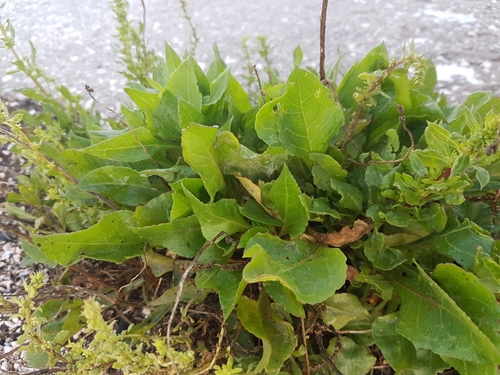
Verbatim
e0“average leaf extension rates (LER) in darkness to be from three to six times those in light for plants growing in non‐salinized media”
t0“Beta vulgaris”
Claim · model-written summary
Sugar beet leaf extension responded to light-dark transitions within seconds, faster than stomata moved.
- Taxon
- Beta vulgarisBeta vulgarist0
- Outcome
- changes in LERe0
- Direction
- more rapide0
- Qualifier
- within secondse0
- Comparator
- stomatal opening or closinge0
Organisms pictured · Representative pictures of the matched species, not figures from the paper.
Verbatim
e0“The changes in LER in light‐dark transitions occurred within seconds, a response which was more rapid than stomatal opening or closing”
t0“Beta vulgaris”
Claim · model-written summary
Salinity reduced sugar beet leaf extension by about 50% in darkness.
- Taxon
- Beta vulgarisBeta vulgarist0
- Treatment
- 100 mol m −3 NaCle0
- Outcome
- LER'se0
- Direction
- reducede0
- Value
- about 50%e0
- Qualifier
- in darknesse0
Not reportedComparator
Organisms pictured · Representative pictures of the matched species, not figures from the paper.
Verbatim
e0“When the growth medium was salinized to 100 mol m −3 NaCl, LER's were reduced by about 50% in darkness and 90% in light”
t0“Beta vulgaris”
Claim · model-written summary
Salinity reduced sugar beet leaf extension by 90% in light.
- Taxon
- Beta vulgarisBeta vulgarist0
- Treatment
- 100 mol m −3 NaCle0
- Outcome
- LER'se0
- Direction
- reducede0
- Value
- 90%e0
- Qualifier
- in lighte0
Not reportedComparator
Organisms pictured · Representative pictures of the matched species, not figures from the paper.
Verbatim
e0“When the growth medium was salinized to 100 mol m −3 NaCl, LER's were reduced by about 50% in darkness and 90% in light”
t0“Beta vulgaris”
Claim · model-written summary
A two-day root-zone salinity episode decreased sugar beet leaf extension.
- Taxon
- Beta vulgarisBeta vulgarist0
- Treatment
- 2‐d episode of root‐zone salinitye0
- Outcome
- LERe0
- Direction
- decreasede0
Not reportedComparator
Organisms pictured · Representative pictures of the matched species, not figures from the paper.
Verbatim
e0“A 2‐d episode of root‐zone salinity imposed midway through a 5‐d period of measurement decreased LER and produced higher leaf temperatures”
t0“Beta vulgaris”
Claim · model-written summary
A two-day root-zone salinity episode increased sugar beet leaf temperature.
- Taxon
- Beta vulgarisBeta vulgarist0
- Treatment
- 2‐d episode of root‐zone salinitye0
- Outcome
- leaf temperaturese0
- Direction
- highere0
Not reportedComparator
Organisms pictured · Representative pictures of the matched species, not figures from the paper.
Verbatim
e0“A 2‐d episode of root‐zone salinity imposed midway through a 5‐d period of measurement decreased LER and produced higher leaf temperatures”
t0“Beta vulgaris”
Claim · model-written summary
Sugar beet leaf extension and leaf temperature patterns returned to previous levels after salinity removal.
- Taxon
- Beta vulgarisBeta vulgarist0
- Treatment
- root‐zone salinity was removede0
- Outcome
- LER and diurnal leaf temperature patternse0
- Direction
- revertede0
- Comparator
- pre‐salinized levelse0
Organisms pictured · Representative pictures of the matched species, not figures from the paper.
Verbatim
e0“LER and diurnal leaf temperature patterns reverted to their pre‐salinized levels when root‐zone salinity was removed”
t0“Beta vulgaris”
Claim · model-written summary
The authors suggest reversible water stress rather than salt toxicity explains the growth reduction.
- Taxon
- Beta vulgarisBeta vulgarist0
- Treatment
- high sodium chloride in the growth mediume0
- Outcome
- growth reductione0
- Qualifier
- water stress mechanisme0
Organisms pictured · Representative pictures of the matched species, not figures from the paper.
Verbatim
e0“the effects of short episodes of high sodium chloride in the growth medium appear to be reversible, suggesting a water stress mechanism of growth reduction rather than toxicity effects of salt”
t0“Beta vulgaris”
The same questions in other papers
sodium chloride · yield · Beta vulgaris (beet)Positive and negative results
2 papers in the same direction as this paper · 3 in the opposite direction
- positive
- positive
- positive
2 papers more in this group
See all 6 papers →salinity · yield · Beta vulgaris (beet)Positive and negative results
3 papers in the same direction as this paper · 13 in the opposite direction
- negative
- negative
- negative
13 papers more in this group
See all 17 papers →Claims are grouped by organism, treatment and what was measured or targeted. A paper counts as positive when any of its claims in the group is positive.