Abstract
The ability of endomycorrhizal fungi to colonize tomato (Lycopersicum esculentum. Mill) roots, was studied under glasshouse conditions. Two indigenous species; Glomus mosseae and Scutellospora sp. and non-indigenous species Gigaspora margarita were used in the study. Pot culture technique was used for re-culturing G. mosseae and Scutellospora sp., sorghum was used as a trap host. Gigaspora margarita was re-cultured by test tube technique. All species had the ability to colonize tomato root with different colonization levels. Significantly higher root were colonized by G. mosseae (80%) compared to G. margarita (20%). A G. mosseae significantly increased shoot dry weight (2.82 g) and flowers number (32.75 g) and root growth. Tomato plants treated by G. mosseae were higher significantly after seven week of plant growth. The colonization of tomato root by G. mosseae lead to bigger root size and more branching which increase positively the number of root tips, length, surface area and root volume. Higher spores (455/100 g) were counted in Glomus mosseae inoculated plant compared to Scutellospora sp. (250/100 g) and G. margarita plant (132/100 g).
Abstract from the paper’s OpenAlex record, shown for indexing and research. Copyright remains with the authors or the publisher. Read at the source ↗
The text the model read, with the source record’s inline markup (italics, sub- and superscripts) rendered and its character entities decoded; quote offsets refer to the raw text.
Claims 10
Claim · model-written summary
Glomus mosseae colonized tomato roots.
- Taxon
- tomato
 Solanum lycopersicume0
- Interactor
- Glomus mosseae
 Funneliformis mosseaee1symbiont
- Outcome
- colonize tomato roote0
Organisms pictured · Representative pictures of the matched species, not figures from the paper.


Verbatim
e0“All species had the ability to colonize tomato root with different colonization levels.”
e1“Glomus mosseae and Scutellospora sp.”
Claim · model-written summary
Scutellospora sp. colonized tomato roots.
- Taxon
- tomatoSolanum lycopersicume0
- Interactor
- Scutellospora sp.
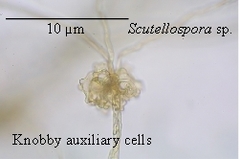 Scutellosporae1symbiont
- Outcome
- colonize tomato roote0
Organisms pictured · Representative pictures of the matched species, not figures from the paper.
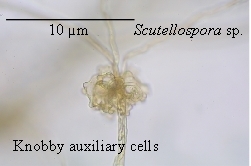
Verbatim
e0“All species had the ability to colonize tomato root with different colonization levels.”
e1“Glomus mosseae and Scutellospora sp.”
Claim · model-written summary
Gigaspora margarita colonized tomato roots.
- Taxon
- tomatoSolanum lycopersicume0
- Interactor
- Gigaspora margarita
 Gigaspora margaritae1symbiont
- Outcome
- colonize tomato roote0
Organisms pictured · Representative pictures of the matched species, not figures from the paper.

Verbatim
e0“All species had the ability to colonize tomato root with different colonization levels.”
e1“Gigaspora margarita were used in the study”
Claim · model-written summary
G. mosseae colonized significantly more tomato root than G. margarita, 80% versus 20%.
- Taxon
- tomatoSolanum lycopersicume1
- Treatment
- G. mosseaee0
- Interactor
- G. mosseaeFunneliformis mosseaee0symbiont
- Outcome
- roote0
- Direction
- highere0
- Value
- 80%e0
- Qualifier
- 20%e0
- Comparator
- G. margaritae0
Organisms pictured · Representative pictures of the matched species, not figures from the paper.
Verbatim
e0“Significantly higher root were colonized by G. mosseae (80%) compared to G. margarita (20%).”
e1“colonize tomato (Lycopersicum esculentum. Mill) roots”
Claim · model-written summary
G. mosseae significantly increased tomato shoot dry weight to 2.82 g.
- Taxon
- Lycopersicum esculentumt0
- Treatment
- G. mosseaee0
- Interactor
- G. mosseaeFunneliformis mosseaee0symbiont
- Outcome
- shoot dry weighte0
- Direction
- increasede0
- Value
- 2.82 ge0
Not reportedComparator
Organisms pictured · Representative pictures of the matched species, not figures from the paper.
Verbatim
e0“A G. mosseae significantly increased shoot dry weight (2.82 g) and flowers number (32.75 g) and root growth.”
t0“Lycopersicum esculentum Mill.”
Claim · model-written summary
G. mosseae significantly increased tomato flower number to the reported 32.75 g.
- Taxon
- Lycopersicum esculentumt0
- Treatment
- G. mosseaee0
- Interactor
- G. mosseaeFunneliformis mosseaee0symbiont
- Outcome
- flowers numbere0
- Direction
- increasede0
- Value
- 32.75 ge0
Not reportedComparator
Organisms pictured · Representative pictures of the matched species, not figures from the paper.
Verbatim
e0“A G. mosseae significantly increased shoot dry weight (2.82 g) and flowers number (32.75 g) and root growth.”
t0“Lycopersicum esculentum Mill.”
Claim · model-written summary
G. mosseae increased tomato root growth.
- Taxon
- Lycopersicum esculentumt0
- Treatment
- G. mosseaee0
- Interactor
- G. mosseaeFunneliformis mosseaee0symbiont
- Outcome
- root growthe0
- Direction
- increasede0
Not reportedComparator
Organisms pictured · Representative pictures of the matched species, not figures from the paper.
Verbatim
e0“A G. mosseae significantly increased shoot dry weight (2.82 g) and flowers number (32.75 g) and root growth.”
t0“Lycopersicum esculentum Mill.”
Claim · model-written summary
G. mosseae treated tomato plants were significantly taller after seven weeks.
- Taxon
- TomatoSolanum lycopersicume0
- Treatment
- G. mosseaee0
- Interactor
- G. mosseaeFunneliformis mosseaee0symbiont
- Outcome
- plantse0
- Direction
- highere0
- Qualifier
- after seven week of plant growthe0
Not reportedComparator
Organisms pictured · Representative pictures of the matched species, not figures from the paper.
Verbatim
e0“Tomato plants treated by G. mosseae were higher significantly after seven week of plant growth.”
Claim · model-written summary
G. mosseae colonization enlarged tomato roots and increased branching and root tips, length, area and volume.
- Taxon
- tomatoSolanum lycopersicume0
- Treatment
- colonization of tomato root by G. mosseaee0
- Interactor
- G. mosseaeFunneliformis mosseaee0symbiont
- Outcome
- root size and more branchinge0
- Direction
- biggere0
Not reportedComparator
Organisms pictured · Representative pictures of the matched species, not figures from the paper.
Verbatim
e0“The colonization of tomato root by G. mosseae lead to bigger root size and more branching which increase positively the number of root tips, length, surface area and root volume.”
Claim · model-written summary
G. mosseae inoculated plants had 455 spores per 100 g, exceeding the other two inocula.
- Taxon
- Lycopersicum esculentumt0
- Treatment
- Glomus mosseae inoculated plante0
- Interactor
- Glomus mosseaeFunneliformis mosseaee0symbiont
- Outcome
- sporese0
- Direction
- Highere0
- Value
- 455/100 ge0
- Comparator
- Scutellospora sp.e0
Organisms pictured · Representative pictures of the matched species, not figures from the paper.
Verbatim
e0“Higher spores (455/100 g) were counted in Glomus mosseae inoculated plant compared to Scutellospora sp. (250/100 g) and G. margarita plant (132/100 g).”
t0“Lycopersicum esculentum Mill.”
The same questions in other papers
Funneliformis mosseae · growth · Solanum lycopersicum (tomato)Positive and negative results
15 papers in the same direction as this paper · 1 in the opposite direction
- positive
- negative
- positive
13 papers more in this group
See all 17 papers →infection · growth · Solanum lycopersicum (tomato)Positive and negative results
25 papers in the same direction as this paper · 32 in the opposite direction · 1 reporting no difference from an alternative
- negative
- no effect
- negative
55 papers more in this group
See all 59 papers →Claims are grouped by organism, treatment and what was measured or targeted. A paper counts as positive when any of its claims in the group is positive.