Abstract
Two species of rocket salad, Eruca vesicaria L. subsp. sativa Miller and Diplotaxis tenuifolia L. DC, were grown hydroponically in a growth chamber with two nitrogen levels (1 or 8 mM N) to evaluate nitrate accumulation and nitrogen use efficiency. One ecotype of Eruca and two of Diplotaxis were used. Nitrogen (N) increased leaf production and the contribution of leaves to the total dry mass production in E. vesicaria but not in D. tenuifolia, and emphasized leaf area differences between the two species. The two species also showed differences in the inorganic anions and N content. D. tenuifolia ecotypes accumulated more NO3 than E. vesicaria (7.7 vs. 4.7 g kg−1 fresh mass). By increasing N concentration in the nutrient solution, NO3 content in leaves expressed on fresh mass basis increased in both species by 52%. Nitrogen use efficiency was greater in E. vesicaria than in D. tenuifolia (19.0 vs. 18.0), and decreased with increasing nitrogen in the nutrient solution (19.0 vs. 17.6).
Abstract from the paper’s OpenAlex record, shown for indexing and research. Copyright remains with the authors or the publisher. Read at the source ↗
The text the model read, with the source record’s inline markup (italics, sub- and superscripts) rendered and its character entities decoded; quote offsets refer to the raw text.
Claims 10
Claim · model-written summary
Nitrogen increased leaf production in E. vesicaria.
- Taxon
- E. vesicaria
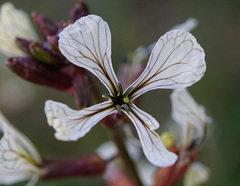 Eruca vesicariae0
- Treatment
- Nitrogen (N)e0
- Outcome
- leaf productione0
- Direction
- increasede0
Not reportedComparator
Organisms pictured · Representative pictures of the matched species, not figures from the paper.

Verbatim
e0“Nitrogen (N) increased leaf production and the contribution of leaves to the total dry mass production in E. vesicaria but not in D. tenuifolia”
Claim · model-written summary
Nitrogen increased the leaf contribution to total dry mass in E. vesicaria.
- Taxon
- E. vesicariaEruca vesicariae0
- Treatment
- Nitrogen (N)e0
- Outcome
- contribution of leaves to the total dry mass productione0
- Direction
- increasede0
Not reportedComparator
Organisms pictured · Representative pictures of the matched species, not figures from the paper.
Verbatim
e0“Nitrogen (N) increased leaf production and the contribution of leaves to the total dry mass production in E. vesicaria but not in D. tenuifolia”
Claim · model-written summary
Nitrogen did not increase leaf production in D. tenuifolia.
- Taxon
- D. tenuifolia
 Diplotaxis tenuifoliae0
- Treatment
- Nitrogen (N)e0
- Outcome
- leaf productione0
- Direction
- but note0
Not reportedComparator
Organisms pictured · Representative pictures of the matched species, not figures from the paper.

Verbatim
e0“Nitrogen (N) increased leaf production and the contribution of leaves to the total dry mass production in E. vesicaria but not in D. tenuifolia”
Claim · model-written summary
Nitrogen did not increase leaf contribution to total dry mass in D. tenuifolia.
- Taxon
- D. tenuifoliaDiplotaxis tenuifoliae0
- Treatment
- Nitrogen (N)e0
- Outcome
- contribution of leaves to the total dry mass productione0
- Direction
- but note0
Not reportedComparator
Organisms pictured · Representative pictures of the matched species, not figures from the paper.
Verbatim
e0“Nitrogen (N) increased leaf production and the contribution of leaves to the total dry mass production in E. vesicaria but not in D. tenuifolia”
Claim · model-written summary
Nitrogen emphasized leaf area differences between the species.
Not reportedDirection
Verbatim
e0“emphasized leaf area differences between the two species”
t0“ROCKET SALAD”
e1“Nitrogen (N) increased leaf production and the contribution of leaves to the total dry mass production in E. vesicaria but not in D. tenuifolia”
Claim · model-written summary
The two rocket salad species differed in inorganic anions and nitrogen content.
Verbatim
e0“The two species also showed differences in the inorganic anions and N content.”
t0“ROCKET SALAD”
Claim · model-written summary
D. tenuifolia ecotypes accumulated more nitrate than E. vesicaria, 7.7 versus 4.7 g kg−1 fresh mass.
- Taxon
- D. tenuifoliaDiplotaxis tenuifoliae0
- Material
- D. tenuifolia ecotypese0
- Outcome
- NO3e0
- Direction
- moree0
- Value
- 7.7 vs. 4.7 g kg−1 fresh masse0
- Comparator
- E. vesicariae0
Organisms pictured · Representative pictures of the matched species, not figures from the paper.
Verbatim
e0“D. tenuifolia ecotypes accumulated more NO3 than E. vesicaria (7.7 vs. 4.7 g kg−1 fresh mass)”
Claim · model-written summary
Increasing nutrient solution nitrogen raised leaf nitrate content in both species by 52%.
- Taxon
- ROCKET SALADt0
- Treatment
- increasing N concentration in the nutrient solutione0
- Outcome
- NO3 content in leavese0
- Direction
- increasede0
- Value
- 52%e0
Not reportedComparator
Verbatim
e0“By increasing N concentration in the nutrient solution, NO3 content in leaves expressed on fresh mass basis increased in both species by 52%”
t0“ROCKET SALAD”
Claim · model-written summary
Nitrogen use efficiency was greater in E. vesicaria than D. tenuifolia, 19.0 versus 18.0.
- Taxon
- E. vesicariaEruca vesicariae0
- Outcome
- Nitrogen use efficiencye0
- Direction
- greatere0
- Value
- 19.0 vs. 18.0e0
- Comparator
- D. tenuifoliae0
Organisms pictured · Representative pictures of the matched species, not figures from the paper.
Verbatim
e0“Nitrogen use efficiency was greater in E. vesicaria than in D. tenuifolia (19.0 vs. 18.0)”
Claim · model-written summary
Nitrogen use efficiency fell with increasing nutrient solution nitrogen, from 19.0 to 17.6.
- Taxon
- ROCKET SALADt0
- Treatment
- increasing nitrogen in the nutrient solutione0
- Outcome
- Nitrogen use efficiencye1
- Direction
- decreasede0
- Value
- 19.0 vs. 17.6e0
Not reportedComparator
Verbatim
e0“decreased with increasing nitrogen in the nutrient solution (19.0 vs. 17.6)”
t0“ROCKET SALAD”
e1“Nitrogen use efficiency was greater”
The same questions in other papers
nitrogen · yield · Diplotaxis tenuifoliaPositive and negative results
1 in the opposite direction
- positive
nitrogen · yield · Eruca vesicariaPositive and negative results
3 papers in the same direction as this paper · 1 in the opposite direction
- positive
- no effect
- positive
1 paper more in this group
See all 5 papers →Claims are grouped by organism, treatment and what was measured or targeted. A paper counts as positive when any of its claims in the group is positive.