Abstract
ABSTRACT Planting the cotton cv. Sure-Grow 747 in cotton seedling disease plots during the 2001 growing season resulted in high levels of preemergence damping-off among the seedlings. Four cotton pathogens, Pythium aphanidermatum, P. ultimum, an unidentified Pythium sp., and Rhizopus oryzae, were isolated from diseased seed embryos and seedlings. Disease incited by the Pythium spp. could be controlled by seed treatment with Metalaxyl, but disease incited by R. oryzae could not. Seed treatment with Metalaxyl in naturally infested field soil was only partially effective; therefore, symptoms in 47% of the diseased seedlings could be attributed to R. oryzae. Susceptibility to disease appeared to be related to release in the spermosphere, by the germinating seeds, of compounds that stimulate pathogen propagule germination, because exudates from seed of the suscept Sure-Grow 747 and extracts from wheat bran induced pathogen germination and growth, whereas exudates from resistant cv. Stoneville 213 did not. However, even Stoneville 213 became susceptible when infested soil was amended with wheat bran. Seed treatment with preparations of Trichoderma virens parent, mutant, and hybrid strains gave effective biological control of preemergence damping-off. Disease control was attributable to metabolism by the biocontrol agent of pathogen germination stimulants released by the seed, because amendment of pathogen-infested soil with the propagule germination stimulants in wheat bran negated the protective effect of the seed treatment.
Abstract from the paper’s OpenAlex record, shown for indexing and research. Copyright remains with the authors or the publisher. Read at the source ↗
The text the model read, with the source record’s inline markup (italics, sub- and superscripts) rendered and its character entities decoded; quote offsets refer to the raw text.
Claims 12
Claim · model-written summary
Sure-Grow 747 planting resulted in high preemergence damping-off.
- Taxon
- cotton
 Gossypium hirsutume0
- Material
- Sure-Grow 747e0
- Outcome
- high levels of preemergence damping-offe0
- Setting
- cotton seedling disease plotse0
Organisms pictured · Representative pictures of the matched species, not figures from the paper.

Verbatim
e0“Planting the cotton cv. Sure-Grow 747 in cotton seedling disease plots during the 2001 growing season resulted in high levels of preemergence damping-off among the seedlings.”
Claim · model-written summary
Four pathogens were isolated from diseased cotton embryos and seedlings.
- Taxon
- cottonGossypium hirsutume0
- Interactor
- Pythium aphanidermatumPythium aphanidermatume0pathogen
- Second interactor
- P. ultimumGlobisporangium ultimume0pathogen
- Outcome
- were isolated from diseased seed embryos and seedlingse0
- Qualifier
- an unidentified Pythium sp., and Rhizopus oryzaee0
Organisms pictured · Representative pictures of the matched species, not figures from the paper.
Verbatim
e0“Four cotton pathogens, Pythium aphanidermatum, P. ultimum, an unidentified Pythium sp., and Rhizopus oryzae, were isolated from diseased seed embryos and seedlings.”
Claim · model-written summary
Metalaxyl controlled damping-off incited by Pythium spp.
- Taxon
- cottonGossypium hirsutumt0
- Treatment
- seed treatment with Metalaxyle0
- Outcome
- Disease incited by the Pythium spp.e0
- Direction
- controllede0
 Pythium
Not reportedComparator
Organisms pictured · Representative pictures of the matched species, not figures from the paper.

Verbatim
e0“Disease incited by the Pythium spp. could be controlled by seed treatment with Metalaxyl”
t0“Cotton”
Claim · model-written summary
Metalaxyl did not control disease incited by R. oryzae.
- Taxon
- cottonGossypium hirsutumt0
- Interactor
- R. oryzae
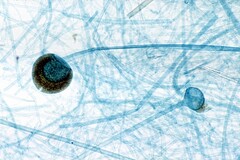 Rhizopus arrhizuse0pathogent0
- Outcome
- disease incited by R. oryzaee0
- Direction
- could note0
Not reportedTreatmentComparator
Organisms pictured · Representative pictures of the matched species, not figures from the paper.

Verbatim
e0“but disease incited by R. oryzae could not.”
t0“Cotton”
Claim · model-written summary
Metalaxyl was only partially effective in naturally infested field soil.
- Taxon
- cottonGossypium hirsutumt0
- Treatment
- Seed treatment with Metalaxyle0
- Outcome
- only partially effectivee0
- Direction
- only partially effectivee0
- Setting
- naturally infested field soile0
Not reportedComparator
Organisms pictured · Representative pictures of the matched species, not figures from the paper.
Verbatim
e0“Seed treatment with Metalaxyl in naturally infested field soil was only partially effective”
t0“Cotton”
Claim · model-written summary
R. oryzae accounted for symptoms in 47% of diseased cotton seedlings.
- Taxon
- cottonGossypium hirsutumt0
- Interactor
- R. oryzaeRhizopus arrhizuse0pathogent0
- Outcome
- symptoms in 47% of the diseased seedlingse0
- Value
- 47%e0
Organisms pictured · Representative pictures of the matched species, not figures from the paper.
Verbatim
e0“symptoms in 47% of the diseased seedlings could be attributed to R. oryzae”
t0“Cotton”
Claim · model-written summary
Sure-Grow 747 seed exudates induced pathogen germination and growth.
- Taxon
- cottonGossypium hirsutumt0
- Material
- Sure-Grow 747e0
- Treatment
- exudates from seed of the suscept Sure-Grow 747e0
- Outcome
- pathogen germination and growthe0
- Direction
- inducede0
Not reportedComparator
Organisms pictured · Representative pictures of the matched species, not figures from the paper.
Verbatim
e0“exudates from seed of the suscept Sure-Grow 747 and extracts from wheat bran induced pathogen germination and growth”
t0“Cotton”
Claim · model-written summary
Wheat bran extracts induced pathogen germination and growth.
- Taxon
- cottonGossypium hirsutumt0
- Treatment
- extracts from wheat brane0
- Outcome
- pathogen germination and growthe0
- Direction
- inducede0
Not reportedComparator
Organisms pictured · Representative pictures of the matched species, not figures from the paper.
Verbatim
e0“extracts from wheat bran induced pathogen germination and growth”
t0“Cotton”
Claim · model-written summary
Stoneville 213 seed exudates did not induce pathogen germination and growth.
- Taxon
- cottonGossypium hirsutumt0
- Material
- Stoneville 213e0
- Treatment
- exudates from resistant cv. Stoneville 213e0
- Outcome
- pathogen germination and growthe0
- Direction
- did note0
Not reportedComparator
Organisms pictured · Representative pictures of the matched species, not figures from the paper.
Verbatim
e0“exudates from seed of the suscept Sure-Grow 747 and extracts from wheat bran induced pathogen germination and growth, whereas exudates from resistant cv. Stoneville 213 did not.”
t0“Cotton”
Claim · model-written summary
Stoneville 213 became susceptible when infested soil received wheat bran.
- Taxon
- cottonGossypium hirsutumt0
- Material
- Stoneville 213e0
- Treatment
- infested soil was amended with wheat brane0
- Outcome
- became susceptiblee0
- Direction
- became susceptiblee0
Not reportedComparator
Organisms pictured · Representative pictures of the matched species, not figures from the paper.
Verbatim
e0“even Stoneville 213 became susceptible when infested soil was amended with wheat bran”
t0“Cotton”
Claim · model-written summary
Trichoderma virens seed preparations controlled preemergence damping-off.
- Taxon
- cottonGossypium hirsutumt0
- Treatment
- Seed treatment with preparations of Trichoderma virens parent, mutant, and hybrid strainse0
- Interactor
- Trichoderma virensTrichoderma virense0biocontrol_agentt0
- Outcome
- preemergence damping-offe0
- Direction
- controle0
Not reportedComparator
Organisms pictured · Representative pictures of the matched species, not figures from the paper.
Verbatim
e0“Seed treatment with preparations of Trichoderma virens parent, mutant, and hybrid strains gave effective biological control of preemergence damping-off”
t0“Cotton”
Claim · model-written summary
Wheat bran germination stimulants negated Trichoderma seed treatment protection.
- Taxon
- cottonGossypium hirsutumt0
- Treatment
- amendment of pathogen-infested soil with the propagule germination stimulants in wheat brane0
- Outcome
- the protective effect of the seed treatmente0
- Direction
- negatede0
Not reportedComparator
Organisms pictured · Representative pictures of the matched species, not figures from the paper.
Verbatim
e0“amendment of pathogen-infested soil with the propagule germination stimulants in wheat bran negated the protective effect of the seed treatment”
t0“Cotton”
The same questions in other papers
Triticum aestivum · control · Gossypium hirsutum (cotton)Positive and negative results
1 in the opposite direction
- positive
metalaxyl · Pythium · Gossypium hirsutum (cotton)Positive and negative results
1 paper in the same direction as this paper · 1 in the opposite direction
- no effect
- positive
Triticum aestivum · disease · Gossypium hirsutum (cotton)Positive and negative results
2 papers in the same direction as this paper · 1 in the opposite direction
- positive
- no effect
- negative
Triticum aestivum · growth · Gossypium hirsutum (cotton)Positive and negative results
4 papers in the same direction as this paper · 4 in the opposite direction
- positive
- positive
- positive
5 papers more in this group
See all 9 papers →Trichoderma virens · disease · Gossypium hirsutum (cotton)Results agree
1 paper in the same direction as this paper
- positive
processing · control · Gossypium hirsutum (cotton)Positive and negative results
1 in the opposite direction
- positive
seed treatment · Pythium · Gossypium hirsutum (cotton)Positive and negative results
1 paper in the same direction as this paper · 1 in the opposite direction
- positive
- no effect
allelopathy · growth · Gossypium hirsutum (cotton)Positive and negative results
3 papers in the same direction as this paper · 2 in the opposite direction
- no effect
- negative
- positive
2 papers more in this group
See all 6 papers →8 of 12 groups shown: named compounds and organisms first, then groups whose results differ (checked claim by claim), then those with positive and negative results, then the smaller groups.
Claims are grouped by organism, treatment and what was measured or targeted. A paper counts as positive when any of its claims in the group is positive.