Abstract
Expression of pathogenesis-related (PR) genes is part of the plant's natural defense response against pathogen attack. The PRms gene encodes a fungal-inducible PR protein from maize. Here, we demonstrate that expression of PRms in transgenic rice confers broad-spectrum protection against pathogens, including fungal (Magnaporthe oryzae, Fusarium verticillioides, and Helminthosporium oryzae) and bacterial (Erwinia chrysanthemi) pathogens. The PRms-mediated disease resistance in rice plants is associated with an enhanced capacity to express and activate the natural plant defense mechanisms. Thus, PRms rice plants display a basal level of expression of endogenous defense genes in the absence of the pathogen. PRms plants also exhibit stronger and quicker defense responses during pathogen infection. We also have found that sucrose accumulates at higher levels in leaves of PRms plants. Sucrose responsiveness of rice defense genes correlates with the pathogen-responsive priming of their expression in PRms rice plants. Moreover, pretreatment of rice plants with sucrose enhances resistance to M. oryzae infection. Together, these results support a sucrose-mediated priming of defense responses in PRms rice plants which results in broad-spectrum disease resistance.
Abstract from the paper’s OpenAlex record; open copy licensed other-oa. Read at the source ↗
The text the model read, with the source record’s inline markup (italics, sub- and superscripts) rendered and its character entities decoded; quote offsets refer to the raw text.
Claims 7
Claim · model-written summary
PRms expression gave rice protection against three fungal pathogens.
- Taxon
- rice
 Oryza sativat0
- Treatment
- expression of PRmse0
- Interactor
- Magnaporthe oryzae, Fusarium verticillioides, and Helminthosporium oryzae
 Bipolaris oryzae
 Fusarium verticillioides
 Pyricularia oryzaee0pathogen
- Gene
- PRmse0
- Outcome
- protection against pathogense0
- Direction
- conferse0
Not reportedComparator
Organisms pictured · Representative pictures of the matched species, not figures from the paper.

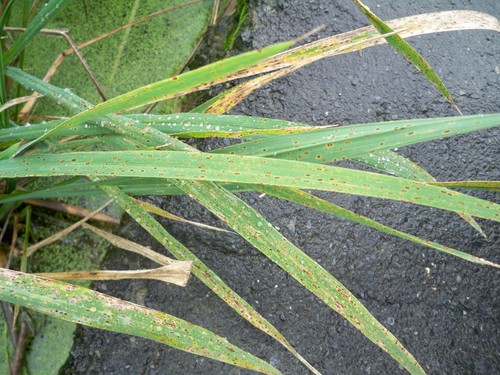


Verbatim
e0“expression of PRms in transgenic rice confers broad-spectrum protection against pathogens, including fungal (Magnaporthe oryzae, Fusarium verticillioides, and Helminthosporium oryzae)”
t0“Rice”
Claim · model-written summary
PRms expression protected rice against Erwinia chrysanthemi.
- Taxon
- riceOryza sativat0
- Treatment
- expression of PRmse0
- Interactor
- Erwinia chrysanthemi
 Dickeya chrysanthemie0pathogen
- Gene
- PRmse0
- Outcome
- protection against pathogense0
- Direction
- conferse0
Not reportedComparator
Organisms pictured · Representative pictures of the matched species, not figures from the paper.

Verbatim
e0“expression of PRms in transgenic rice confers broad-spectrum protection against pathogens, including fungal (Magnaporthe oryzae, Fusarium verticillioides, and Helminthosporium oryzae) and bacterial (Erwinia chrysanthemi) pathogens.”
t0“Rice”
Claim · model-written summary
PRms rice expressed endogenous defense genes without a pathogen.
- Taxon
- riceOryza sativat0
- Material
- PRms rice plantse0
- Gene
- endogenous defense genese0
- Outcome
- expression of endogenous defense genese0
- Direction
- basal levele0
Organisms pictured · Representative pictures of the matched species, not figures from the paper.
Verbatim
e0“PRms rice plants display a basal level of expression of endogenous defense genes in the absence of the pathogen.”
t0“Rice”
Claim · model-written summary
PRms plants gave stronger and quicker responses to infection.
- Taxon
- riceOryza sativat0
- Material
- PRms plantse0
- Outcome
- defense responsese0
- Direction
- stronger and quickere0
Organisms pictured · Representative pictures of the matched species, not figures from the paper.
Verbatim
e0“PRms plants also exhibit stronger and quicker defense responses during pathogen infection.”
t0“Rice”
Claim · model-written summary
Sucrose accumulated at higher levels in PRms rice leaves.
- Taxon
- riceOryza sativat0
- Material
- PRms plantse0
- Organ / stage
- leavese0
- Outcome
- sucrosee0
- Direction
- higher levelse0
Organisms pictured · Representative pictures of the matched species, not figures from the paper.
Verbatim
e0“sucrose accumulates at higher levels in leaves of PRms plants.”
t0“Rice”
Claim · model-written summary
Sucrose responsiveness of defense genes correlated with pathogen-responsive priming.
- Taxon
- riceOryza sativat0
- Material
- PRms rice plantse0
- Gene
- rice defense genese0
- Outcome
- Sucrose responsiveness of rice defense genese0
- Direction
- correlatese0
Organisms pictured · Representative pictures of the matched species, not figures from the paper.
Verbatim
e0“Sucrose responsiveness of rice defense genes correlates with the pathogen-responsive priming of their expression in PRms rice plants.”
t0“Rice”
Claim · model-written summary
Sucrose pretreatment enhanced rice resistance to M. oryzae.
- Taxon
- riceOryza sativat0
- Treatment
- pretreatment of rice plants with sucrosee0
- Interactor
- M. oryzaePyricularia oryzaee0pathogen
- Outcome
- resistance to M. oryzae infectione0
- Direction
- enhancese0
Not reportedComparator
Organisms pictured · Representative pictures of the matched species, not figures from the paper.
Verbatim
e0“pretreatment of rice plants with sucrose enhances resistance to M. oryzae infection.”
t0“Rice”
The same questions in other papers
transgenic · Pyricularia oryzae · Oryza sativa (rice)Positive and negative results
3 papers in the same direction as this paper · 3 in the opposite direction
- no effect
- negative
- no effect
3 papers more in this group
See all 7 papers →Claims are grouped by organism, treatment and what was measured or targeted. A paper counts as positive when any of its claims in the group is positive.