Abstract
Floral patterning in Papilionoideae plants, such as pea (Pisum sativum) and Medicago truncatula, is unique in terms of floral organ number, arrangement, and initiation timing as compared to other well-studied eudicots. To investigate the molecular mechanisms involved in the floral patterning in legumes, we have analyzed two mutants, proliferating floral meristem and proliferating floral organ-2 (pfo-2), obtained by ethyl methanesulfonate mutagenesis of Lotus japonicus. These two mutants showed similar phenotypes, with indeterminate floral structures and altered floral organ identities. We have demonstrated that loss of function of LjLFY and LjUFO/Pfo is likely to be responsible for these mutant phenotypes, respectively. To dissect the regulatory network controlling the floral patterning, we cloned homologs of the ABC function genes, which control floral organ identity in Arabidopsis (Arabidopsis thaliana). We found that some of the B and C function genes were duplicated. RNA in situ hybridization showed that the C function genes were expressed transiently in the carpel, continuously in stamens, and showed complementarity with the A function genes in the heterogeneous whorl. In proliferating floral meristem and pfo-2 mutants, all B function genes were down-regulated and the expression patterns of the A and C function genes were drastically altered. We conclude that LjLFY and LjUFO/Pfo are required for the activation of B function genes and function together in the recruitment and determination of petals and stamens. Our findings suggest that gene duplication, change in expression pattern, gain or loss of functional domains, and alteration of key gene functions all contribute to the divergence of floral patterning in L. japonicus.
Abstract from the paper’s OpenAlex record, shown for indexing and research. Copyright remains with the authors or the publisher. Read at the source ↗
The text the model read, with the source record’s inline markup (italics, sub- and superscripts) rendered and its character entities decoded; quote offsets refer to the raw text.
Claims 10
Claim · model-written summary
The proliferating floral meristem and pfo-2 mutants showed similar phenotypes, with indeterminate floral structures and altered floral organ identities.
- Taxon
- Lotus japonicus
 Lotus japonicust0
- Material
- two mutantse0
- Outcome
- indeterminate floral structures and altered floral organ identitiese0
Organisms pictured · Representative pictures of the matched species, not figures from the paper.
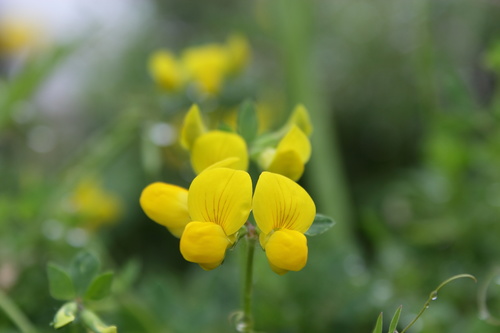
Verbatim
t0“Floral Patterning in Lotus japonicus”
e0“These two mutants showed similar phenotypes, with indeterminate floral structures and altered floral organ identities”
Claim · model-written summary
Loss of function of LjLFY and LjUFO/Pfo is likely responsible for the respective mutant phenotypes.
- Taxon
- Lotus japonicusLotus japonicust0
- Gene
- LjLFY and LjUFO/Pfoe0
- Outcome
- mutant phenotypese0
Organisms pictured · Representative pictures of the matched species, not figures from the paper.
Verbatim
t0“Floral Patterning in Lotus japonicus”
e0“loss of function of LjLFY and LjUFO/Pfo is likely to be responsible for these mutant phenotypes”
Claim · model-written summary
Some of the cloned B and C function genes were duplicated.
- Taxon
- Lotus japonicusLotus japonicust0
- Gene
- B and C function genese0
- Outcome
- duplicatede0
Organisms pictured · Representative pictures of the matched species, not figures from the paper.
Verbatim
t0“Floral Patterning in Lotus japonicus”
e0“We found that some of the B and C function genes were duplicated”
Claim · model-written summary
RNA in situ hybridization showed the C function genes were expressed transiently in the carpel.
- Taxon
- Lotus japonicusLotus japonicust0
- Organ / stage
- carpele0
- Gene
- C function genese0
- Outcome
- expressed transientlye0
Organisms pictured · Representative pictures of the matched species, not figures from the paper.
Verbatim
t0“Floral Patterning in Lotus japonicus”
e0“C function genes were expressed transiently in the carpel, continuously in stamens, and showed complementarity with the A function genes in the heterogeneous whorl”
Claim · model-written summary
RNA in situ hybridization showed the C function genes were expressed continuously in stamens.
- Taxon
- Lotus japonicusLotus japonicust0
- Organ / stage
- stamense0
- Gene
- C function genese0
- Outcome
- expressede0
- Qualifier
- continuouslye0
Organisms pictured · Representative pictures of the matched species, not figures from the paper.
Verbatim
t0“Floral Patterning in Lotus japonicus”
e0“C function genes were expressed transiently in the carpel, continuously in stamens, and showed complementarity with the A function genes in the heterogeneous whorl”
Claim · model-written summary
The C function genes showed complementarity with the A function genes in the heterogeneous whorl.
- Taxon
- Lotus japonicusLotus japonicust0
- Organ / stage
- heterogeneous whorle0
- Gene
- C function genese0
- Outcome
- complementaritye0
- Comparator
- A function genese0
Organisms pictured · Representative pictures of the matched species, not figures from the paper.
Verbatim
t0“Floral Patterning in Lotus japonicus”
e0“C function genes were expressed transiently in the carpel, continuously in stamens, and showed complementarity with the A function genes in the heterogeneous whorl”
Claim · model-written summary
In the proliferating floral meristem and pfo-2 mutants, all B function genes were down-regulated.
- Taxon
- Lotus japonicusLotus japonicust0
- Material
- proliferating floral meristem and pfo-2 mutantse0
- Gene
- B function genese0
- Outcome
- down-regulatede0
Organisms pictured · Representative pictures of the matched species, not figures from the paper.
Verbatim
t0“Floral Patterning in Lotus japonicus”
e0“In proliferating floral meristem and pfo-2 mutants, all B function genes were down-regulated and the expression patterns of the A and C function genes were drastically altered”
Claim · model-written summary
In the proliferating floral meristem and pfo-2 mutants, the expression patterns of the A and C function genes were drastically altered.
- Taxon
- Lotus japonicusLotus japonicust0
- Material
- proliferating floral meristem and pfo-2 mutantse0
- Gene
- A and C function genese0
- Outcome
- expression patternse0
- Qualifier
- drastically alterede0
Organisms pictured · Representative pictures of the matched species, not figures from the paper.
Verbatim
t0“Floral Patterning in Lotus japonicus”
e0“In proliferating floral meristem and pfo-2 mutants, all B function genes were down-regulated and the expression patterns of the A and C function genes were drastically altered”
Claim · model-written summary
The authors conclude LjLFY and LjUFO/Pfo are required for activation of B function genes and function together in recruitment and determination of petals and stamens.
- Taxon
- Lotus japonicusLotus japonicust0
- Organ / stage
- petals and stamense0
- Gene
- LjLFY and LjUFO/Pfoe0
- Outcome
- activation of B function genese0
Organisms pictured · Representative pictures of the matched species, not figures from the paper.
Verbatim
t0“Floral Patterning in Lotus japonicus”
e0“We conclude that LjLFY and LjUFO/Pfo are required for the activation of B function genes and function together in the recruitment and determination of petals and stamens”
Claim · model-written summary
The authors suggest gene duplication, change in expression pattern, gain or loss of functional domains and alteration of key gene functions all contribute to the divergence of floral patterning in L. japonicus.
- Taxon
- L. japonicusLotus japonicuse0
- Outcome
- divergence of floral patterninge0
- Qualifier
- gene duplication, change in expression pattern, gain or loss of functional domains, and alteration of key gene functionse0
Organisms pictured · Representative pictures of the matched species, not figures from the paper.
Verbatim
t0“Floral Patterning in Lotus japonicus”
e0“gene duplication, change in expression pattern, gain or loss of functional domains, and alteration of key gene functions all contribute to the divergence of floral patterning in L. japonicus”